Brain scan model classifies cognitive screening results
The model scored 0.860 in 139 independently studied people, versus 0.966 in the original test group, on a scale where 1 means perfect separation.
433 participants, independent replication, multicenter
Limit: The model overclassified cognitive impairment externally, with specificity of 0.513
Edited by Boris Djordjevic · AgingResearch.News
Researchers developed a machine-learning model in an observational study of 433 people: 302 scored below 26 on the Montreal Cognitive Assessment, a cognitive screening test, and 131 scored 26 or higher. They considered 16 features, including age, sex and brain-scan measures. They compared five algorithms and narrowed the best-performing model to 11 features.
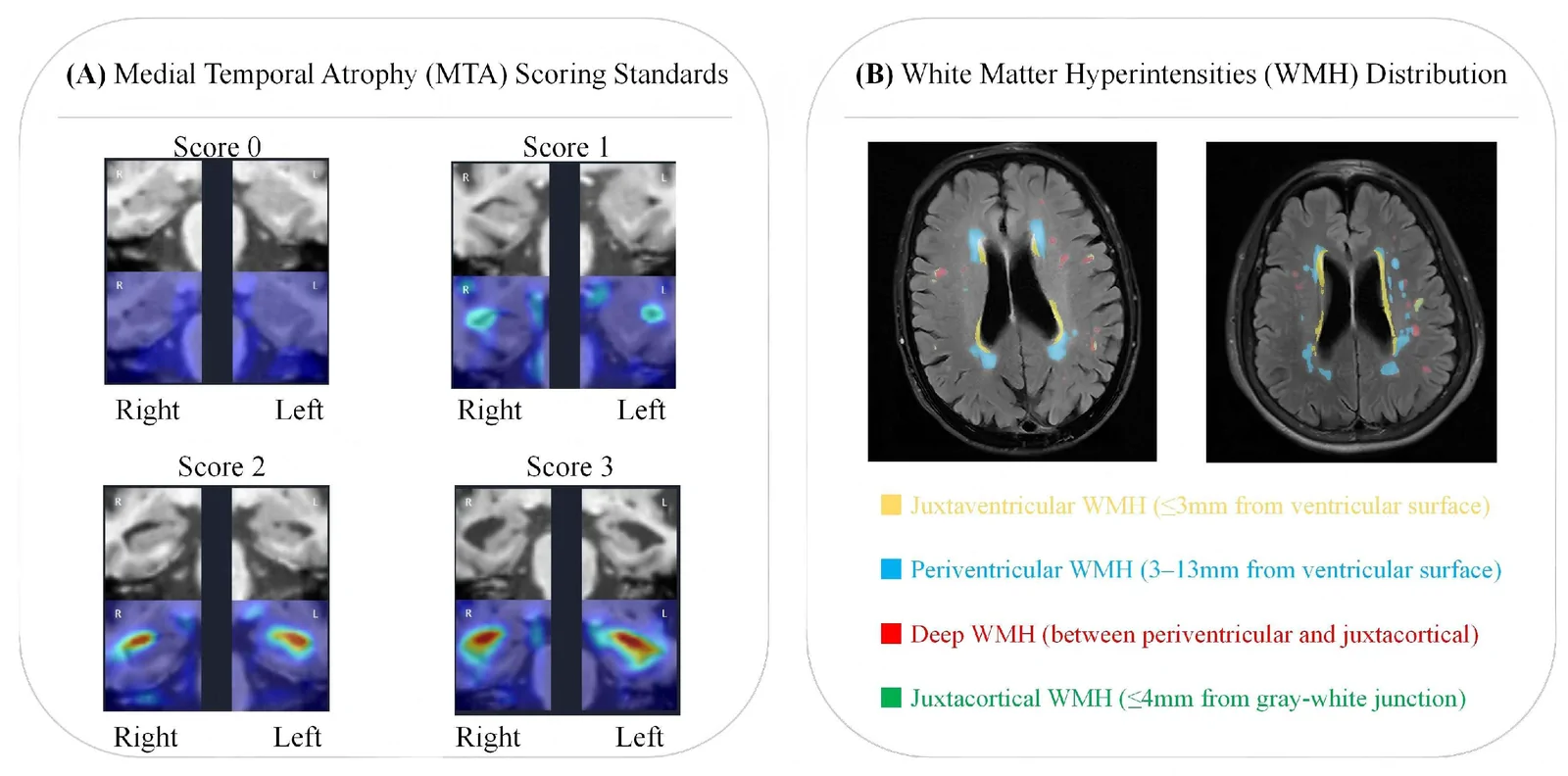
On a scale where 1 means perfect separation of the screening groups, the model scored 0.966 in a held-out test group. It scored 0.860 in an independent cohort of 139 people, including 100 with low screening scores and 39 with higher scores. The most influential feature measured shrinkage in the left medial temporal lobe, a brain region involved in memory.
Why it matters
Cognitive impairment is a concern as people age. The researchers said the model may offer an objective screening aid based on routine brain scans.
Caveats
The outcome was a screening-test cutoff, not a clinical diagnosis of cognitive impairment. The model still needs prospective testing across multiple centers.
From the paper
- Participants
A total of 433 subjects were included: 302 with cognitive impairment (69.7%) and 131 without (30.3%) (Table 1).
- Limitation
Cognitive status was defined by the MoCA alone, a screening rather than a diagnostic tool, so the outcome is a screening classification that a fuller neuropsychological testing would define more definitively.
Quoted word for word from the full text on mdpi.com.
- Machine learning
- Cognitive impairment
- MoCA-defined cognitive impairment
- Fazekas rating
- Left medial temporal atrophy score
- Humans
The paper
Shanghai University of Traditional Chinese Medicine
Bioengineering, Sep 23, 2026, Open access


