Kidney drug showed no clear short-term effect on minerals in urine
In a crossover trial, 15 adults with autosomal dominant polycystic kidney disease took empagliflozin or placebo for 14 days each.
Double-blind, placebo-controlled
Limit: Only 15 people participated in this exploratory trial
Edited by Boris Djordjevic · AgingResearch.News
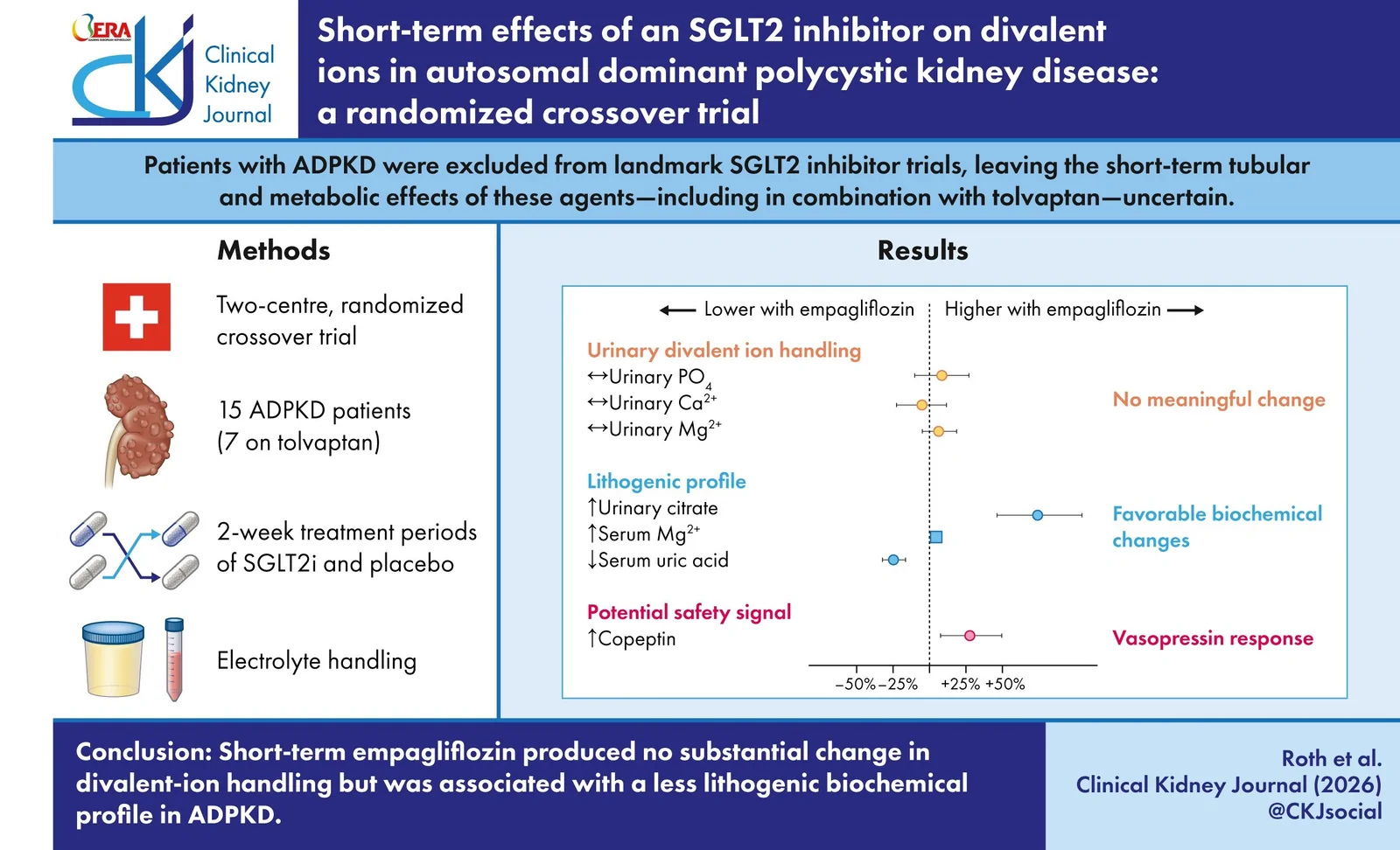
Fifteen adults with autosomal dominant polycystic kidney disease, an inherited kidney condition, joined a randomized, double-blind crossover trial. Their median age was 43. Each received empagliflozin at 10 mg and placebo for 14 days each, separated by a two-week break.
The researchers detected no difference between empagliflozin and placebo in the amounts of phosphate, calcium or magnesium passed in urine over 24 hours. Nor did they detect differences in the fraction of each filtered mineral that left the body in urine. Exploratory findings included 5.7% higher blood magnesium, 78.6% higher urinary citrate and 26% lower blood uric acid with empagliflozin versus placebo. Estimated kidney filtration declined by 7.1%, which the researchers described as expected. They observed no major short-term safety signals.
Why it matters
Drugs in empagliflozin’s class reduce kidney disease progression, cardiovascular events and deaths in chronic kidney disease, making their effects relevant to health and lifespan.
Caveats
This exploratory trial included only 15 people and short treatment periods. It cannot establish long-term benefits or safety, or effects in people without this kidney condition.
Empagliflozin is part of Bryan Johnson's Blueprint
The paper
Kantonsspital Graubünden; University of Zurich
Clinical Kidney Journal, Oct 2, 2026, Open access

