Drug pair lowered blood pressure more than either drug alone
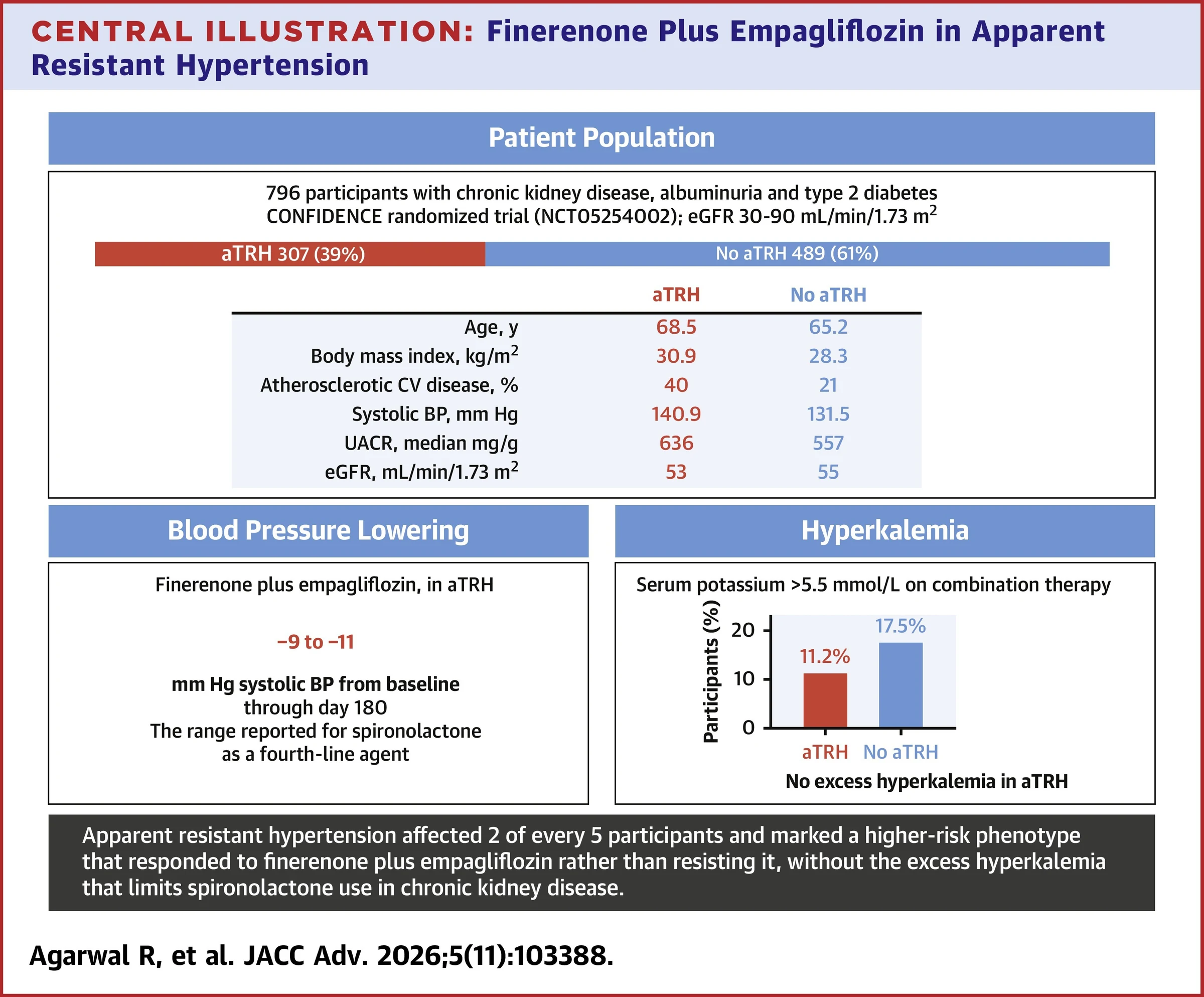
A reanalysis of a randomized trial included 796 people with kidney disease and type 2 diabetes, including 307 with apparent treatment-resistant high blood pressure.
Double-blind, registered NCT05254002
Limit: This post hoc analysis addressed a question the trial was not specifically designed to answer
Stake: Authors hold patents with Bayer, which develops finerenone, take fees from it and receive grants from it. Authors take fees from Boehringer Ingelheim, which develops empagliflozin, and receive grants from it. Authors also declare ties to 2 more companies.
Edited by Boris Djordjevic · AgingResearch.News
Researchers reanalyzed a randomized trial of 796 people with chronic kidney disease, albumin—a blood protein—in their urine, and type 2 diabetes. The trial compared finerenone, empagliflozin and both drugs together. Of the participants, 307 had apparent treatment-resistant hypertension: blood pressure of at least 130/80 mm Hg while taking three blood pressure drugs, or use of at least four drugs regardless of blood pressure.
The combination lowered systolic blood pressure, the upper reading, more than either drug alone. Adverse events occurred in 63.8% of participants with apparent treatment-resistant hypertension versus 51.1% without it. Among those receiving both drugs, high blood potassium occurred in 11.2% with apparent treatment-resistant hypertension versus 17.5% without it.
Why it matters
Apparent treatment-resistant hypertension marked an older, higher-risk group in this trial. The findings may help inform blood pressure management in that group.
Caveats
This was a post hoc analysis, rather than a trial designed specifically to answer this question. The findings do not establish results for people with hypertension who lack chronic kidney disease or type 2 diabetes.
Empagliflozin is part of Bryan Johnson's Blueprint
The paper
Richard L. Roudebush VA Medical Center & Indiana University School of Medicine; University of Maryland School of Medicine
JACC Advances, Oct 23, 2026