Vitamin E form linked to lower cancer death risk in older adults
Adults in the highest versus lowest quarter of blood levels of one vitamin E form had 35% lower relative cancer death risk.
Limit: The analysis measured blood levels, not whether vitamin E supplements reduce cancer deaths
Edited by Boris Djordjevic · AgingResearch.News
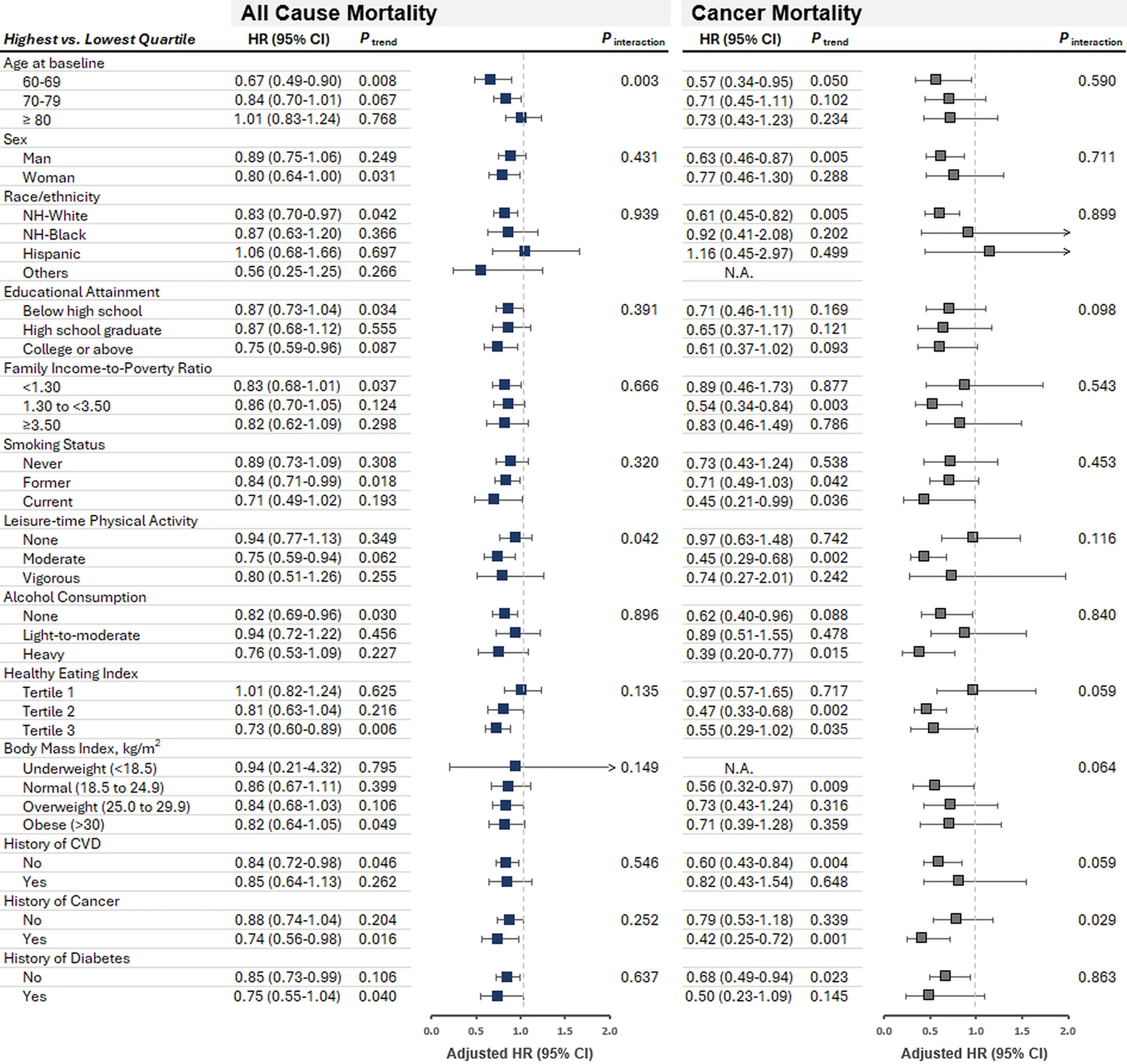
An observational study examined 6,025 US adults aged 60 and older with blood measurements of two vitamin E forms. Researchers linked national survey data from 1999–2006 to death records. They accounted for cholesterol, demographic characteristics, lifestyle factors and other illnesses. Over an average follow-up of 12.1 years, 3,745 participants died.
Adults in the highest quarter of alpha-tocopherol, one vitamin E form, had 16% lower relative risk of death from any cause and 35% lower relative risk of cancer death than those in the lowest quarter. Higher blood levels of gamma-tocopherol, the other vitamin E form, were associated with a 37% lower relative risk of death from Alzheimer's disease.
Why it matters
The authors suggested that vitamin E status may be a potentially modifiable target for aging-related mortality, warranting further research.
Caveats
This observational study cannot establish cause and effect. Its findings concern US adults aged 60 and older, not younger adults.