Air pollution particles link to distinct Alzheimer's markers
In 340 unimpaired adults, fine particles were linked to lower amyloid ratios while particulate manganese was linked to higher levels of tau.
Environmental Pollution
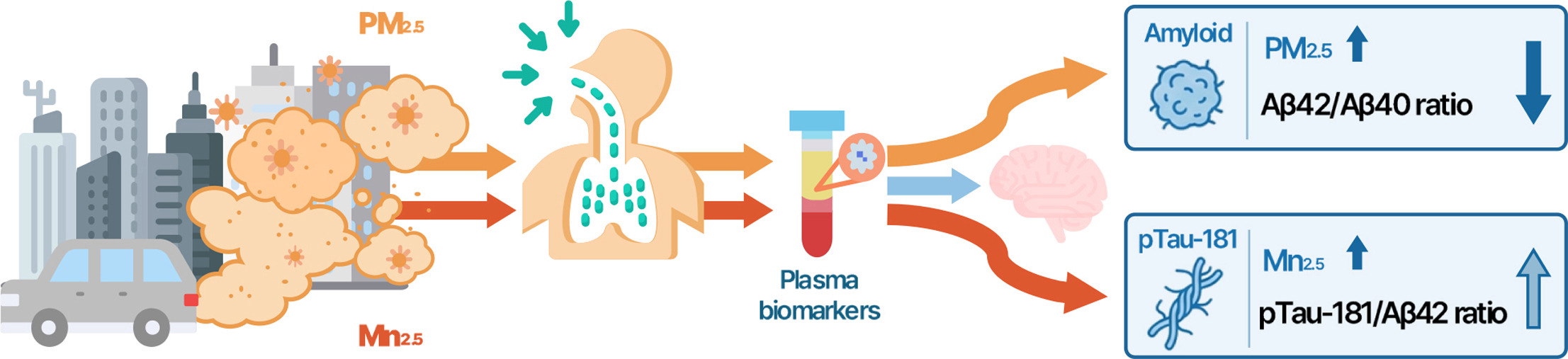
In an observational study of 340 cognitively unimpaired adults, researchers evaluated exposure to airborne particles and measured blood markers of Alzheimer's disease. They assessed particles with diameters up to 2.5 and 10 micrometres, alongside their manganese content and plasma levels of amyloid and phosphorylated tau proteins. Higher exposure to particles up to 2.5 micrometres was linked to a lower ratio of amyloid beta 42 to 40 in blood. Higher manganese within these fine particles was associated with higher levels of phosphorylated tau-181. Neither particles up to 10 micrometres nor their manganese content showed significant links with any measured biomarker. The link between fine particles and a higher tau-to-amyloid ratio appeared stronger in carriers of the APOE-ε4 gene variant.
Why it matters
Amyloid beta and phosphorylated tau proteins are key features of Alzheimer's disease, a condition associated with aging. These findings bear on how specific air pollutants may relate differently to early amyloid and tau changes in cognitively unimpaired adults.
Caveats
Because the study was observational, it cannot determine whether air pollution caused the differences in blood biomarkers. The analysis was also limited to 340 participants.
The paper
Show 6 more authors
Young Noh, Sang-Baek Koh, Jung Il Lee, Ho Hyun Kim, Sun-Young Kim, Changsoo Kim,Yonsei University College of Medicine
Environmental Pollution · 7 Oct 2026