Sweet-tooth preferences were linked to higher dementia risk
The sweet-tooth group had a 79% higher dementia risk than the group labelled health-aligned in a prospective cohort study.
GeroScience
People who completed a food-preferences questionnaire were studied in a prospective cohort study, which followed them for new cases of dementia. Researchers grouped preferences into three profiles: “health-aligned”, “broad-preference” and “sweet-tooth”. They assessed links with dementia, biological aging and genetic susceptibility.
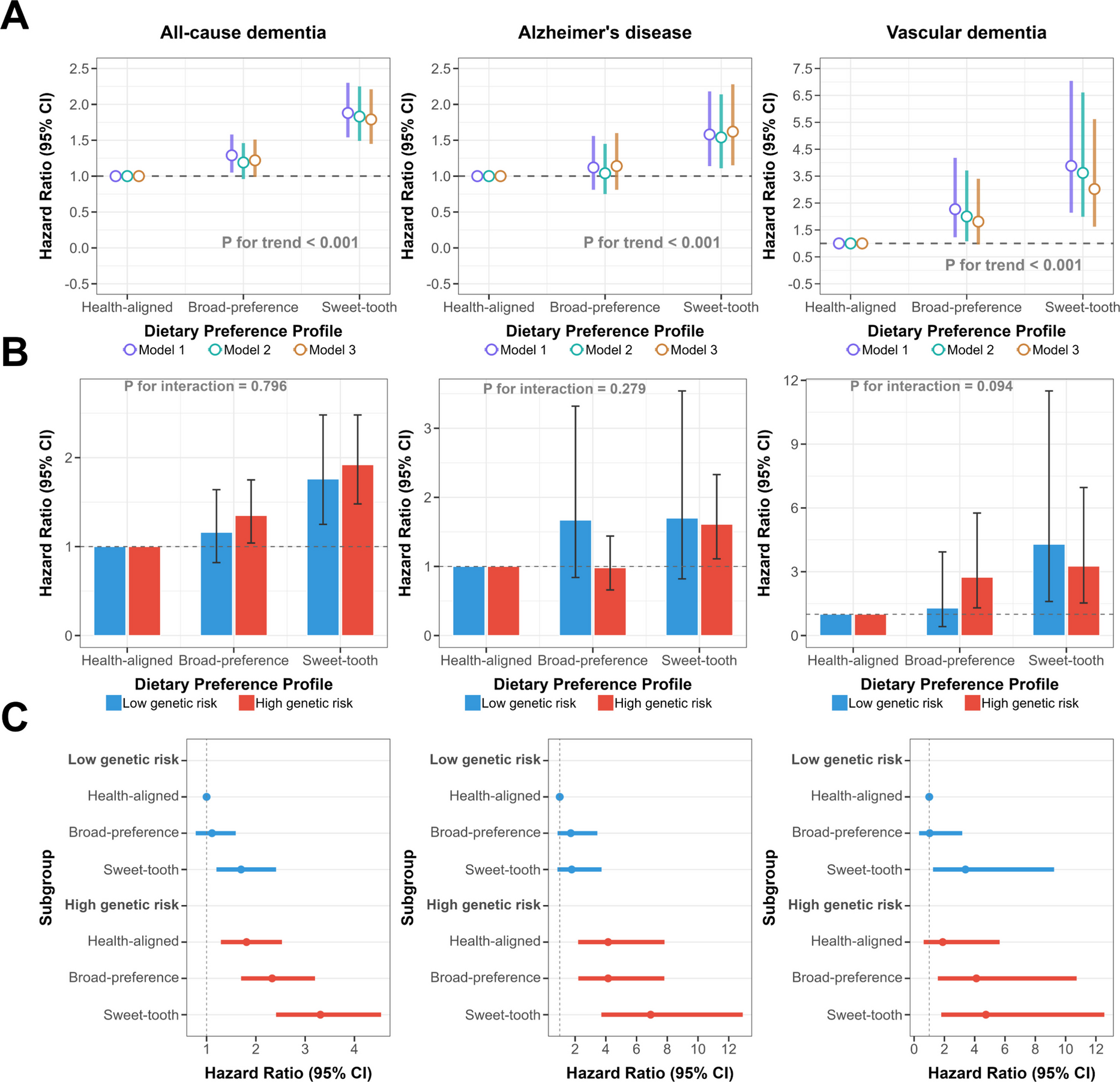
Compared with the health-aligned group, the sweet-tooth group had a 79% higher risk of dementia. The profile was also associated with faster biological aging on two measures and shorter telomeres, the protective ends of chromosomes, in white blood cells. The dementia association was particularly strong among people with high genetic susceptibility. Exploratory analyses suggested that biological aging markers statistically accounted for 2.28–4.82% of the association between sweet-tooth preferences and dementia.
Why it matters
Dementia is an age-related disease. The findings support investigating dietary interventions for prevention, particularly in people with high genetic susceptibility.
Caveats
This observational study cannot show that sweet-tooth preferences caused dementia or faster biological aging. The questionnaire assessed food preferences, which do not necessarily reflect what people ate.
The paper
Dietary preference, biological aging, and incident dementia: a prospective cohort study