High serum vitamin B12 is linked to modest cancer risk
Cancer incidence rose modestly above baseline with adjusted hazard ratios of 1.05 to 1.08, while mortality followed a J-shaped pattern across serum vitamin B12 strata.
The Journal of Nutrition
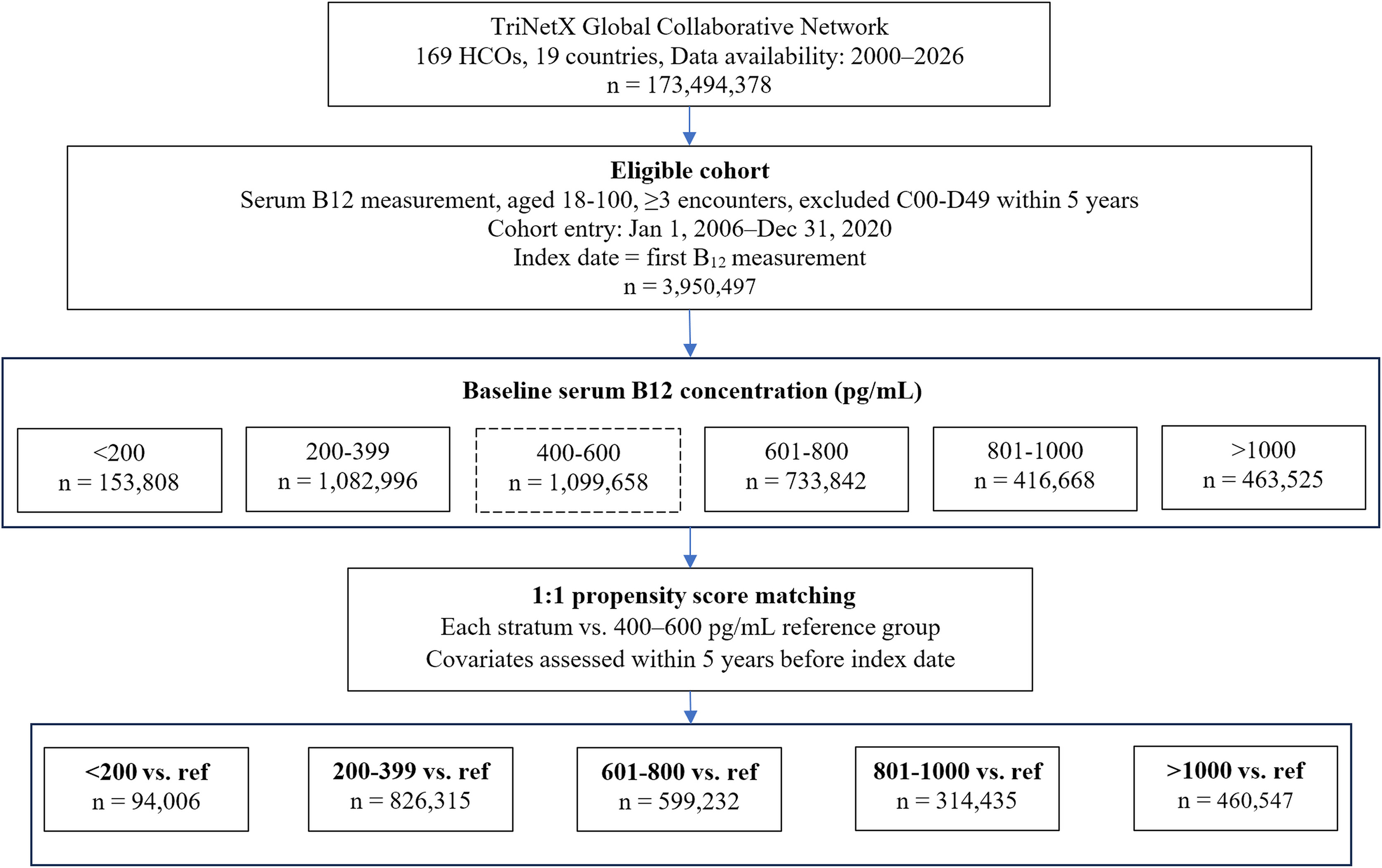
In a retrospective study of 3,950,497 adults across 19 countries, researchers evaluated how baseline serum vitamin B12 concentrations relate to cancer and all-cause mortality over 10 years. Participants were categorized into six strata, using 400 to 600 pg/mL as the reference.
Overall cancer incidence increased modestly above the reference level, with adjusted hazard ratios ranging from 1.05 to 1.08, but showed no association in the deficiency range. When researchers excluded the first two years of follow-up, the cancer link above 1,000 pg/mL attenuated from an adjusted hazard ratio of 1.07 to 1.02. All-cause mortality followed a J-shaped pattern with elevations at both extremes. Mortality risk in the deficiency range of under 200 pg/mL attenuated the least, moving from an adjusted hazard ratio of 1.26 at one year to 1.18 at 10 years.
Why it matters
Understanding how circulating micronutrients correlate with late-life health outcomes can help clarify whether biomarker extremes reflect underlying disease processes or biological deficits in aging populations.
Caveats
The retrospective, observational electronic health record design cannot establish causality, and the attenuation of the cancer association after two years suggests reverse causation likely influenced the initial risk elevation at high concentrations.
The paper
Tainan Municipal Hospital · Asia University
The Journal of Nutrition · 29 Sep 2026