Diet-linked blood score tied to lower osteoarthritis risk
Participants in the highest versus lowest third of the blood score had an osteoarthritis hazard ratio of 0.77, a relative measure of risk.
Limit: Effects of changing diet or blood metabolites on osteoarthritis risk were not measured
Edited by Boris Djordjevic · AgingResearch.News
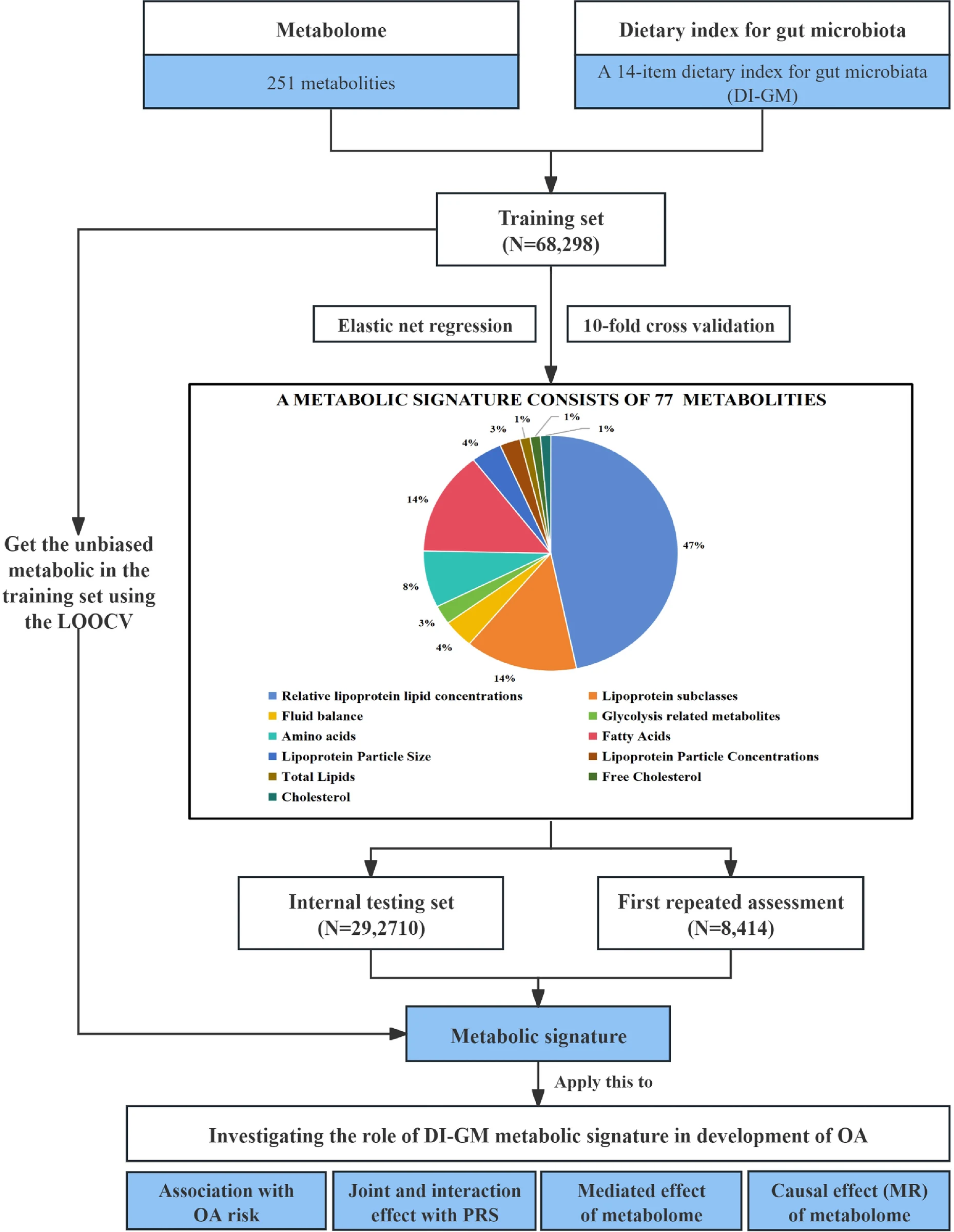
Researchers analyzed 97,569 UK Biobank participants in an observational cohort study. They built a score from blood metabolites, small molecules involved in the body’s chemical reactions. The score reflected a dietary index for gut microbiota, the microbes living in the gut.
Over a median 11.6 years, researchers recorded 12,860 new cases of osteoarthritis, a joint disease, and 4,392 cases of knee osteoarthritis. Higher dietary index scores were associated with lower risks of both outcomes. The blood score showed stronger associations: the highest versus lowest third had hazard ratios of 0.77 for osteoarthritis overall and 0.66 for knee osteoarthritis. Favorable metabolic profiles were associated with lower risk even among participants with high genetic susceptibility. Additional analyses suggested a potential role for fat-related metabolism in the diet–osteoarthritis link.
Why it matters
Osteoarthritis is an age-related joint disease. The study addressed whether diet-related metabolic patterns might help distinguish risk even among people with high inherited susceptibility.
Caveats
The observational cohort study could not establish that changing diet or blood metabolites would reduce osteoarthritis risk. The abstract did not specify participants’ ages or exclusion criteria.
- Dietary index for gut microbiota
- Machine learning
- Lipid and ceramide metabolism
- Osteoarthritis
- Knee osteoarthritis
- Humans
The paper
West China School of Public Health and West China Fourth Hospital
The Journal of Nutrition, Oct 26, 2026


