Air pollution linked to higher fracture rates in Norway
Forearm fracture rates were 1.22 times as high in men and 1.24 times in women in the highest versus lowest thirds of fine-particle pollution.
127,799 participants
Limit: The reported risk ratios weakened after adjustment for annual temperature and geography
Edited by Boris Djordjevic · AgingResearch.News
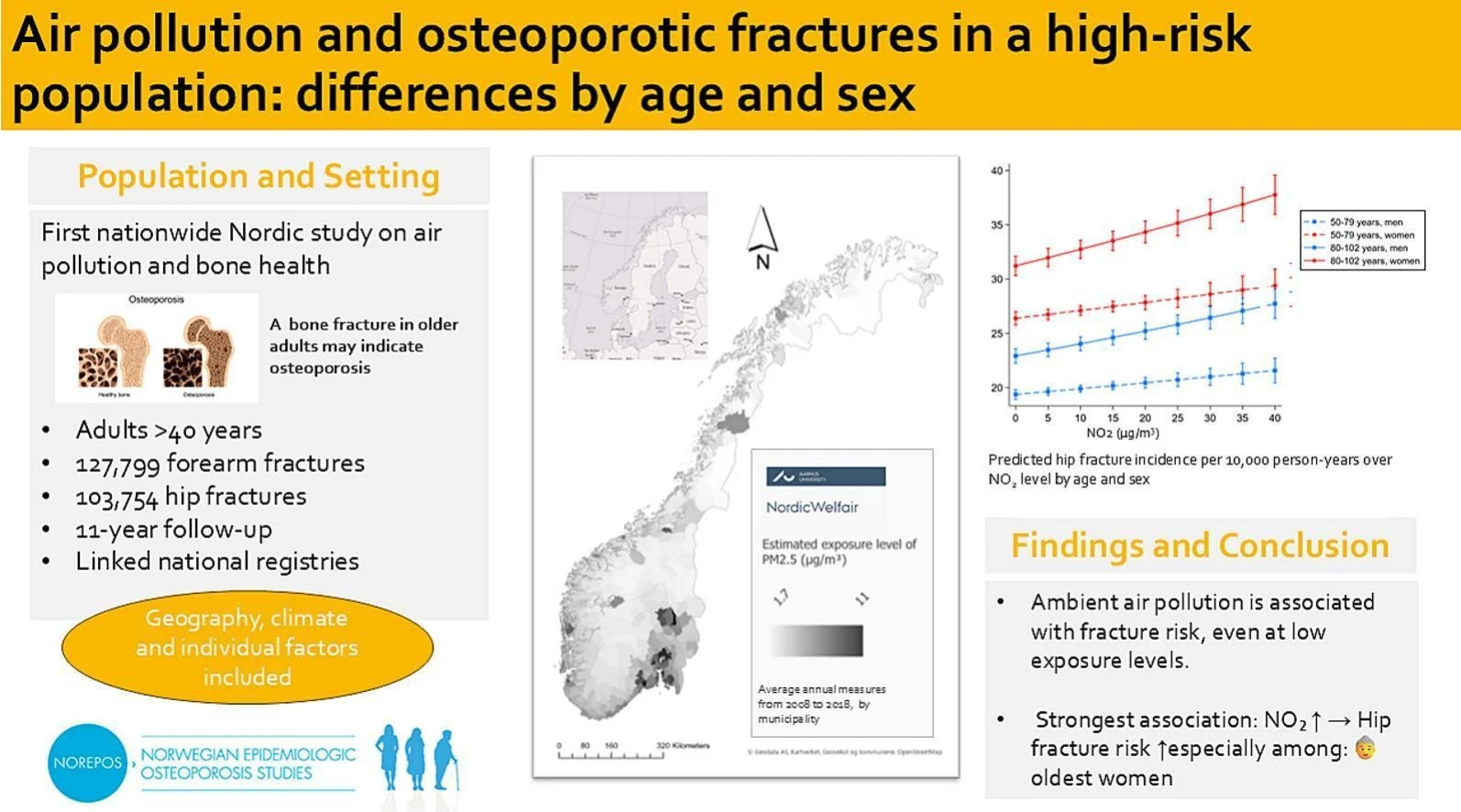
In Norway, an observational study examined forearm fractures in people aged 40 and older and hip fractures in people aged 50 and older. Researchers linked records of 127,799 forearm fractures and 103,754 hip fractures to population data from 2008–2018. They compared fracture rates with modeled annual levels of fine-particle pollution and nitrogen dioxide, an air-polluting gas.
The forearm comparisons accounted for age and year. Further adjustment for annual temperature and geographic factors partly weakened those associations. Links involving nitrogen dioxide and hip fractures were similar but weaker. The most consistent finding was a stronger association among people aged 80 and older, particularly between nitrogen dioxide and hip fractures. The researchers reported associations even at low pollution levels.
Why it matters
The age comparisons address whether the link between air quality and bone fractures differs in later life.
Caveats
This observational study could not establish that pollution caused fractures. It covered Norway, with forearm fractures studied from age 40 and hip fractures from age 50, not younger people.

