Air pollution linked to irregular heartbeat risk in US adults
Exposure to 13.5 parts per billion more nitrogen dioxide was linked to a 29% higher relative risk of atrial fibrillation, an irregular heartbeat.
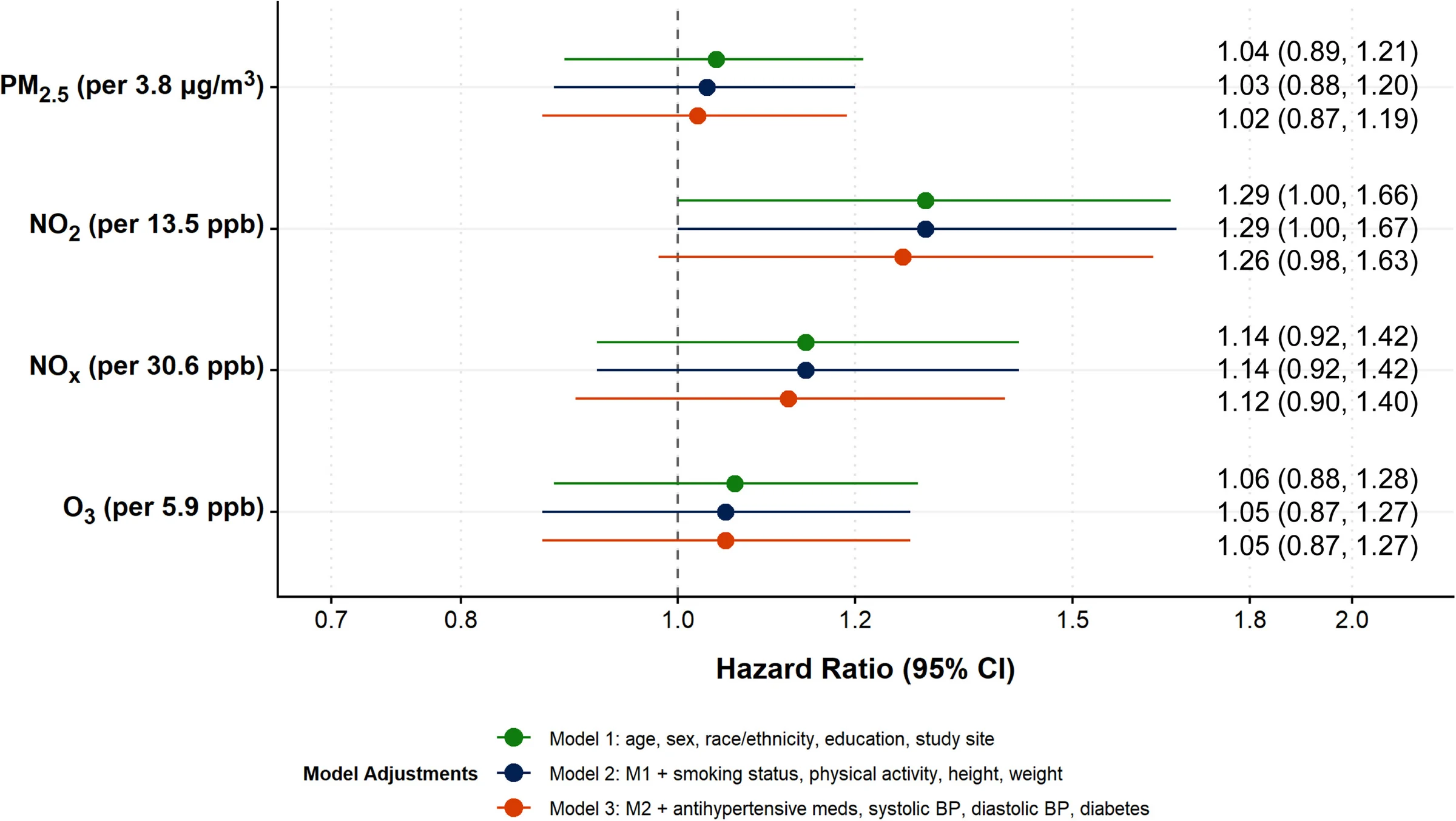
The prospective observational study followed 6,618 adults from six US metropolitan areas, with a mean age of 62; 53% were women. Researchers modelled pollution concentrations at participants’ homes using monitoring data from 2000 to 2018. They updated estimates of average exposure over the preceding two years every 30 days.
Over a median follow-up of 16.5 years, researchers identified 1,055 new cases of atrial fibrillation. The main analysis accounted for demographics and health behaviours. It linked higher nitrogen dioxide exposure to higher risk, although the range of likely values included no difference in risk. The three other pollutants showed weaker associations in the same direction.
Why it matters
For adults followed into later life, the findings bear on pollution policies aimed at reducing the burden of atrial fibrillation. The authors highlighted that median nitrogen dioxide exposure was 17.3 parts per billion, below the US annual standard of 53 parts per billion.
Caveats
This observational study cannot establish cause and effect, and researchers estimated pollution at participants’ homes rather than measuring personal exposure. The findings concern adults from six US metropolitan areas.
The paper
University of Minnesota School of Public Health
Heart Rhythm, 16 Oct 2026


