Targeted RNA delivery alleviates bone loss in mice
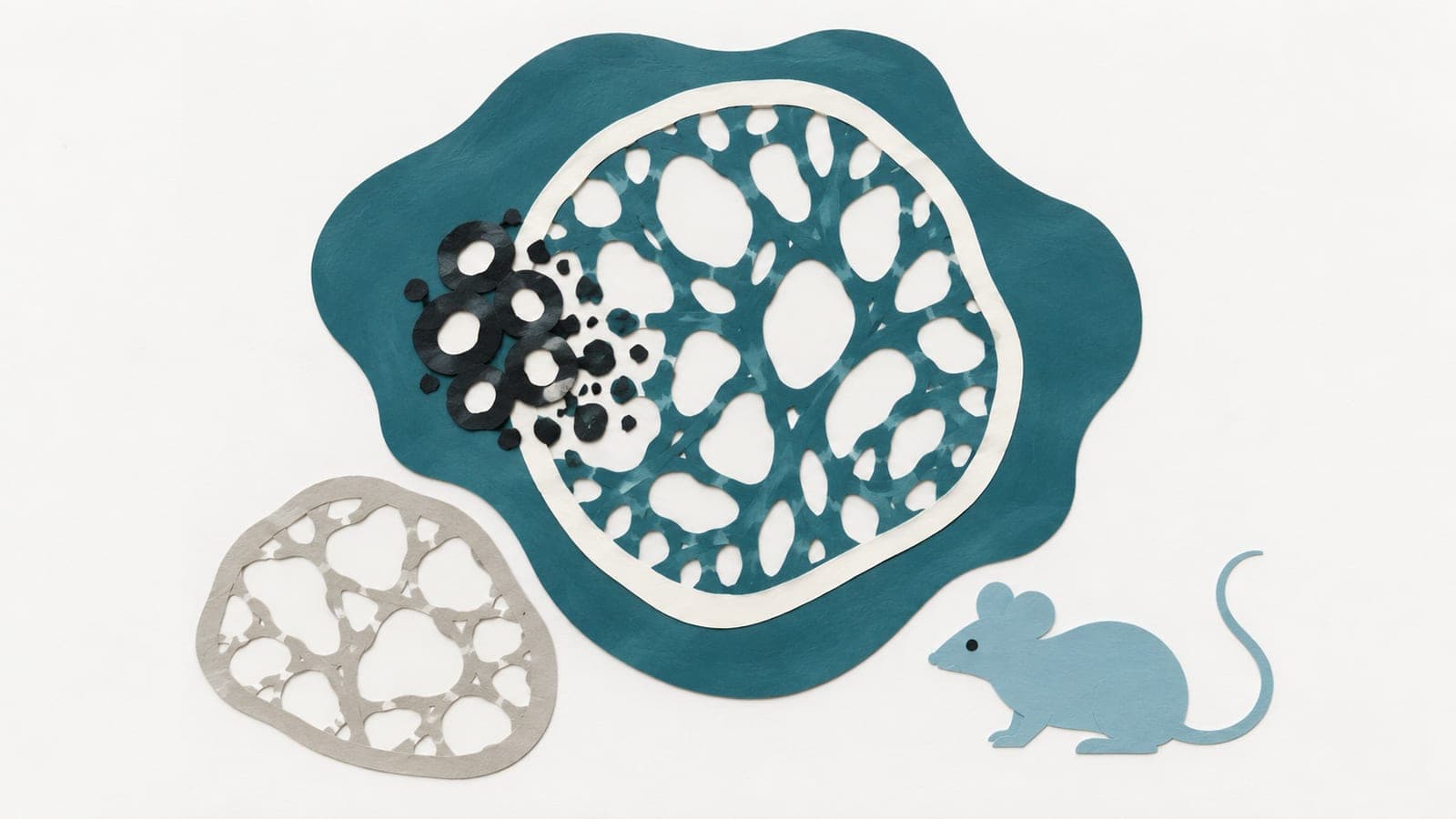
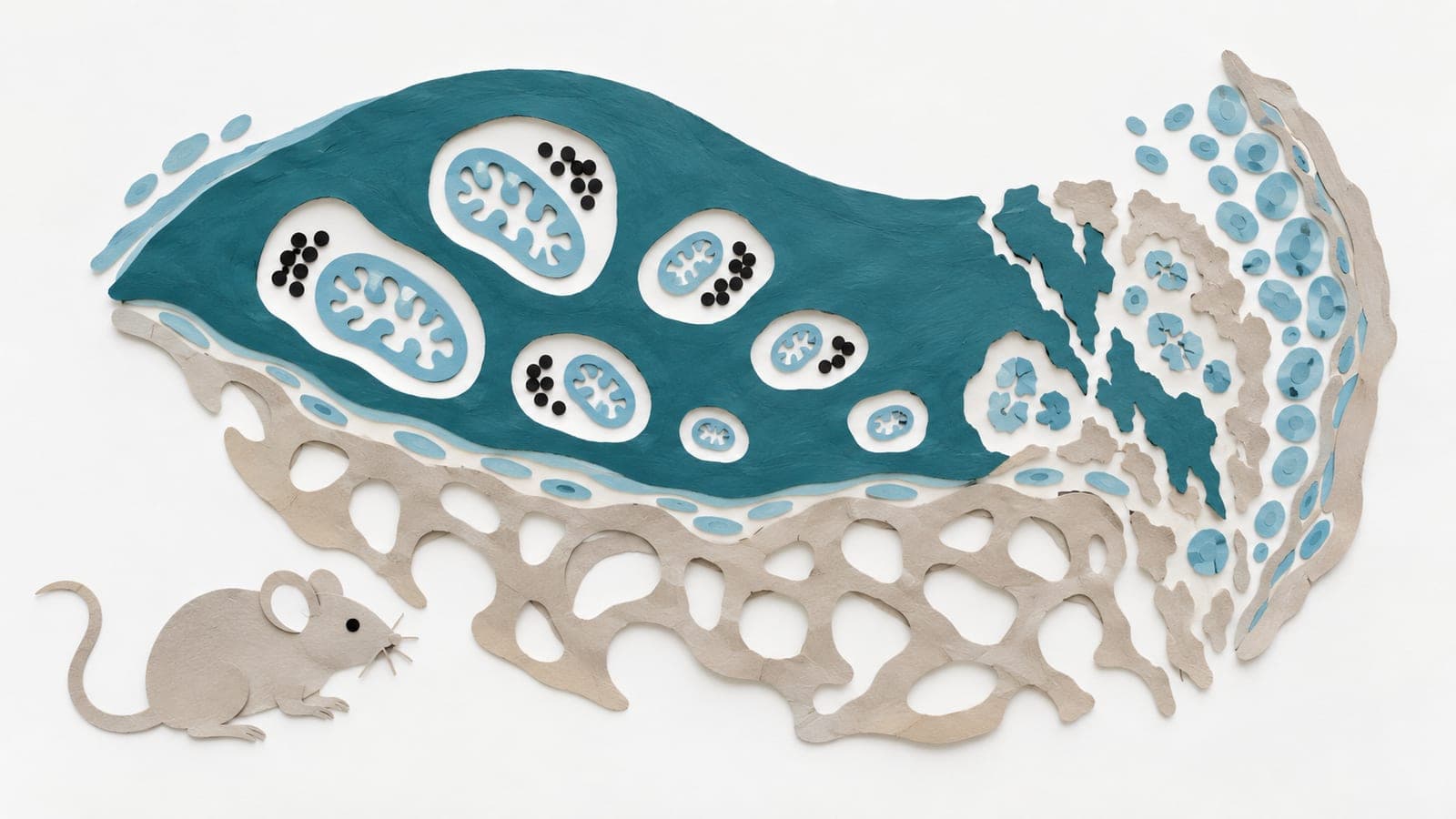
In a mouse model of osteoporosis caused by ovary removal, bone-targeted engineered vesicles preserved bone structure and reduced bone-breakdown activity without causing systemic toxicity.
Limit: The abstract provides no long-term safety data
Edited by Boris Djordjevic · AgingResearch.News
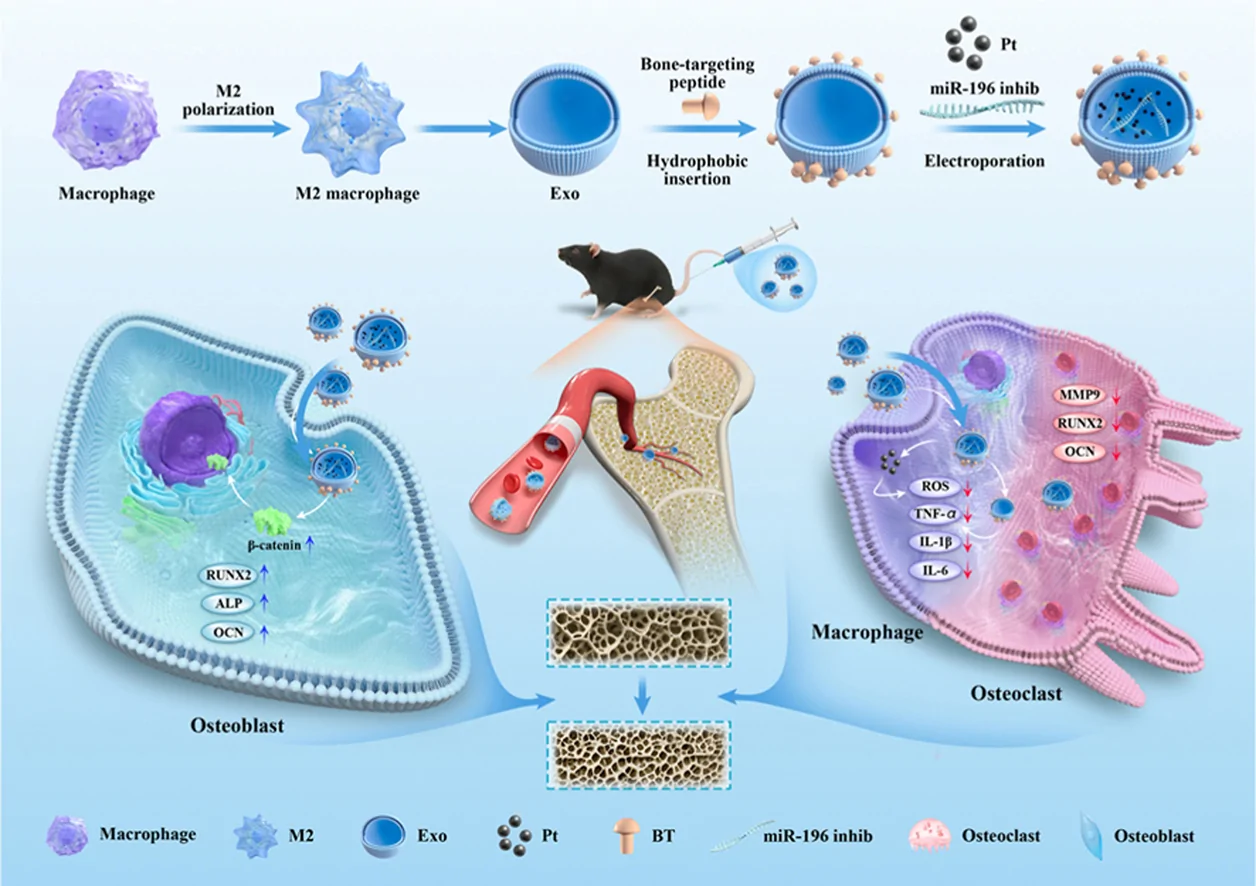
In an experiment in mice with osteoporosis induced by ovary removal and in cells grown in the lab, researchers tested a bone-targeted delivery platform. They engineered exosomes, tiny fluid-filled bubbles released by M2 macrophages, a type of immune cell. The team loaded the bubbles with platinum nanoparticles to scavenge reactive oxygen species, damaging oxygen molecules that cause oxidative stress, and an inhibitor of miR-196b, a regulatory RNA molecule. Together, the components reduced the expression of inflammatory cytokines, which are immune-signaling proteins.
In cells grown in the lab, the engineered bubbles enhanced the maturation and mineral buildup of bone-forming cells. They also suppressed the development of osteoclasts, the cells that break down bone. In the mice, delivering the bubbles directly to bone preserved trabecular bone, the spongy inner bone tissue. The treatment enhanced bone-forming activity, reduced osteoclast function, and alleviated bone loss without inducing systemic toxicity.
Why it matters
Osteoporosis is an age-related condition in which bone breakdown outpaces bone formation, often worsened by chronic inflammation and oxidative stress. Developing therapies that address both inflammatory stress and bone cell signaling may offer a strategy for restoring balance to skeletal remodeling in age-related bone disease.
Caveats
The findings come from cells grown in the lab and a mouse model of surgically induced bone loss, which may not replicate natural age-related osteoporosis in humans. The therapy has not been tested in people, and the abstract provides no sample sizes or long-term safety data.
The paper
Engineering exosomes-mediated RNA delivery regulates bone homeostasis and alleviates osteoporosis
Southwest Medical University
Materials Today Bio, Oct 17, 2026, Open access