Grip strength measure linked to heart and metabolic conditions
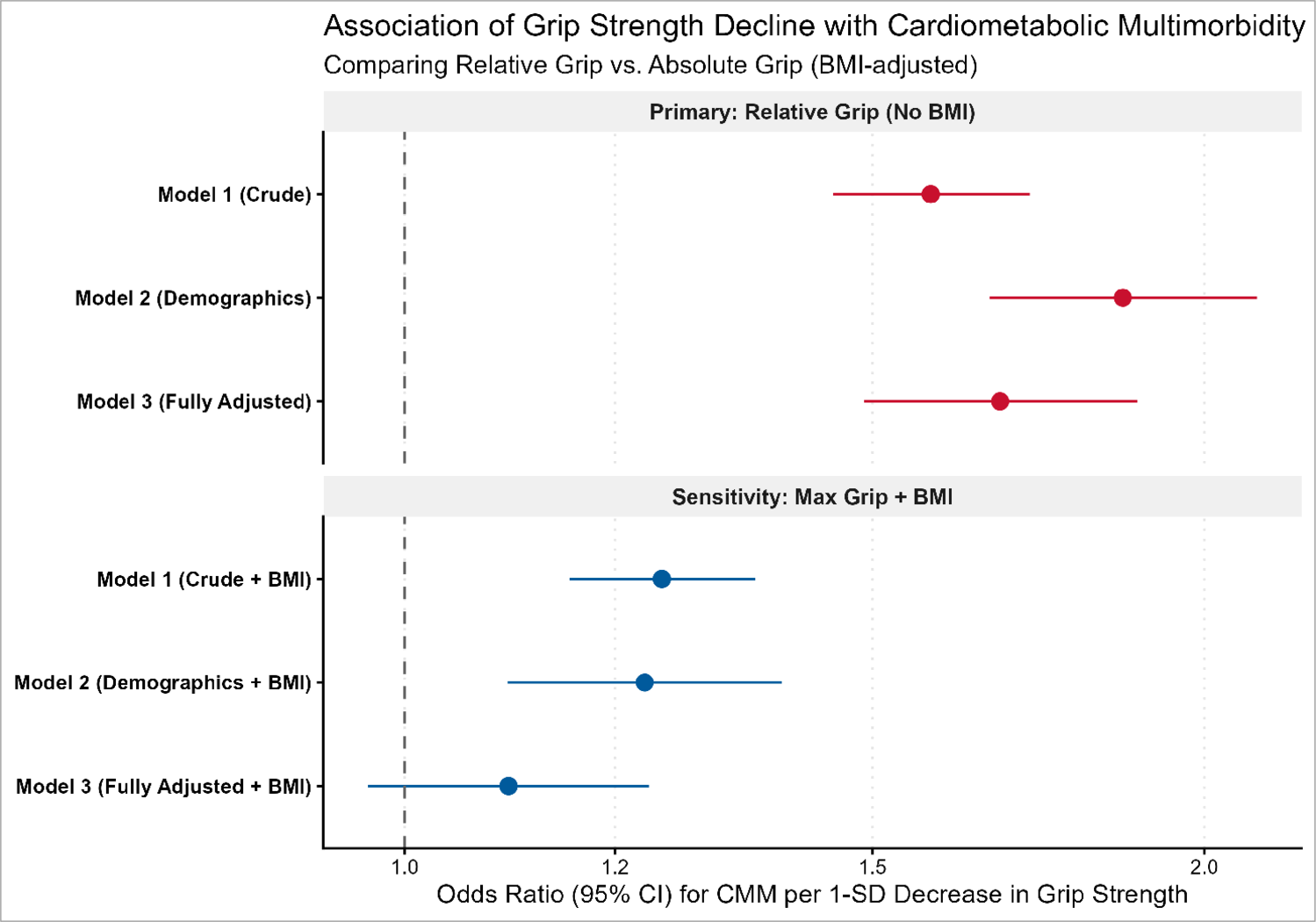
Relative grip strength lower by one standard deviation, a statistical measure of variation, was linked to 68% higher odds of multiple heart and metabolic conditions.
Limit: Heart and metabolic conditions could weaken grip, rather than weak grip preceding disease
Edited by Boris Djordjevic · AgingResearch.News
In 6,839 middle-aged and older Chinese adults, researchers conducted a cross-sectional study of grip strength and coexisting heart and metabolic conditions. They analyzed data from the 2015 China Health and Retirement Longitudinal Study.
Lower relative grip strength was associated with having multiple conditions and a higher number of concurrent conditions. Researchers found no clear association when they instead used absolute grip strength adjusted for body size. Statistical models estimated that an unfavorable blood-fat measure accounted for 20.0% of the relative-strength association. A measure of insulin resistance, when cells respond less well to insulin, accounted for 19.8%. An inflammation measure accounted for 1.8%. The authors suggested that relative grip strength may be useful for assessing heart and metabolic risk, but called for studies following people over time to evaluate its clinical usefulness.
Why it matters
Muscle decline is implicated in heart and metabolic diseases. Finding useful measures of muscle strength could help assess these risks in middle and older age.
Caveats
This cross-sectional analysis could not establish which came first or whether the proposed pathways were causal. The findings do not establish usefulness in younger adults or populations outside China.
- Inflammation
- Insulin/IGF-1 signaling
- Lipid and ceramide metabolism
- Absolute grip strength
- Insulin resistance
- Humans
The paper
Henan Kaifeng College of Science technology and Communication; Henan University
3 Biotech, Oct 23, 2026