Heart recordings add clues to cognitive impairment and dementia
At a second hospital, adding heart-recording information to age improved the score for separating future cases from controls to 0.825, versus 0.809 with age alone.
52,355 participants, case-control study, independent replication
Limit: The outcome was a prediction score, not improved screening in practice
Edited by Boris Djordjevic · AgingResearch.News
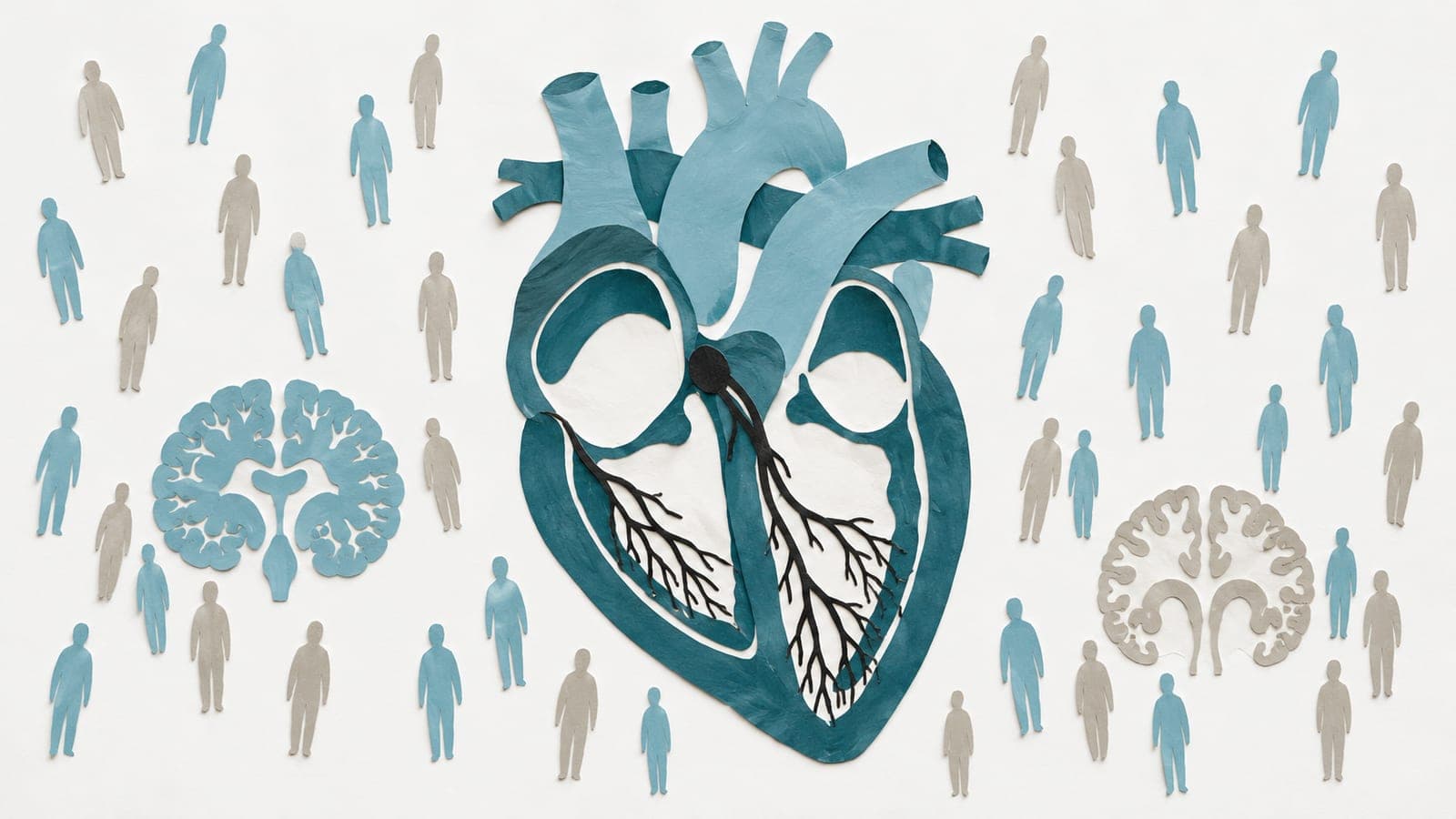
In a retrospective observational study, researchers analyzed routine heart recordings from 52,355 patients at Severance Hospital and 6,500 at Yongin Severance Hospital, both in Korea. They used only electrocardiograms, which record the heart’s electrical activity, interpreted as normal sinus rhythm—the heart’s usual rhythm. A computer model used features extracted from these recordings to distinguish patients diagnosed with cognitive impairment—problems with memory or thinking—or dementia within the following 10 years from matched controls.
At the second hospital, combining age with information from the recordings separated the groups better than age alone. After researchers removed information predictable from age, the extracted features still modestly distinguished the groups at both hospitals. Differences in some electrical patterns also widened as diagnosis approached.
Why it matters
Dementia creates a need for low-cost ways to identify people for further cognitive assessment. The findings suggest a possible role for routine heart recordings as a screening aid, not a stand-alone diagnostic test.
Caveats
The retrospective observational design cannot establish the mechanism behind the associations or whether using the model improves screening in practice. The study covered two Korean hospitals and only recordings interpreted as normal sinus rhythm.
- Foundation models
- Cognitive impairment
- Dementia
- Accelerated junctional rhythm
- Acute myocardial infarction
- Humans
The paper
Yonsei University College of Medicine
Journal of Medical Internet Research, Oct 23, 2026