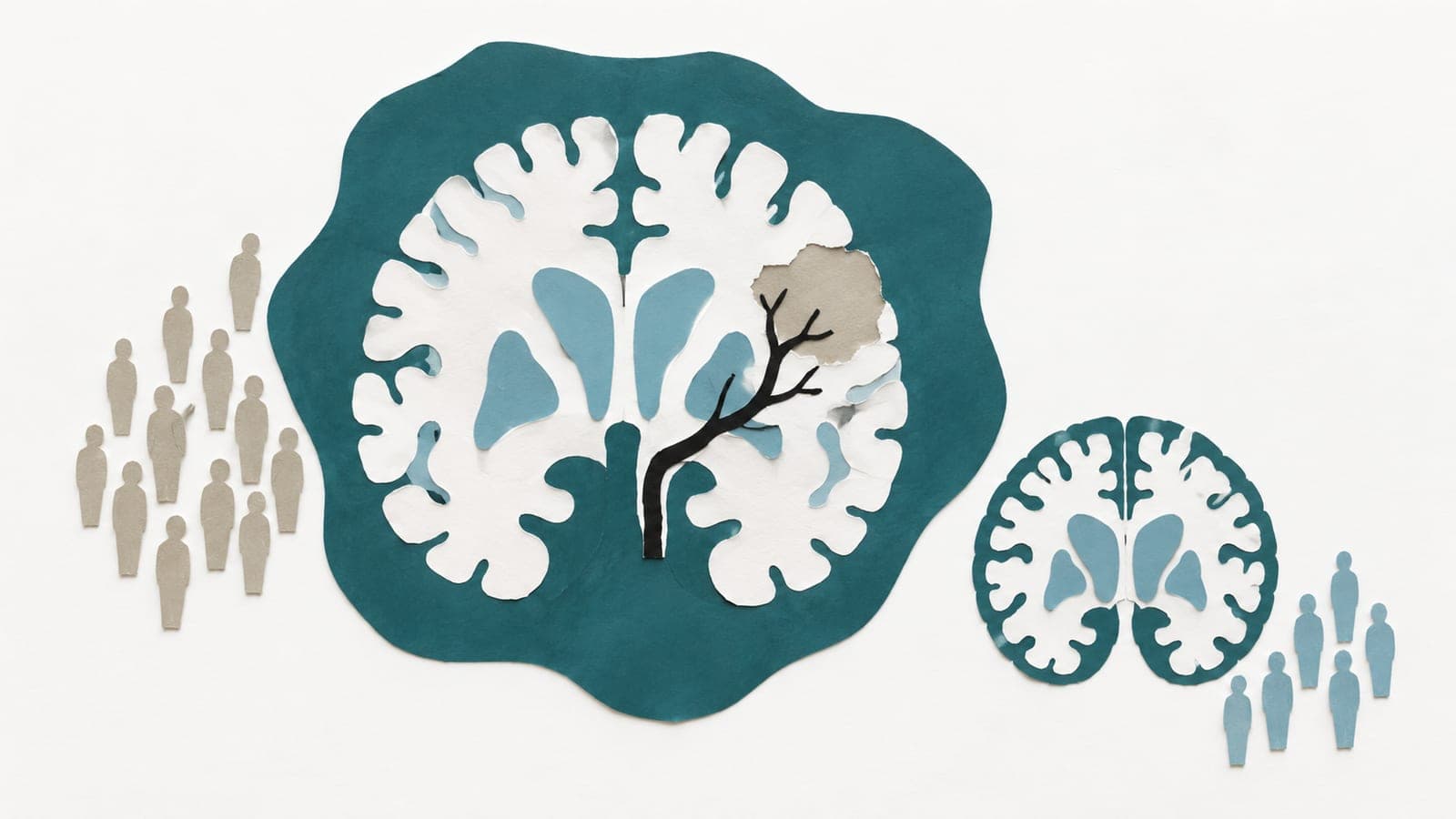
Cardiac rehab after stroke linked to lower dementia risk
Over five years, exercise-based cardiac rehabilitation was linked to a lower rate of new dementia diagnoses than no documented cardiac rehabilitation (hazard ratio 0.70).
Edited by Boris Djordjevic · AgingResearch.News
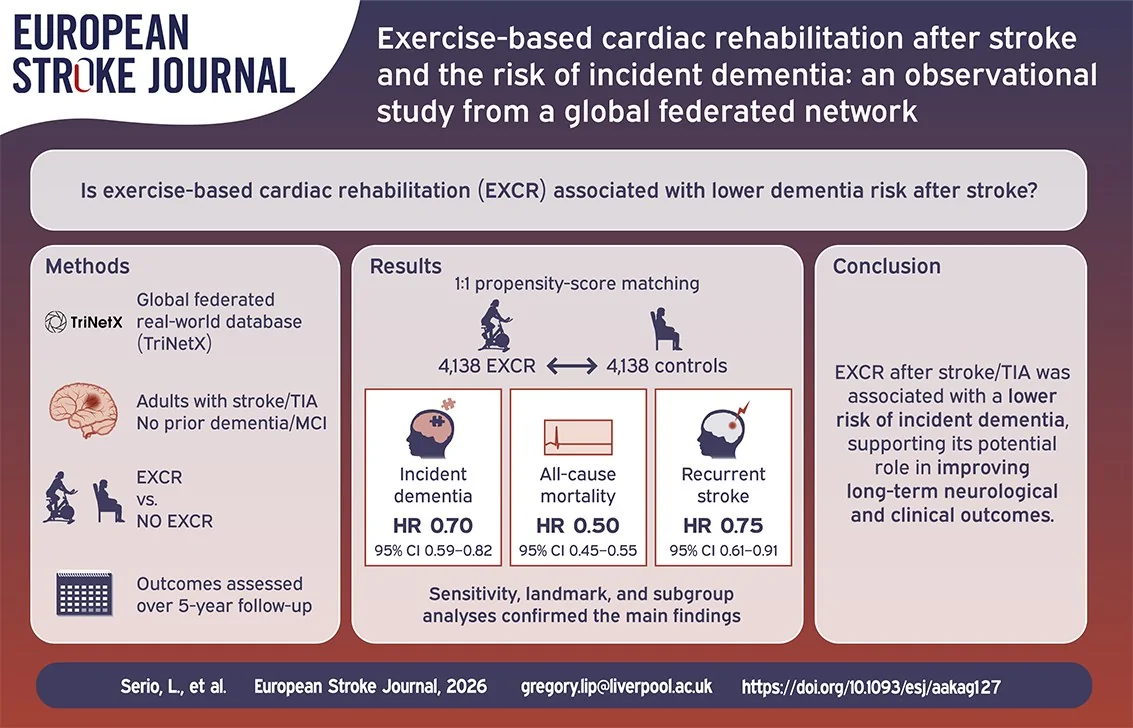
Researchers used health records in an observational study of adults who had an ischemic stroke, caused by blocked blood flow, or a transient ischemic attack, a brief episode of stroke-like symptoms. They identified 4,226 people who began exercise-based cardiac rehabilitation within six months, averaging 64.7 years old and 60.8% male, and 1,889,796 without documented cardiac rehabilitation, averaging 66.3 years old and 48.2% male. They matched 4,138 people in each group on recorded health and demographic characteristics.
Over five years, rehabilitation was associated with a lower rate of new dementia diagnoses (hazard ratio 0.70, a comparison of event rates over time). It was also linked to lower rates of death and recurrent stroke, but a higher rate of rehospitalization (hazard ratio 1.21). Heart attack rates did not differ significantly. The dementia association persisted in analyses that changed follow-up timing or included all stroke-severity categories.
Why it matters
Dementia is an age-related condition and a common, disabling complication after stroke. The study addresses whether rehabilitation may offer benefits beyond heart health and physical recovery.
Caveats
This observational study cannot establish cause and effect, and rehabilitation and dementia records relied on diagnostic and service codes. The main analysis excluded people with recorded severe-stroke scores; people without cardiac rehabilitation codes may have received other post-stroke rehabilitation.
The paper
University of Liverpool; Medical University of Białystok
European Stroke Journal, Oct 5, 2026, Open access