Irregular blood pressure patterns linked to dementia
Higher irregularity measures were linked to greater odds of dementia, with odds ratios ranging from 1.32 to 2.36 in 4,854 people.
Limit: Dementia may precede irregular blood pressure patterns rather than result from them
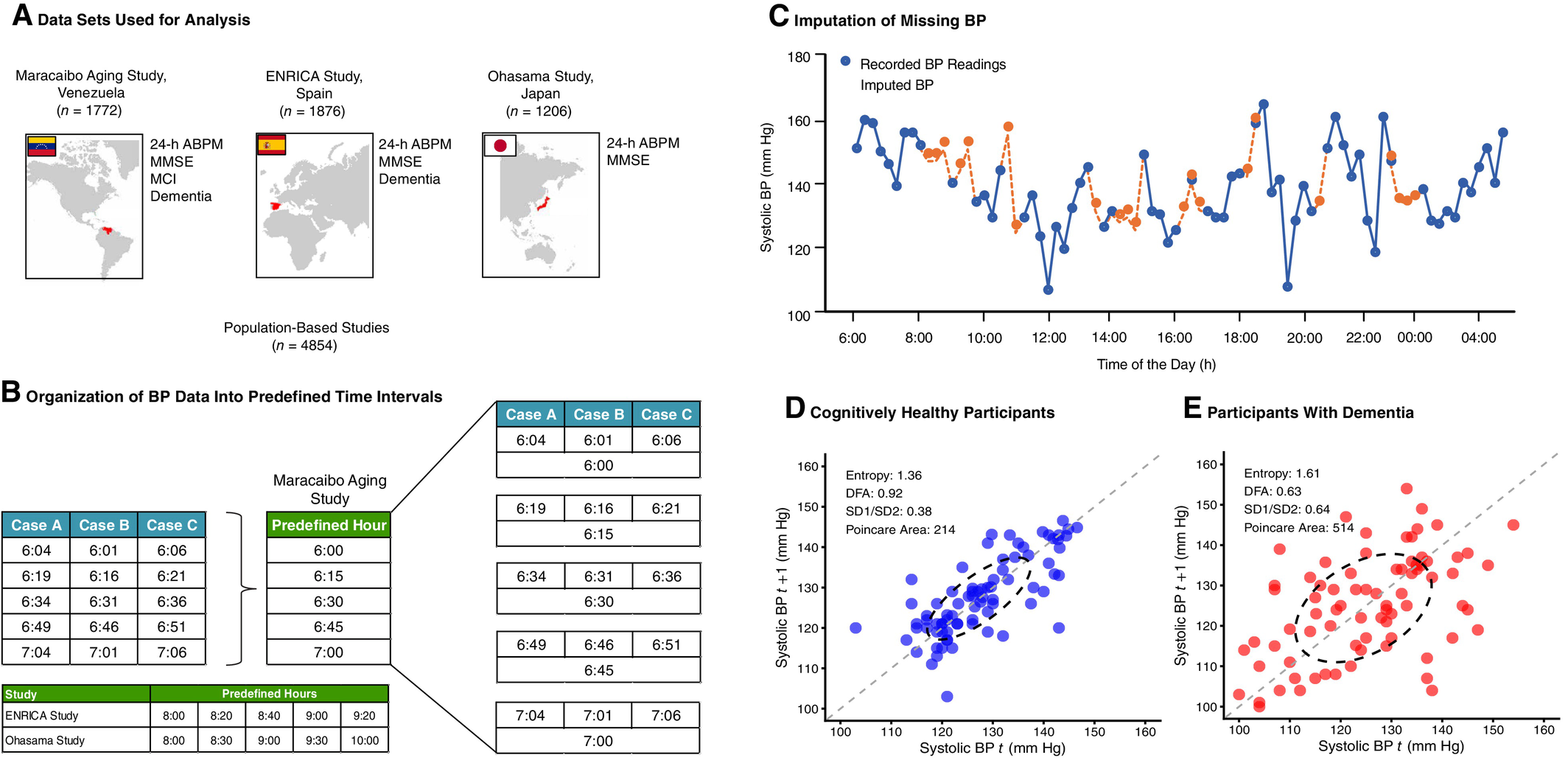
Researchers conducted a cross-sectional analysis of 4,854 people from three population-based studies. Their mean age was 67.6 years, and 61.0% were women. The researchers analysed 24-hour blood pressure recordings for patterns of irregularity and predictability.
Higher measures of irregularity in systolic blood pressure—the pressure when the heart contracts—were associated with lower scores on a test of thinking and memory. They were also linked to higher odds of existing mild cognitive impairment and dementia. An odds ratio above 1 indicates higher odds of having a condition. The study included 212 participants with mild cognitive impairment and 111 with dementia.
Why it matters
Dementia is an age-related disease. The authors suggested that irregular daily blood pressure patterns may reflect disrupted blood pressure regulation relevant to dementia.
Caveats
The cross-sectional design cannot show whether irregular blood pressure patterns preceded cognitive impairment or dementia, or whether they caused either condition.
- Dementia
- Mild cognitive impairment
- Cognitive impairment
- 24-hour blood pressure detrended fluctuation analysis
- 24-hour systolic blood pressure Poincaré measures
- Humans
The paper
Nonlinear 24-Hour Blood Pressure Dynamics in Cognitive Impairment and Dementia
School of Medicine University of Texas Rio Grande Valley (UTRGV) Harlingen TX USA
Journal of the American Heart Association, 16 Oct 2026