High and low iron regulator levels linked to risks in kidney disease
The highest third of iron-regulator levels had a hazard ratio of 1.19 for kidney outcomes versus the middle third in an observational study.
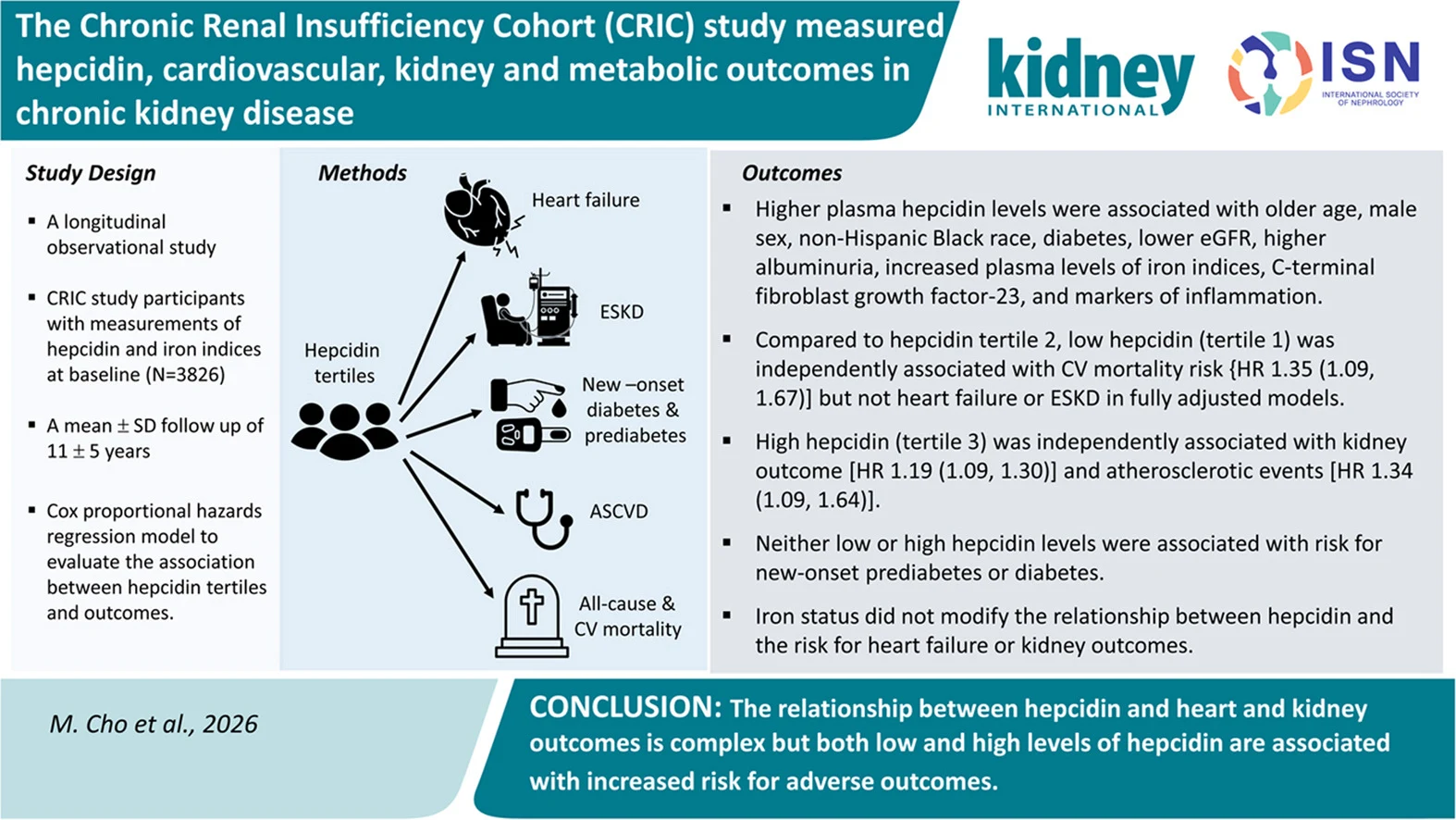
Limit: Hepcidin levels had no association with new heart failure or prediabetes/diabetes, also primary outcomes
Edited by Boris Djordjevic · AgingResearch.News
In an observational cohort study of 3,826 people with chronic kidney disease, researchers measured blood levels of hepcidin, a hormone that controls iron. They compared outcomes across three groups defined by hepcidin levels.
The highest third had a hazard ratio of 1.19 for kidney failure or a halving of estimated kidney filtration compared with the middle third. A hazard ratio measures relative risk over time. The highest third also had a hazard ratio of 1.34 for atherosclerotic events, which involve fatty buildup in arteries. The lowest third was linked to higher risks of death from any cause and cardiovascular causes. These associations remained after accounting for iron measures and inflammation. Researchers found no association with new heart failure, diabetes or prediabetes, a state of higher-than-normal blood sugar.
Why it matters
Kidney and cardiovascular health matter in aging. The results bear on whether iron regulation may help identify health risks in people with chronic kidney disease.
Caveats
This observational study cannot show that hepcidin caused the outcomes. All participants had chronic kidney disease, so the findings may not apply to people without it.
The paper
University of Utah
Kidney International, Oct 20, 2026