Artery calcium in young adults linked to long-term death risk
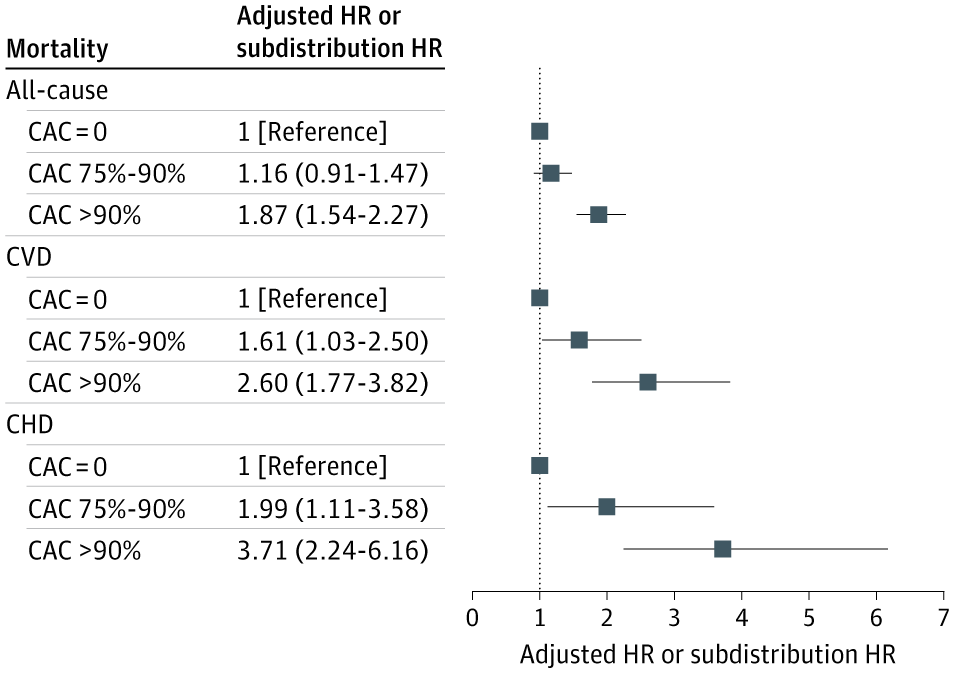
Modeled 30-year death risk was 12.9% in the high coronary calcium group, compared with 7.5% in those with calcium scores of zero.
Multicenter
Limit: Only adults referred for clinically indicated scans were included, limiting representativeness
Edited by Boris Djordjevic · AgingResearch.News
An observational cohort study included 12,847 adults aged 30 to 45 who had been referred for clinically indicated scans measuring calcium in the arteries supplying the heart. Their average age was 40.5, and 77.2% were men. Researchers followed them for a median of 22.6 years.
After accounting for age, sex and traditional cardiovascular risk factors, high calcium scores were associated with higher risks of death than scores of zero. Modeled risks over 30 years were 12.9% versus 7.5% for death from any cause. For death from heart and blood vessel disease, the figures were 4.5% versus 1.5%. For death from disease of the arteries supplying the heart, they were 3.0% versus 0.6%.
Why it matters
Early artery disease raises questions about when to intensify prevention to reduce cardiovascular deaths over a lifetime. The findings suggest that calcium scores may help guide those decisions in high-risk young adults.
Caveats
This observational study could not establish cause and effect, and the 30-year risks were partly modeled. Participants were referred for scans and were mostly men, so the findings may not apply to all young adults.
- Subclinical atherosclerosis
- Cardiovascular disease
- Coronary heart disease
- Coronary artery calcium score
- Humans
The paper
Johns Hopkins Ciccarone Center for the Prevention of Cardiovascular Disease
JAMA Cardiology, Oct 23, 2026


