Poor sleep is linked to complex coronary plaques in young adults
In 3,983 patients aged 40 or younger, functional ischemia rose from 9.6% in favorable sleepers to 31.9% in those with poor sleep.
Global Heart
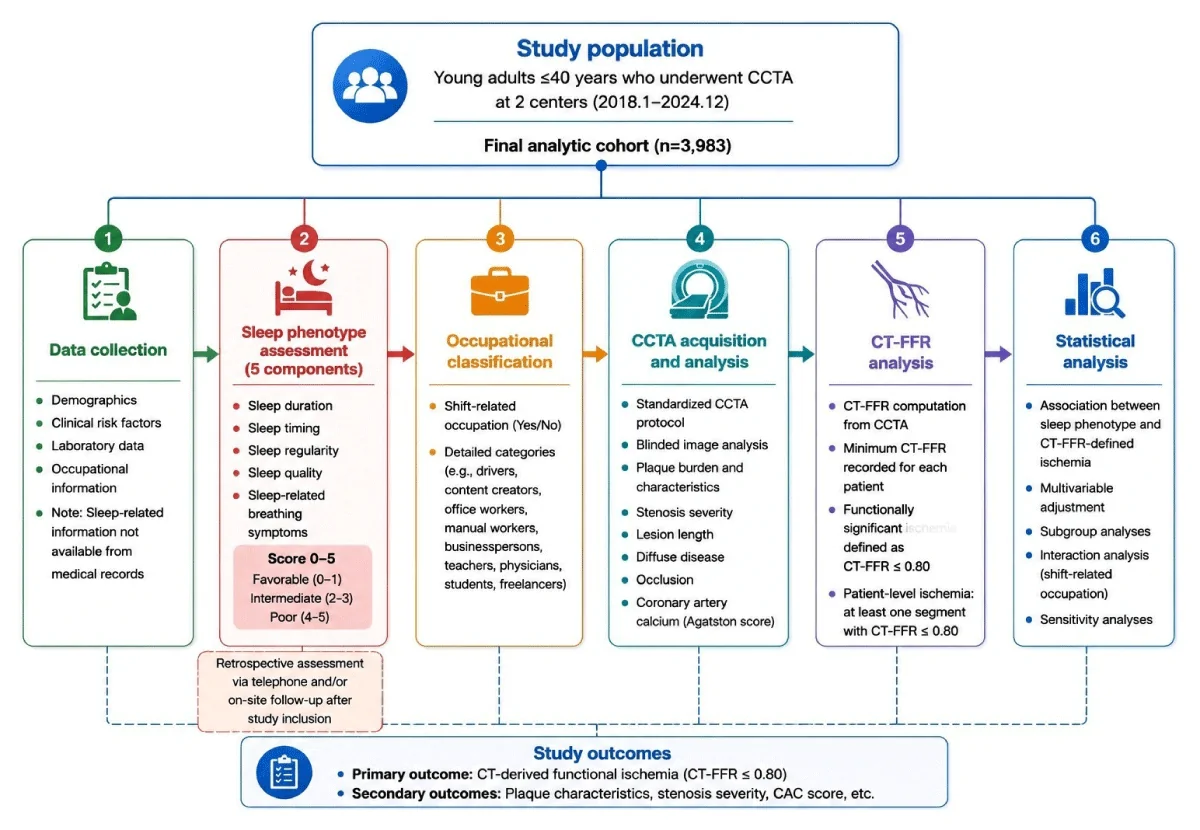
In a retrospective study of 3,983 young adults aged 40 or younger who underwent coronary CT angiography, researchers examined how sleep patterns and shift work relate to early coronary artery disease. Participants were evaluated using a multidimensional score covering sleep duration, timing, regularity, quality, and daytime symptoms. Patients with poorer sleep phenotypes showed more severe stenosis, smaller lumen areas, longer lesions, and higher rates of diffuse disease and occlusion. Each one-point increase in sleep phenotype score was linked to CT-derived functional ischemia with an adjusted odds ratio of 1.38. Shift-related work was also independently linked to functional ischemia with an adjusted odds ratio of 1.67, and it modified the relationship, which was stronger among shift workers.
Why it matters
Sleep disruption and irregular work schedules are recognized risk factors for premature cardiovascular disease, an early presentation of vascular aging. The findings suggest that assessing sleep habits and work hours may help identify young adults who could benefit from earlier cardiovascular risk evaluation.
Caveats
The study used a retrospective observational design with sleep characteristics assessed via self-reported interviews, which prevents establishing causality. In addition, the participants were clinical patients already undergoing imaging for suspected coronary artery disease rather than individuals from the general population.
- Sleep
- Shift-related occupation
- Myocardial ischemia
- Functional ischemia
- Coronary artery calcium score
- Humans
The paper
Xi'an Jiaotong University · First Affiliated Hospital of Xi'an Jiaotong University
Global Heart · 22 Sep 2026 · CC BY