Underweight linked to digestive cancer death risk in diabetes
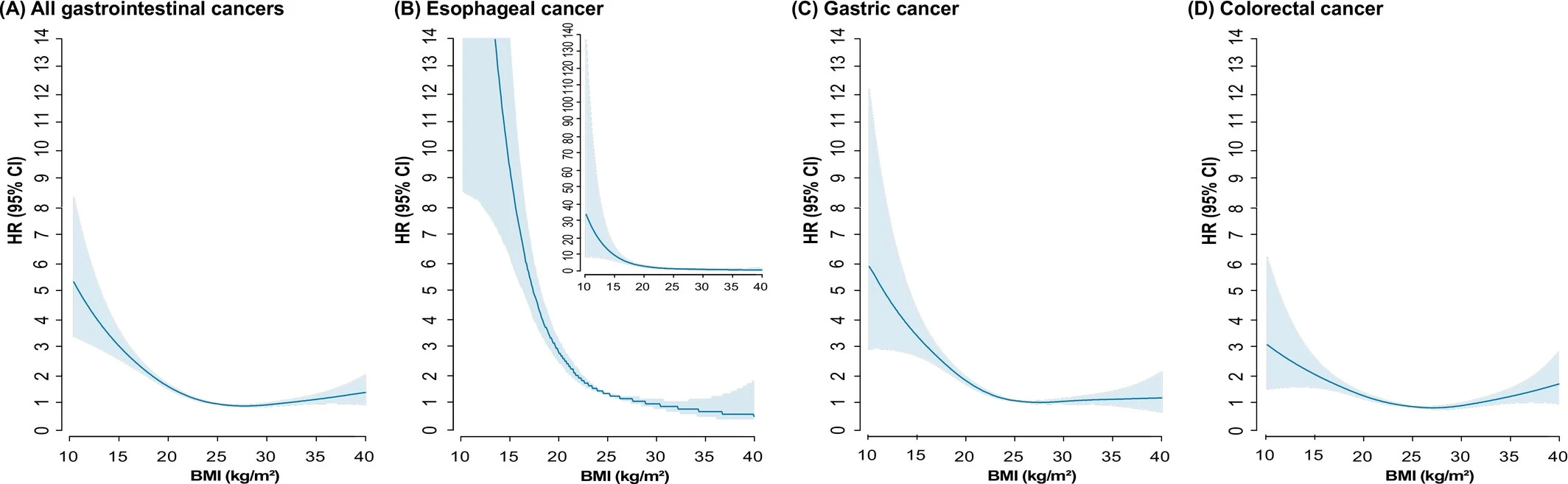
Adjusted hazard ratios for gastrointestinal cancer mortality were 2.54 for mild, 2.51 for moderate, and 2.96 for severe underweight compared with the reference group (25.0–29.9 kg/m²).
Limit: Cancer stage was unavailable, although it can influence both body weight and cancer mortality
Edited by Boris Djordjevic · AgingResearch.News
An observational cohort study followed 2,507,976 adults with type 2 diabetes in South Korea who underwent health screening in 2015–2016. Follow-up continued through 2022 and averaged 5.75 years. Researchers recorded 10,978 deaths from gastrointestinal cancers, which affect the digestive tract.
Researchers grouped participants by body mass index, a measure of weight relative to height. Mortality was lowest in class I obesity, defined as an index of 25.0–29.9 kilograms per square meter. Compared with this group, adjusted hazard ratios—a measure of relative risk over time—were 2.96 for severe underweight and 1.35 for the highest obesity category. All three underweight categories were associated with higher mortality than the highest obesity category. Underweight was not significantly associated with developing these cancers after adjustment.
Why it matters
For people aging with type 2 diabetes, the findings suggest that underweight deserves greater clinical attention when assessing digestive cancer mortality risk.
Caveats
The observational design cannot show that low weight caused these deaths. The findings concern adults with type 2 diabetes in South Korea and do not establish the same associations in people without diabetes.
From the paper
- Participants
A total of 2 507 976 participants were included in the final analysis.
Results, 3.1 Baseline Characteristics of Study Population by BMI Status
- Follow-up
During a mean follow-up period of 5.75 years, 10 978 participants died from gastrointestinal cancer (Table 2).
Results, 3.2 Mortality Risk From Gastrointestinal Cancers Across the Full Range of BMI Status
- Result
Underweight was consistently associated with increased mortality across all severity categories: mild underweight aHR 2.54 (95% CI 2.26–2.85), moderate underweight aHR 2.51 (95% CI 1.96–3.20) and severe underweight aHR 2.96 (95% CI 2.14–4.09), with the highest risk observed in severe underweight.
- Limitation
First, as an observational study, it is inherently limited in its ability to establish a causal relationship between BMI and gastrointestinal cancer mortality.
Quoted word for word from the full text on onlinelibrary.wiley.com.
The paper
Kangbuk Samsung Hospital
Journal of Cachexia, Sarcopenia and Muscle, Oct 2026, Open access