Childhood adversity is linked to frailty in later life
In a study of 10,643 adults aged 50 and older, each adverse childhood experience was linked to a 3% to 12% higher risk across four frailty patterns.
Archives of Gerontology and Geriatrics
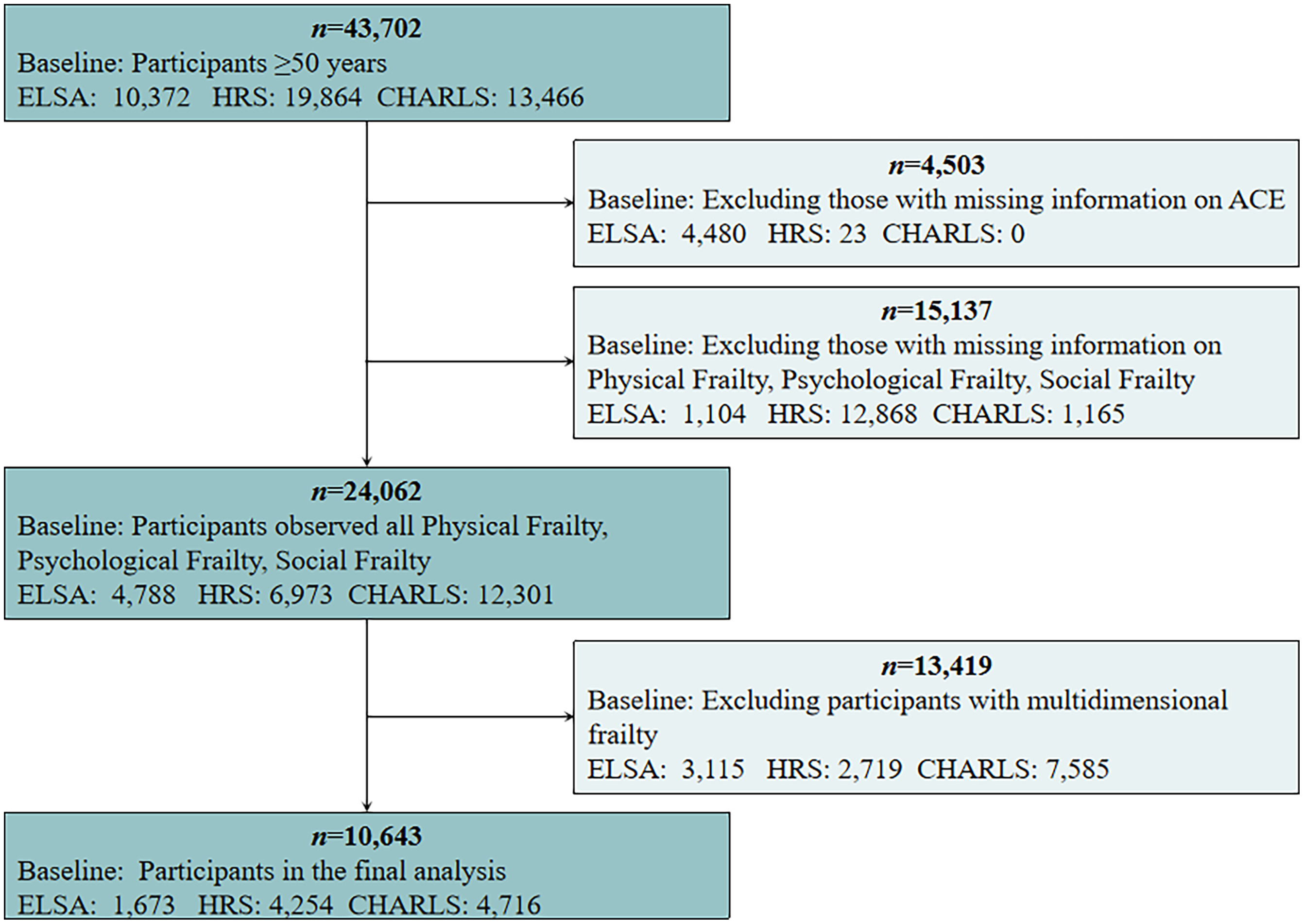
In an observational study, researchers analysed data from 10,643 adults aged 50 years and older in England, the United States, and China. All participants were initially free of multidimensional frailty, defined as frailty in at least two physical, psychological, or social domains. The researchers assessed eight domains of adverse childhood experiences. Overall, 61.9% of participants reported at least one adverse childhood experience, and 61.8% developed multidimensional frailty during follow-up. Experiencing childhood adversity was associated with higher risks of four incident frailty patterns, with hazard ratios ranging from 1.15 to 1.32. Cumulative exposure was linked to a 3% to 12% higher risk per additional adverse experience across all four patterns, as well as higher risks for most transitions toward multidimensional frailty.
Why it matters
The findings support a life-course approach to frailty prevention in aging populations. They suggest that multidimensional vulnerability in later life may connect to hardships experienced early in life.
Caveats
Because the study was observational, it cannot show that childhood adversity caused the later frailty transitions. In addition, the associations weakened after the researchers excluded participants who had frailty in any single domain at baseline.
The paper
Jilin University
Archives of Gerontology and Geriatrics · 1 Oct 2026