Moderate helping linked to slower aging measures in the US
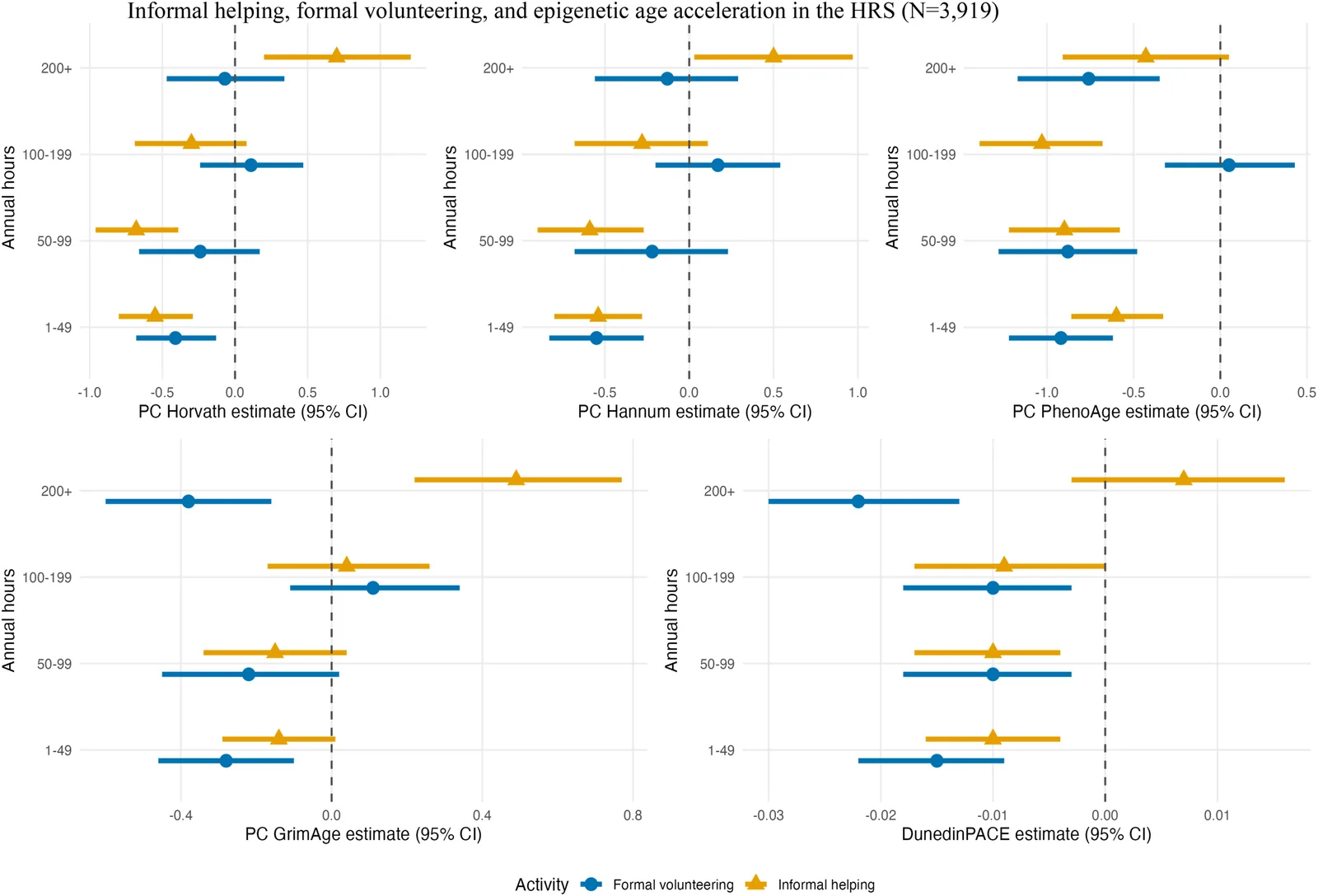
In US participants, formal volunteering and informal helping for 1–99 hours a year were associated with slower aging on several DNA-based measures.
Limit: The outcomes were DNA-based aging estimates, not health or lifespan benefits
Edited by Boris Djordjevic · AgingResearch.News
An observational study examined helping behaviors and five DNA-based aging measures in participants from aging studies in the US and Northern Ireland. These measures, called epigenetic clocks, use chemical marks on DNA to estimate aspects of biological aging. Researchers used US data from 2014 and 2016 and Northern Ireland data from 2016.
In the US, formal volunteering and informal helping for 1–99 hours a year were associated with slower aging on several clocks. Informal helping for 200 or more hours a year was linked to faster aging. Higher levels of formal volunteering were also linked to slower aging. In Northern Ireland, volunteering for 1–4 hours a week was associated with slower aging on GrimAge, a clock related to the risk of death. The other clocks showed no significant associations there.
Why it matters
Helping others has been linked to positive health outcomes, but its relationship with biological aging remains less understood. This study examined whether that relationship varies across social settings.
Caveats
This observational analysis cannot show that helping changed biological aging. The outcomes were DNA-based aging estimates, not demonstrated benefits for health or lifespan.
The paper
University of Michigan
SSM - Population Health, Sep 29, 2026, Open access


