Immune gene variants linked to virus control in aged macaques
In an infection experiment, rhesus macaques aged 17–23 with protective immune gene variants had lower blood virus levels through 70 days than those without.
Limit: Only 8 macaques per allele group supported the viral-control comparison
Edited by Boris Djordjevic · AgingResearch.News
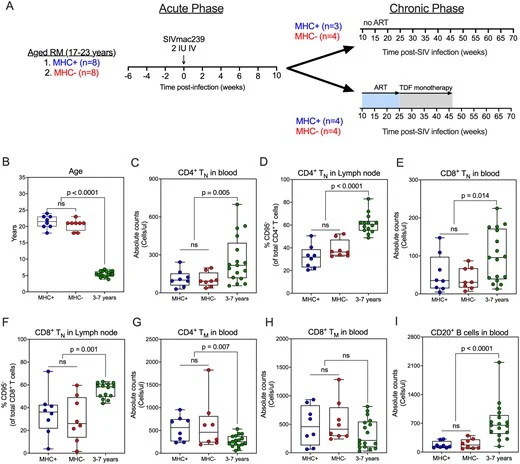
Researchers infected rhesus macaques aged 17–23 years with the SIVmac239 strain of simian immunodeficiency virus in an animal experiment. They compared macaques carrying known protective variants of immune-system genes with those without these variants. Carriers had lower blood virus levels through 70 days after infection.
At day 70, half of each group began three-drug antiviral therapy for 15 weeks, followed by tenofovir disoproxil fumarate alone for 21 weeks. Virus levels fell substantially in both groups, but faster in carriers. After the switch to one drug, virus levels rebounded in noncarriers while carriers maintained viral suppression.
Why it matters
Immune aging raises questions about whether defenses associated with viral control remain effective late in life. The findings suggest a potential role for optimizing immune-cell responses in strategies targeting persistent virus in aging populations.
Caveats
The findings came from experimentally infected macaques, not people with HIV. The abstract did not report the sample size or a younger comparison group.
- Tenofovir disoproxil fumarate
- Dolutegravir
- PROTECTIVEMHC-IAALLELES
- Immune response
- Effector memory T-cell abundance
- Rhesus monkeys
The paper
Preservation of MHC-Ia protective allele suppression of SIVmac239 in aged rhesus macaques
Oregon National Primate Research Center
Journal of Immunology, Oct 1, 2026, Open access


