Midlife activity linked to lower odds of frailty or its early signs
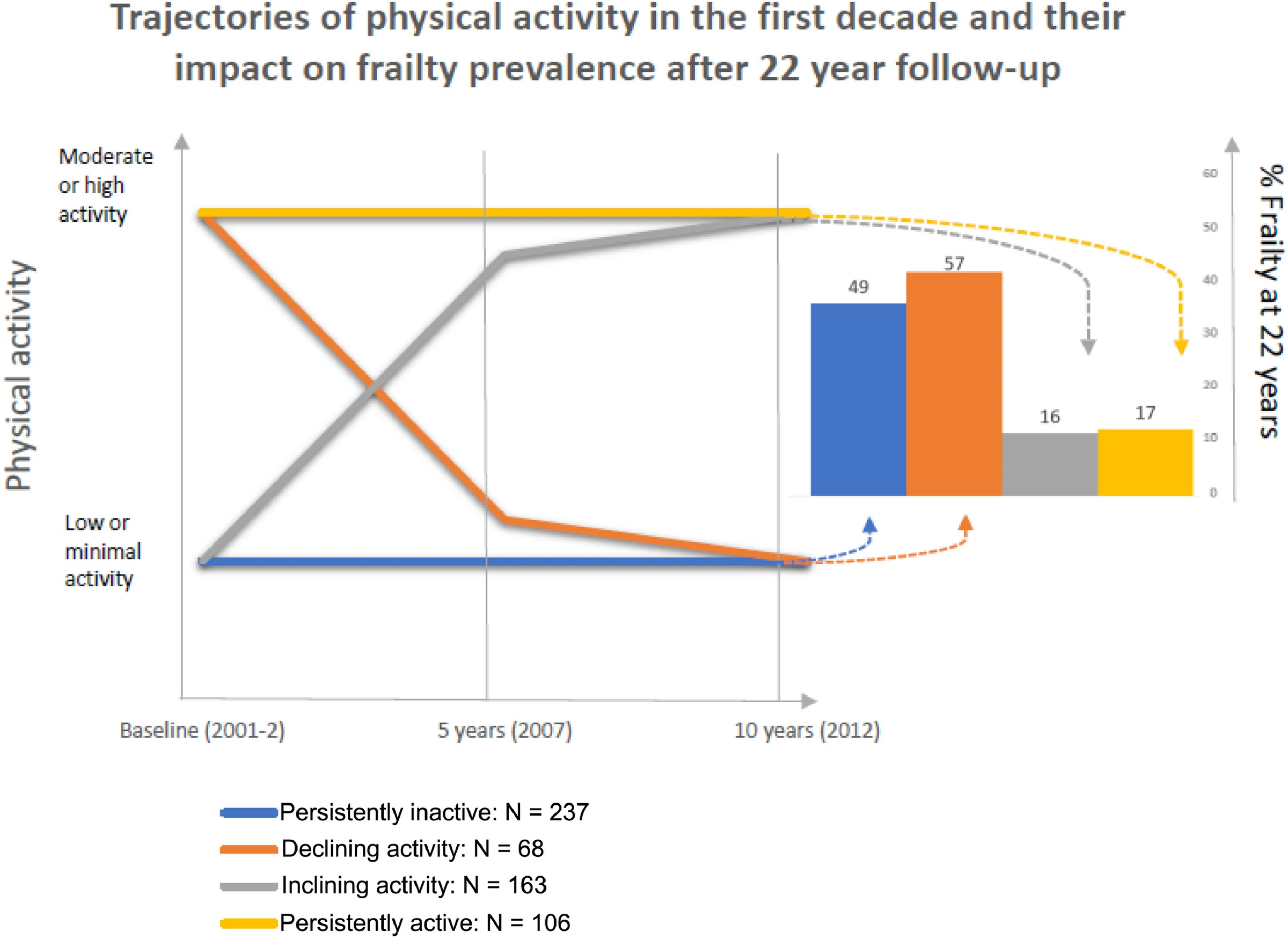
Persistent or rising midlife activity was associated with 80% and 79% lower odds of pre-frailty or frailty, respectively, than persistent inactivity after 22 years.
Limit: Physical activity trajectories were based on self-reports
Edited by Boris Djordjevic · AgingResearch.News
This prospective observational cohort study analyzed surviving ATTICA participants from urban communities in Attica, Greece, who were older than 33 at enrollment. Participants reported their physical activity at enrollment and after five and 10 years. Researchers grouped their patterns as persistently inactive, declining, rising or persistently active.
At 22 years, researchers assessed frailty and pre-frailty, an earlier stage of physical vulnerability, using a rating scale. Persistent or rising activity was linked to lower odds of either condition than persistent inactivity. These associations remained after accounting for age, sex, education, baseline body mass index—a weight-for-height measure—high blood pressure, diabetes and high cholesterol.
Why it matters
The findings support the authors’ suggestion that achieving and maintaining higher activity across midlife may be one key to healthy aging.
Caveats
This observational study cannot establish cause and effect, and participants reported their own activity. The analysis covered surviving urban Greek participants older than 33 at enrollment, limiting its applicability to other populations.
The paper
Laikon General Hospital
The Journal of Frailty & Aging, Oct 19, 2026


