Combined pharmacologic and lifestyle intervention for breast cancer prevention: Results of the randomized phase II TOLERANT trial in high-risk women
6 months
Abstract
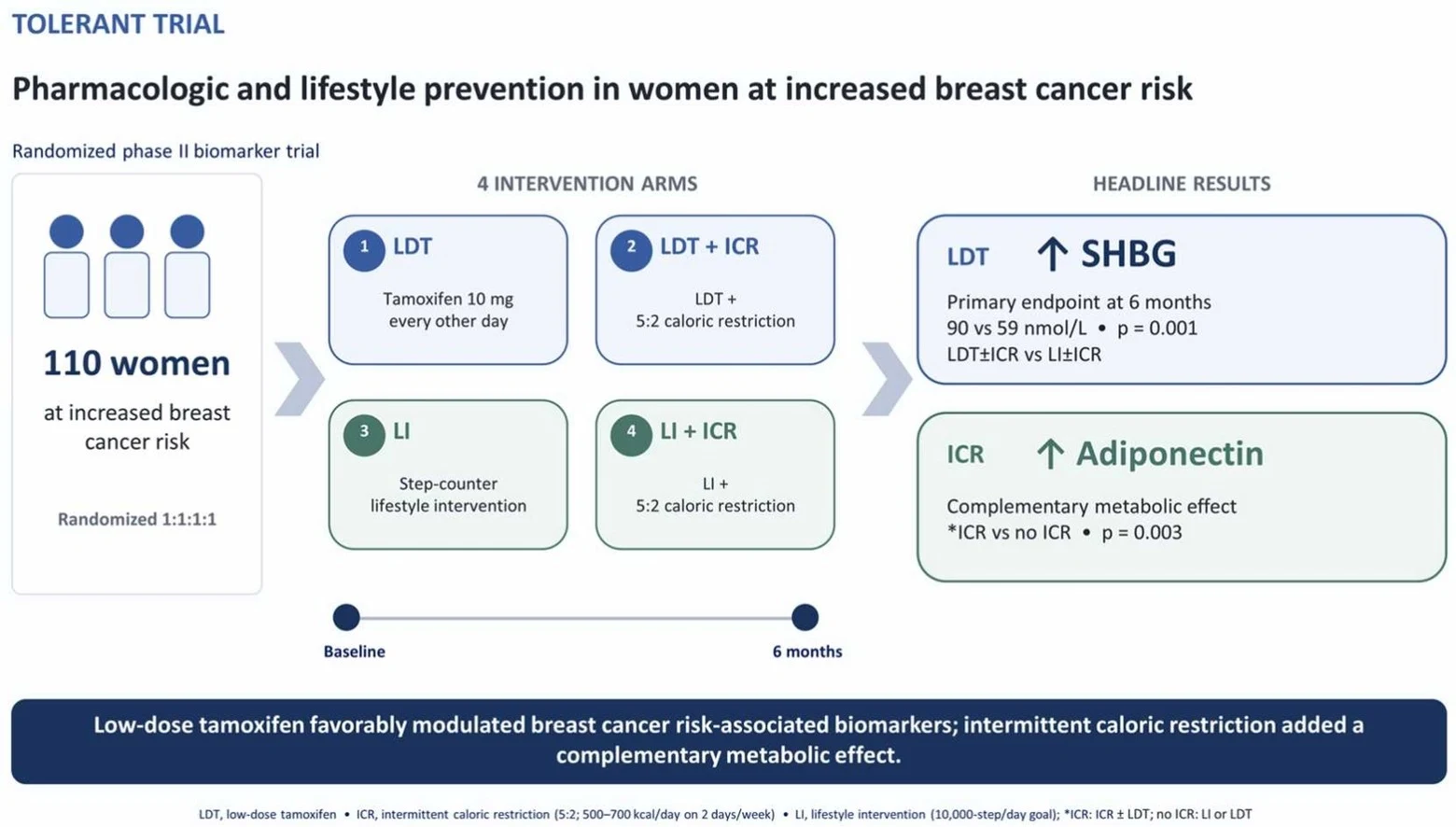
BACKGROUND: Breast cancer (BC) prevention strategies include lifestyle modification and preventive agents such as selective estrogen receptor modulators and aromatase inhibitors. Sex hormone-binding globulin (SHBG) is a breast cancer risk-associated biomarker; however, it is not a validated surrogate endpoint for breast cancer risk reduction. METHODS: Population: women with hereditary BC risk, a ≥ 5% 10-year BC risk, or a history of intraepithelial neoplasia were enrolled. TRIAL DESIGN: a four-arm randomized phase II biomarker trial: Tamoxifen 10 mg every other day (LDT); LDT + Intermittent Caloric Restriction (ICR); Lifestyle intervention with a step counter (LI); LI + ICR. PRIMARY ENDPOINT: Post intervention levels of circulating SHBG. Secondary endpoints: modulation of IGF system, adipokines, inflammatory markers, quality of life. Main analysis was LDT+ ICR vs LI+ICR. RESULTS: One hundred and ten participants were randomized to: LDT, LDT plus ICR, LI, or LI plus ICR, for 6 months. Mean age was 52 years and mean BMI was 25 kg/m²; 62% were unaffected carriers, and 65% were postmenopausal. LDT±ICR significantly increased SHBG and IGFBP-3 and decreased IGF-I (absolute change p < 0.0001, p = 0.004, and p < 0.001, respectively). ICR arms showed higher adiponectin than non-ICR arms (p = 0.003). Furthermore, in adherent subjects (>90%), LI plus ICR was significantly associated with higher SHBG compared with LI alone (p = 0.045). No differences in adverse events between arms; LDT demonstrated a mild, although significant, worsening in quality of life. CONCLUSIONS: LDT favorably modulates BC risk-associated biomarkers, and ICR adds a complementary metabolic effect, supporting further investigation of these combined strategies.
- Lifestyle intervention
- Intermittent caloric restriction
- Inflammation
- Insulin/IGF-1 signaling
- Breast cancer
- Humans
The paper
European Institute of Oncology
European Journal of Cancer, Oct 14, 2026, Open access


