Diagnostic challenges of masked arginine vasopressin deficiency in neurosarcoidosis complicated by sodium-glucose cotransporter 2 inhibitor use
Abstract
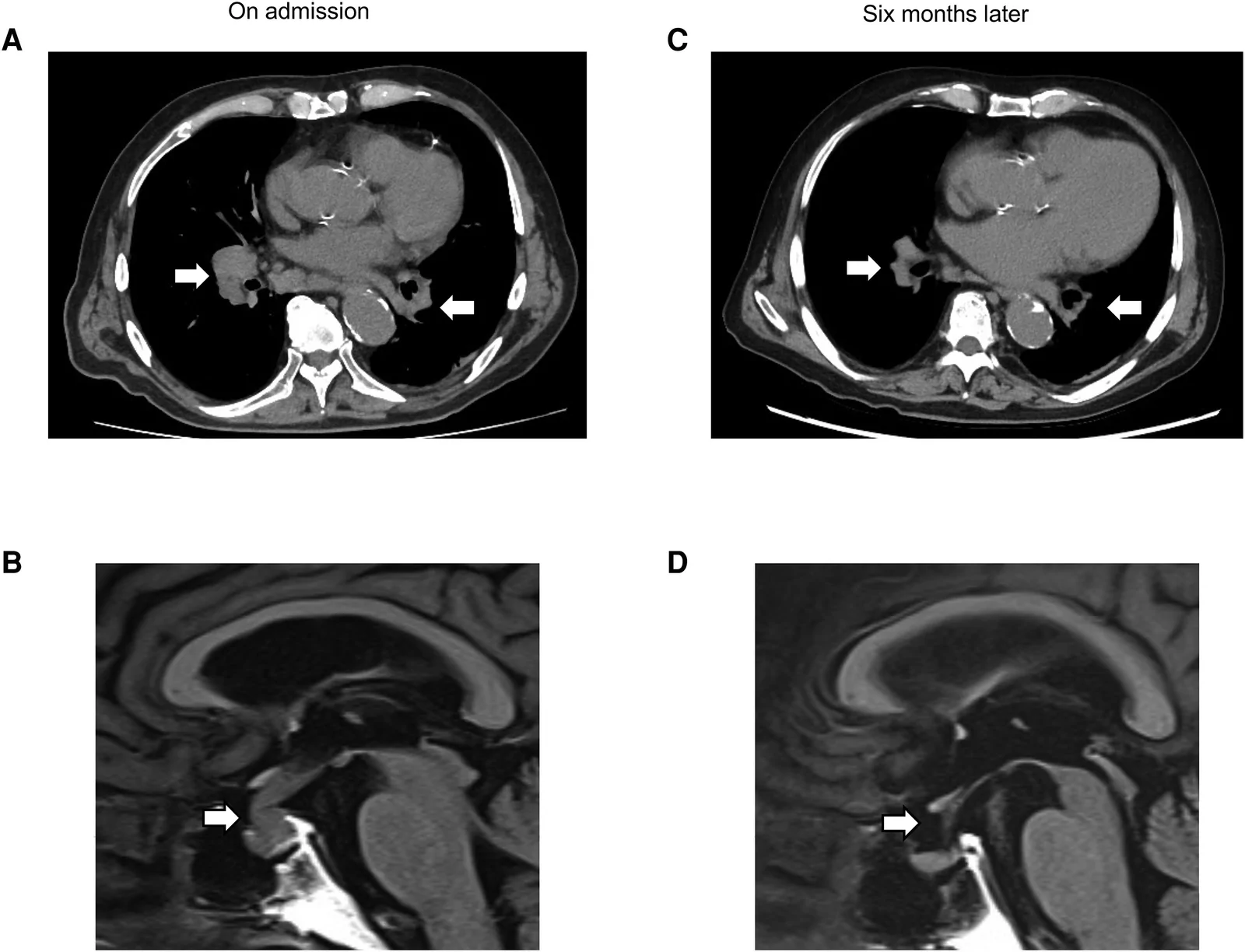
A wide variety of endocrine disorders caused by sarcoidosis have been reported to date. We report the case of an 82-year-old male patient who presented with hypercalcemia and anterior pituitary hormone deficiency at the time of his sarcoidosis diagnosis and was subsequently diagnosed with arginine vasopressin deficiency (AVP-D) 6 months after the initiation of glucocorticoid therapy. Magnetic resonance imaging revealed an enlarged pituitary gland, thickened pituitary stalk, and loss of the posterior pituitary bright spot, raising the suspicion of hypothalamic-pituitary sarcoidosis. Despite improvement in hypercalcemia, anterior pituitary function, and pituitary enlargement and stalk thickening with glucocorticoid therapy, subjective symptoms of dry mouth and polyuria gradually became apparent several months after the start of treatment. While the characteristic hypotonic polyuria of AVP-D was not prominent, we surmised that these typical clinical features were masked by adrenal insufficiency, chronic kidney disease (CKD), and concurrent use of a sodium-glucose cotransporter 2 (SGLT2) inhibitor for type 2 diabetes. This case highlights the fact that the typical presentation of AVP-D can be masked by concurrent SGLT2 inhibitor use and CKD, emphasizing careful assessment of water balance in such patients.
The paper
Oita Prefectural Hospital; Oita University
JCEM Case Reports, Oct 16, 2026, Open access

