Obesity Increases Cardiovascular Strain During Passive Whole-Body Heat Stress in Middle-Aged Women
Non-randomized trial
Abstract
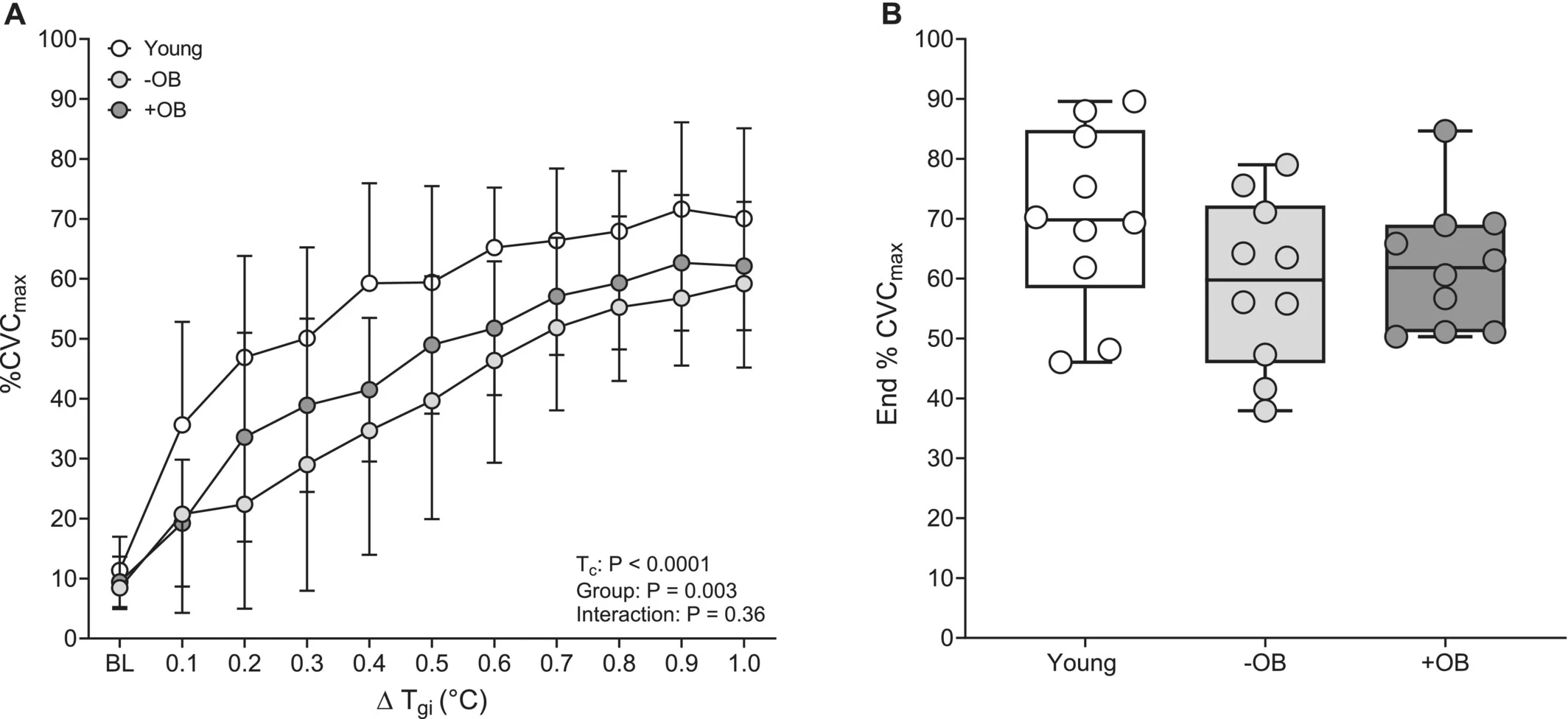
OBJECTIVE: Heat-related mortality is greater in middle-aged and older women, compared with age-matched men, and in those with obesity, although the causes are unclear. METHODS: Thermoregulatory and cardiovascular responses were assessed in (n = 10 per group) young women (21 ± 2 years), middle-aged women without obesity (-OB; 55 ± 6 years), and middle-aged women with obesity (+OB; 55 ± 4 years) during whole-body heat stress until a change in core temperature (ΔTc) = 1°C. Cutaneous vasodilation (laser-Doppler flowmetry) and whole-body sweat rate (sweat loss/body surface area/time) were measured as indices of thermoregulatory function. Heart rate and blood pressure were measured, and rate pressure product (RPP = heart rate × systolic blood pressure) was calculated as an index of cardiovascular strain. RESULTS: The magnitude of the peak cutaneous vasodilation response was not different among the groups (p ≥ 0.21), but thermosensitivity was higher in Young compared with +OB and -OB (p ≤ 0.03). Although there were no baseline differences in RPP (p ≥ 0.67), end-heating RPP was higher in +OB compared with -OB and Young (p ≤ 0.008). Further, body fat percentage was related to peak RPP (p = 0.03, R² = 0.24) in middle-aged women. CONCLUSIONS: Increased adiposity may contribute to greater cardiovascular risk during extreme heat exposure in middle-aged women.


