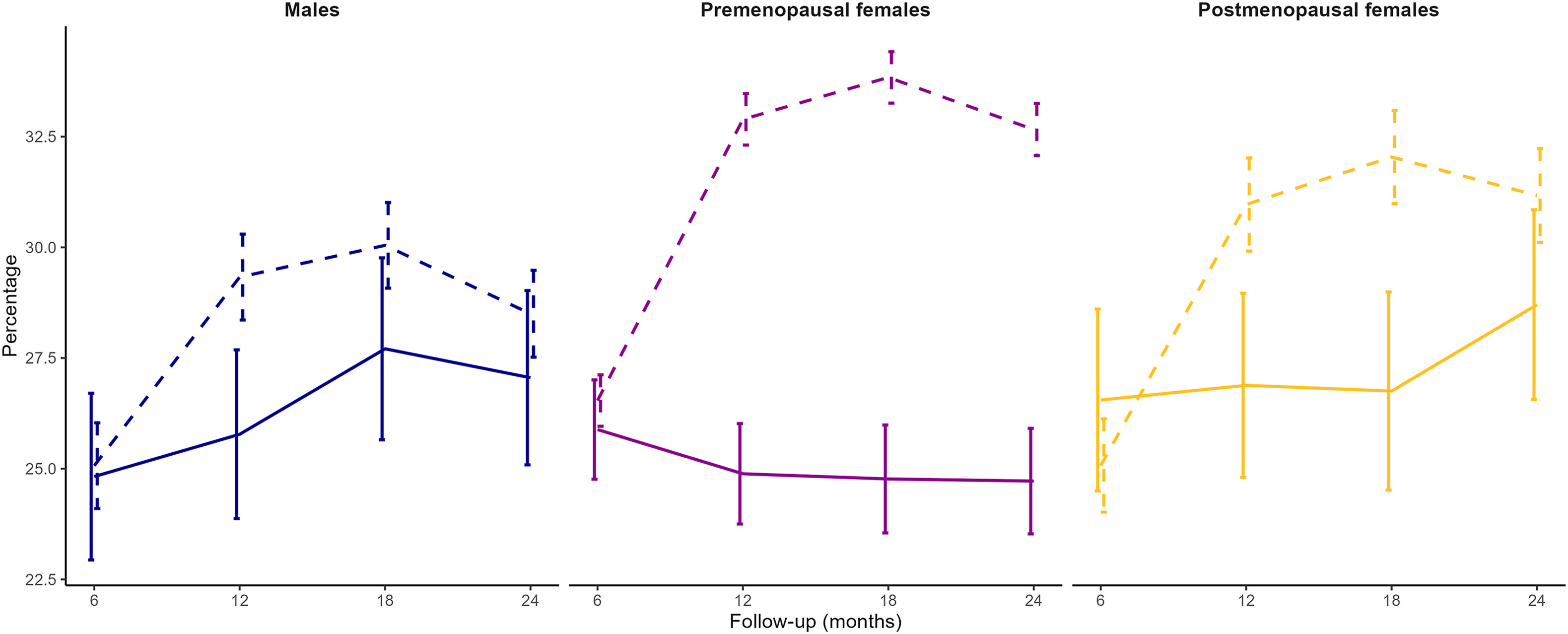
Non-fat weight loss after surgery differed by sex and menopause
At 24 months, non-fat tissue accounted for 24.7% of weight lost in women before menopause, versus 27.1% in men and 28.7% in women after menopause.
The American Journal of Clinical Nutrition
An observational cohort study followed 1,022 people undergoing their first metabolic bariatric surgery, an operation to treat obesity. The group included 221 men, 614 women before menopause and 187 women after menopause. All had at least 18 months of follow-up. Researchers measured body weight and fat-free mass—the weight of everything except fat—before surgery and at intervals up to 72 months afterwards. They assessed heart and lung fitness with a bicycle exercise test.
Men lost the most non-fat mass in absolute terms. Women before menopause lost the smallest share relative to total weight loss. Fitness improved in all three groups despite substantial reductions in non-fat mass. Changes in non-fat mass after surgery were not independently associated with fitness.
Why it matters
Non-fat mass may influence physical function, metabolic health and quality of life. Comparing people before and after menopause helps address how weight loss after obesity surgery relates to these concerns later in life.
Caveats
This observational study cannot establish why the groups differed. It included only people with at least 18 months of follow-up.
The paper
Amsterdam UMC Location University of Amsterdam
The American Journal of Clinical Nutrition · 4 Sep 2026