Living longer but not healthier: Global differences in longevity and cardiometabolic health
Abstract
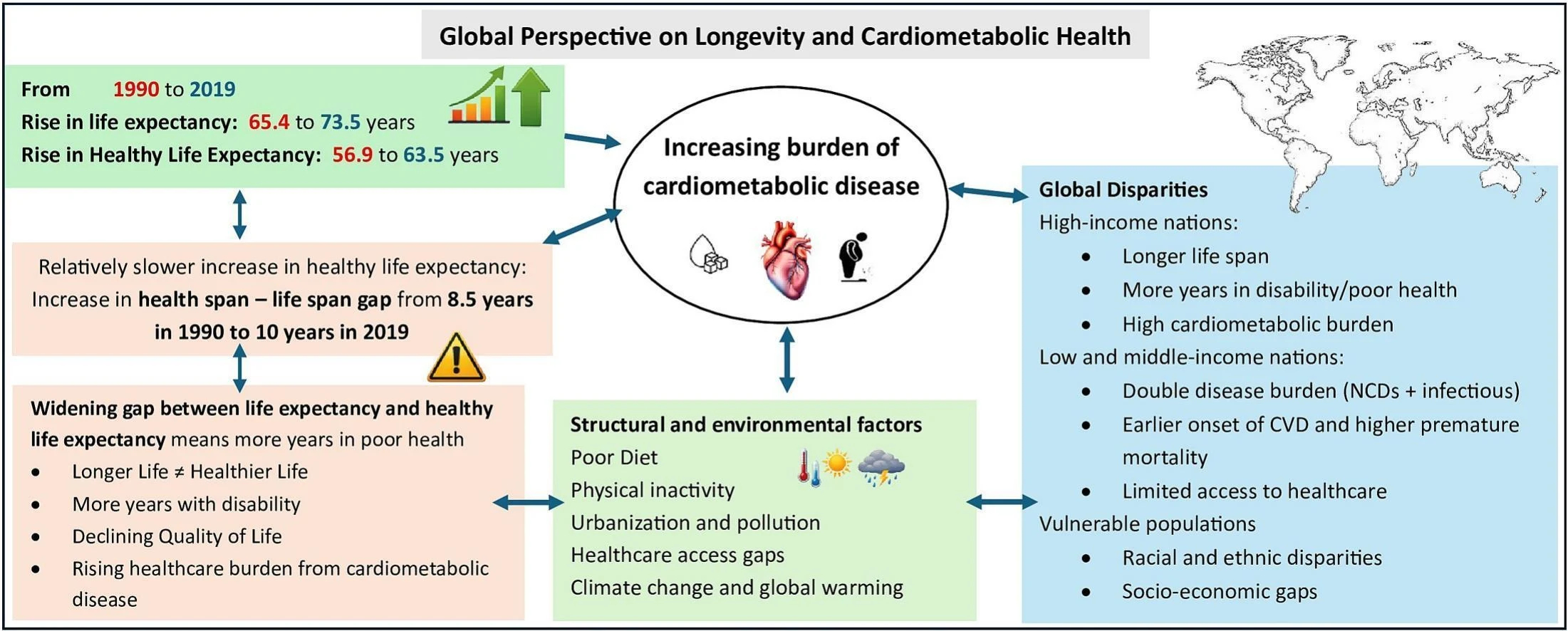
Global life expectancy has increased dramatically from 1950 to 2023, rising by 25 years for females and 24 years for males, driven mostly by advances in nutrition, sanitation, and infectious disease control, and in part by declining cardiovascular disease (CVD) mortality. Although age-standardized CVD mortality has declined in many settings, absolute cardiometabolic burden has increased because of population growth, aging, and rising exposure to metabolic risks. In 2023, CVD alone accounted for 437 million DALYs and 19.2 million deaths. While overall life expectancy did increase by 8.1 years globally between 1990 and 2019, healthy life expectancy increased by only 6.6 years, corresponding to a widening health span-lifespan gap. This divergence is indicative of prolonged years that are lived with disability, with cardiometabolic diseases among the modifiable drivers. Regional patterns reveal significant heterogeneity, with low- and middle-income countries facing a double burden of communicable diseases and rapidly rising cardiometabolic diseases that are primarily driven by urbanization, nutritional transitions, and inadequate primary care infrastructure. High-income countries, on the other hand, are witnessing a rising health span - life span gap due to near-stagnant growth in LE but expanding cardiometabolic morbidity. Understanding the relationship between changes in longevity and cardiometabolic health is essential for addressing the growing global burden of years lived with disability. This narrative review examines global and regional patterns of life expectancy and healthy life expectancy, with a focus on cardiometabolic disease, and highlights disparities across developmental levels, regions, and demographics to inform targeted prevention and intervention strategies.
The paper
Creighton University School of Medicine; Aga Khan University Medical College
Progress in Cardiovascular Diseases, 16 Oct 2026


