Nighttime heatwaves linked to faster biological aging in China
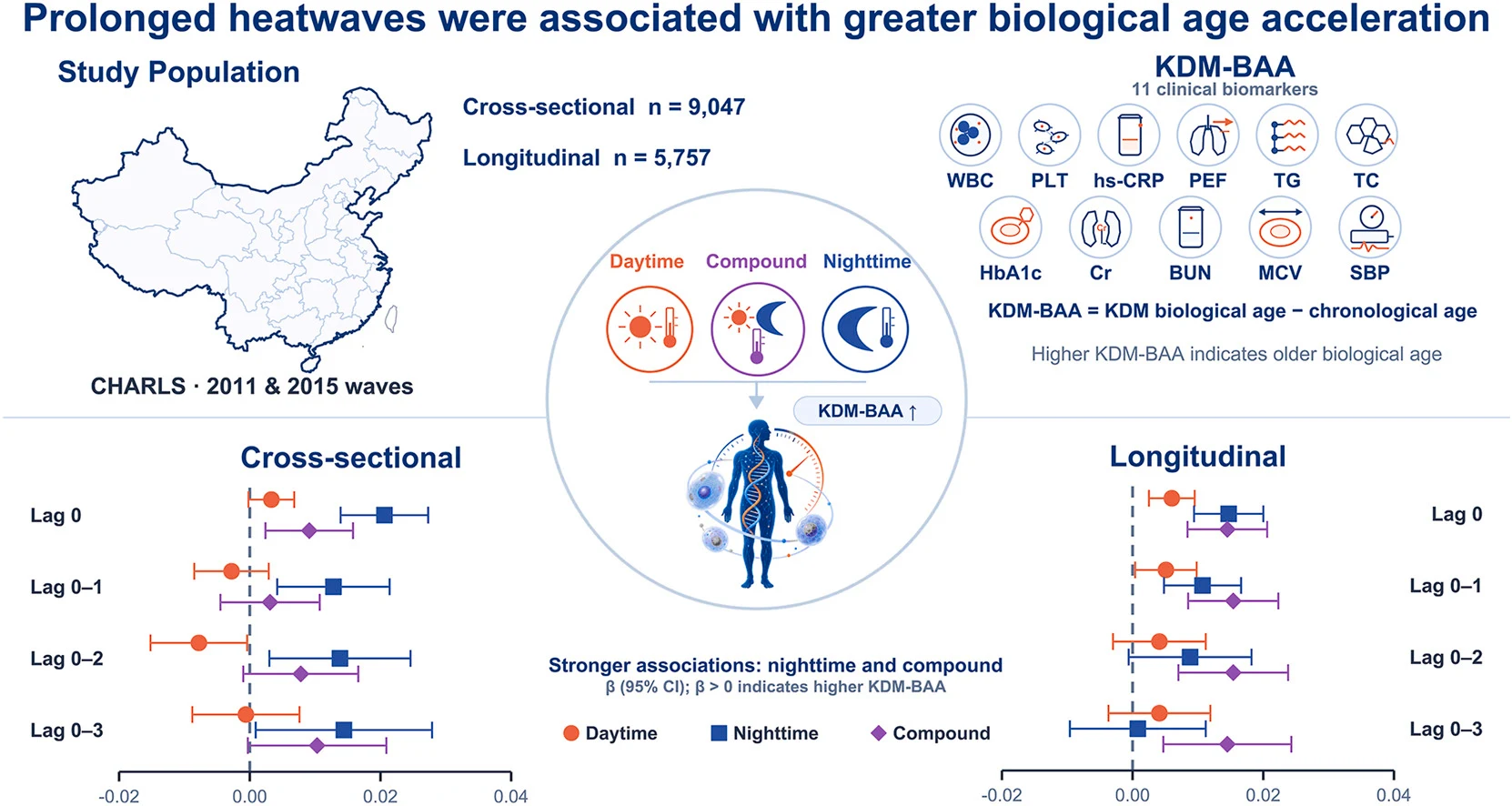
In the follow-up analysis, each extra nighttime heatwave day was linked to 0.0147 years of greater biological age acceleration under one heatwave definition.
Dose-response
Adults aged 45 and over from 125 Chinese cities were studied in observational analyses covering 8,223 people at one time point and 5,047 followed over time. Researchers estimated biological age—a measure of age based on the body's condition—from 11 clinical measurements collected in 2011 and 2015. They examined heatwaves using several temperature thresholds and durations of two to four days.
Nighttime and combined day-and-night heatwaves were more strongly associated with greater biological age acceleration than daytime heatwaves. Nighttime heatwaves had the largest estimates for exposure during the current year in both analyses. Combined day-and-night heatwaves showed more persistent associations across longer exposure periods. Subgroup analyses suggested stronger associations among women and urban residents.
Why it matters
The authors called for heat warnings and protection for middle-aged and older adults to account for hot nights and combined day-and-night heatwaves.
Caveats
These observational analyses cannot establish that heatwaves caused faster aging, and biological age was estimated from clinical measurements. The findings concern Chinese adults aged 45 and over, not younger adults.
- Nighttime heatwaves
- Daytime heatwaves
- Day-night compound heatwaves
- Biological-age acceleration
- Klemera-Doubal biological age
- Humans
The paper
International Journal of Hygiene and Environmental Health, 16 Oct 2026