American Heart Association Life's Essential 8 and Heart Failure in Black Individuals: An Analysis of the National Health and Nutrition Examination Survey
Abstract
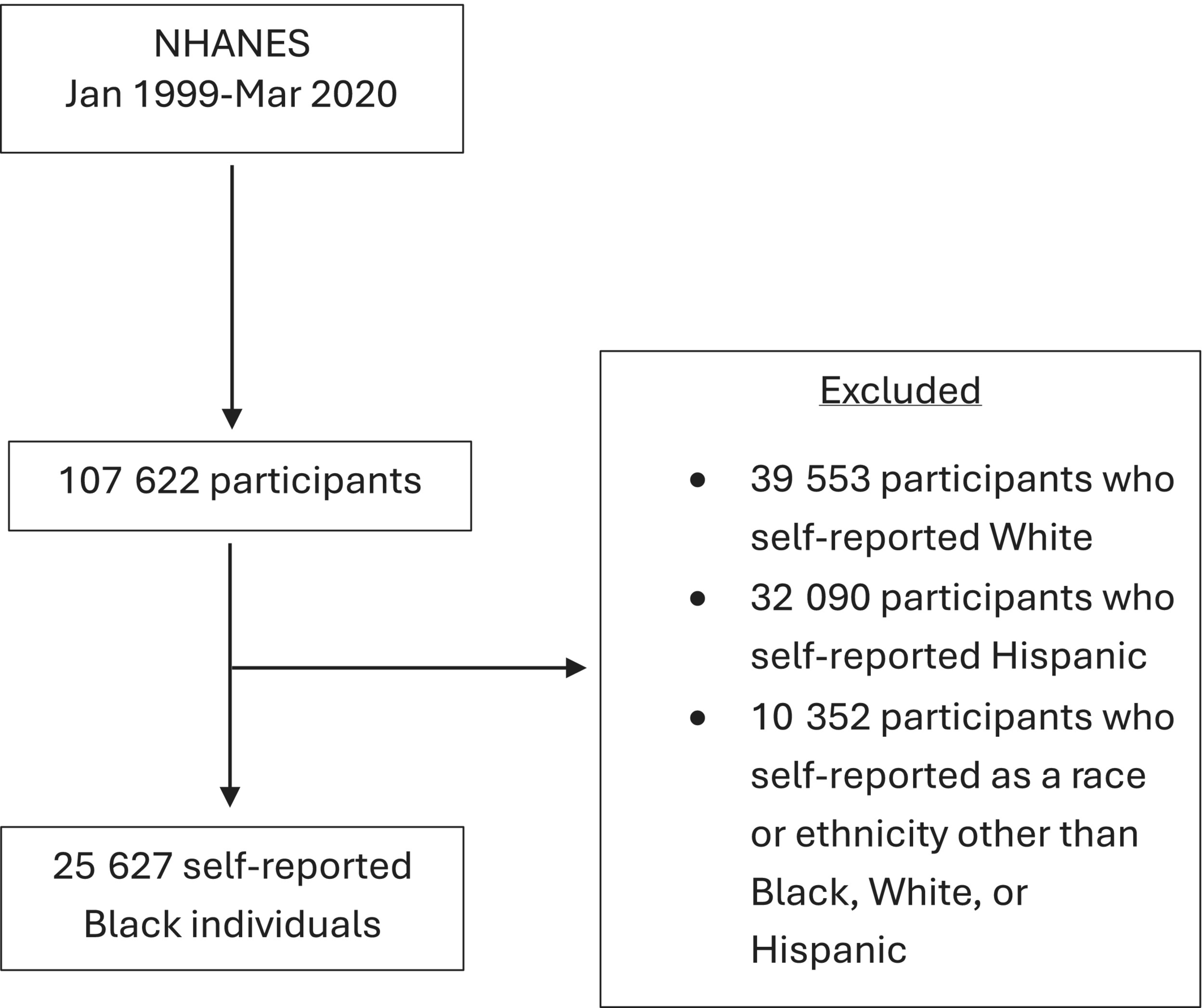
BACKGROUND: Self-reported Black individuals have a disproportionately high prevalence of heart failure (HF) compared with other racial groups. In an effort to empower patients and health providers to combat cardiovascular disease, the American Heart Association identified Life's Essential 8 as the 8 health behaviors crucial for heart health. In this study, we evaluate the association between components of Life's Essential 8 and HF outcomes among Black individuals. METHODS: This cross-sectional observational study analyzed 107 622 individuals captured in the NHANES (National Health and Nutrition Examination Survey) from 1999 to 2020 who were categorized by self-reported race. To represent Life's Essential 8, variables of self-reported sleep duration, physical activity, smoking status, and dietary habits were used. Additionally, self-reported diagnoses of diabetes, hyperlipidemia, hypertension, and heart failure were included. Multivariable logistic regression models were constructed to estimate odds ratios (ORs) and 95% CIs for the associations between Life's Essential 8 components and HF among Black individuals. RESULTS: Black individuals were diagnosed with HF at a younger age compared with White individuals (54 years vs 65 years, P<0.001). Among Black individuals, body mass index (odds ratio [OR], 1.041 [95% CI, 1.027-1.055], P=0.02), hypertension (OR, 3.175 [95% CI, 2.14-4.69], P<0.0001), hyperlipidemia (OR, 1.36 [95% CI, 1.04-1.76], P=0.02), and diabetes (OR, 2.07 [95% CI, 1.60-2.67], P≤0.0001) were associated with increased odds of HF. Physical activity was associated with lower odds (OR, 0.564 [95% CI, 0.38-0.836], P=0.004) of HF in Black individuals. CONCLUSIONS: Black individuals experienced HF at significantly younger ages, with traditional cardiometabolic factors (body mass index, hypertension, hyperlipidemia, diabetes) each independently being associated with HF risk. Physical activity appears protective, underscoring the importance of early, targeted prevention strategies.
The paper
Feinberg School of Medicine Northwestern University Chicago IL USA
Journal of the American Heart Association, 16 Oct 2026