Combined SGLT-2 Inhibitor and Mineralocorticoid Receptor Antagonist Therapy: Effects on the Renin-Angiotensin-Aldosterone System in Heart Failure Treatment
30 days
Abstract
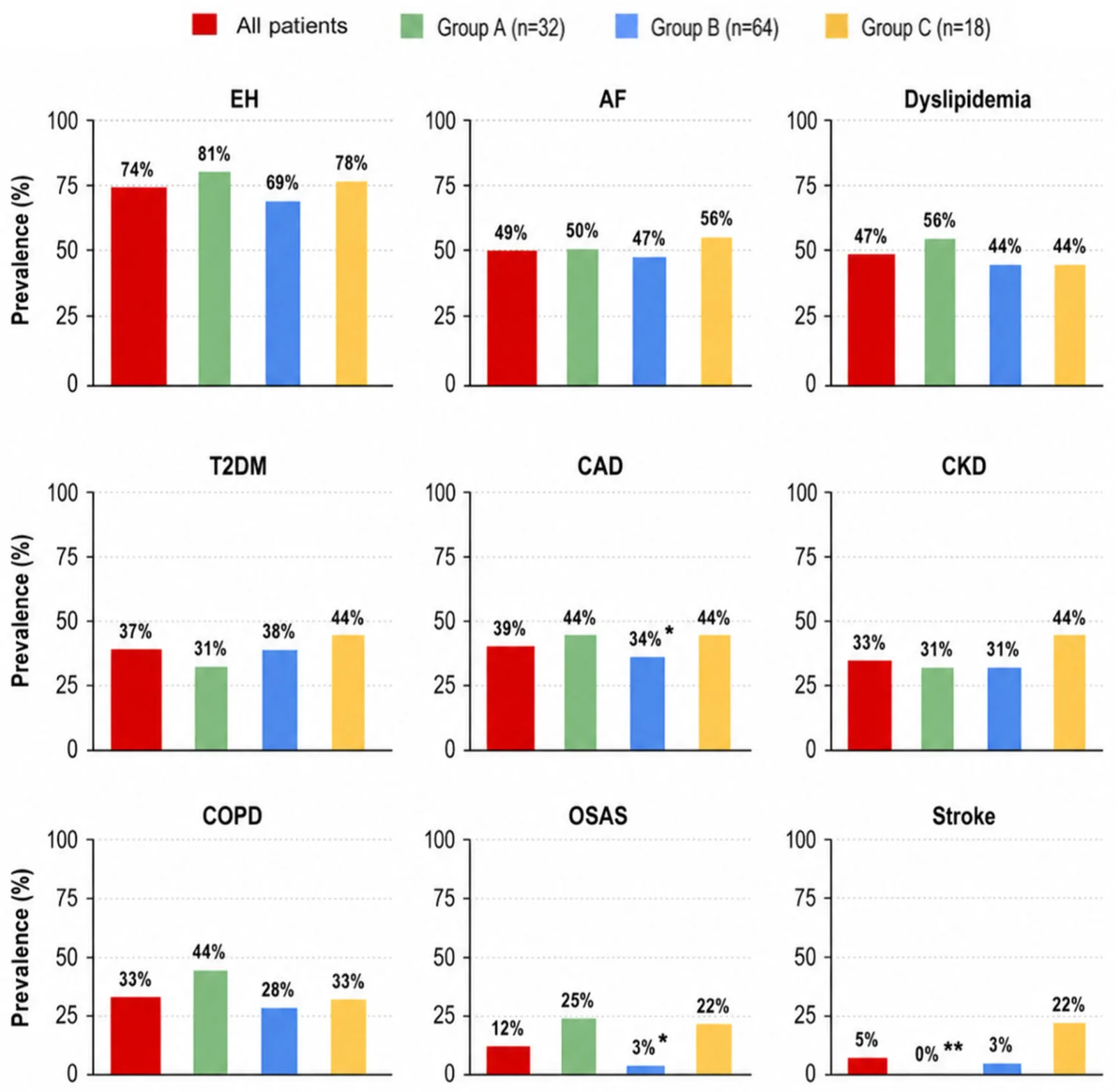
Sodium-glucose cotransporter 2 inhibitors (SGLT2is), originally developed as glucose-lowering agents for type 2 diabetes mellitus, have increasingly demonstrated clinical benefits in patients with chronic kidney disease and heart failure. We retrospectively evaluated 114 patients with heart failure admitted to the Emergency Medicine Unit of Policlinico Umberto I, Sapienza University of Rome, Italy, between March and December 2025. Patients were stratified into three groups: initiation of combined SGLT2i and mineralocorticoid receptor antagonist (MRA) therapy (Group A), initiation of SGLT2i alone (Group B), or ongoing SGLT2i therapy for >12 months (Group C). Hemodynamic parameters, serum and 24 h urinary electrolytes, and hormonal parameters were assessed at admission (T0), 7 days (T1), and 30 days (T2). Baseline anthropometric and laboratory parameters were comparable among groups, except for baseline 24 h urinary glucose excretion, significantly increased in Group C compared to Groups A-B. Hypertension was the most prevalent comorbidity (74%), followed by atrial fibrillation (49%), dyslipidemia (47%), and coronary artery disease (39%). Groups A and B showed activation of the renin-angiotensin-aldosterone system, while Group A exhibited increased 24 h urinary sodium and chloride excretion and lower urinary albumin excretion. These findings confirm that SGLT2i therapy, particularly when combined with MRAs, may favorably influence natriuresis, chloruresis, and urinary albumin excretion in patients with heart failure.
- Mineralocorticoid receptor antagonists
- SGLT2 inhibitors
- Renin–angiotensin system
- Heart failure
- 24-hour urinary chloride excretion
- Humans
The paper
Sapienza University of Rome
International Journal of Molecular Sciences, 24 Sep 2026, Open access