Targeting Gut Microbiota, Inflammation, and Metabolic Dysfunction-Associated Steatotic Liver Disease in Type 2 Diabetes Mellitus: Therapeutic Strategies and the Emerging Role of Time-Restricted Feeding
Abstract
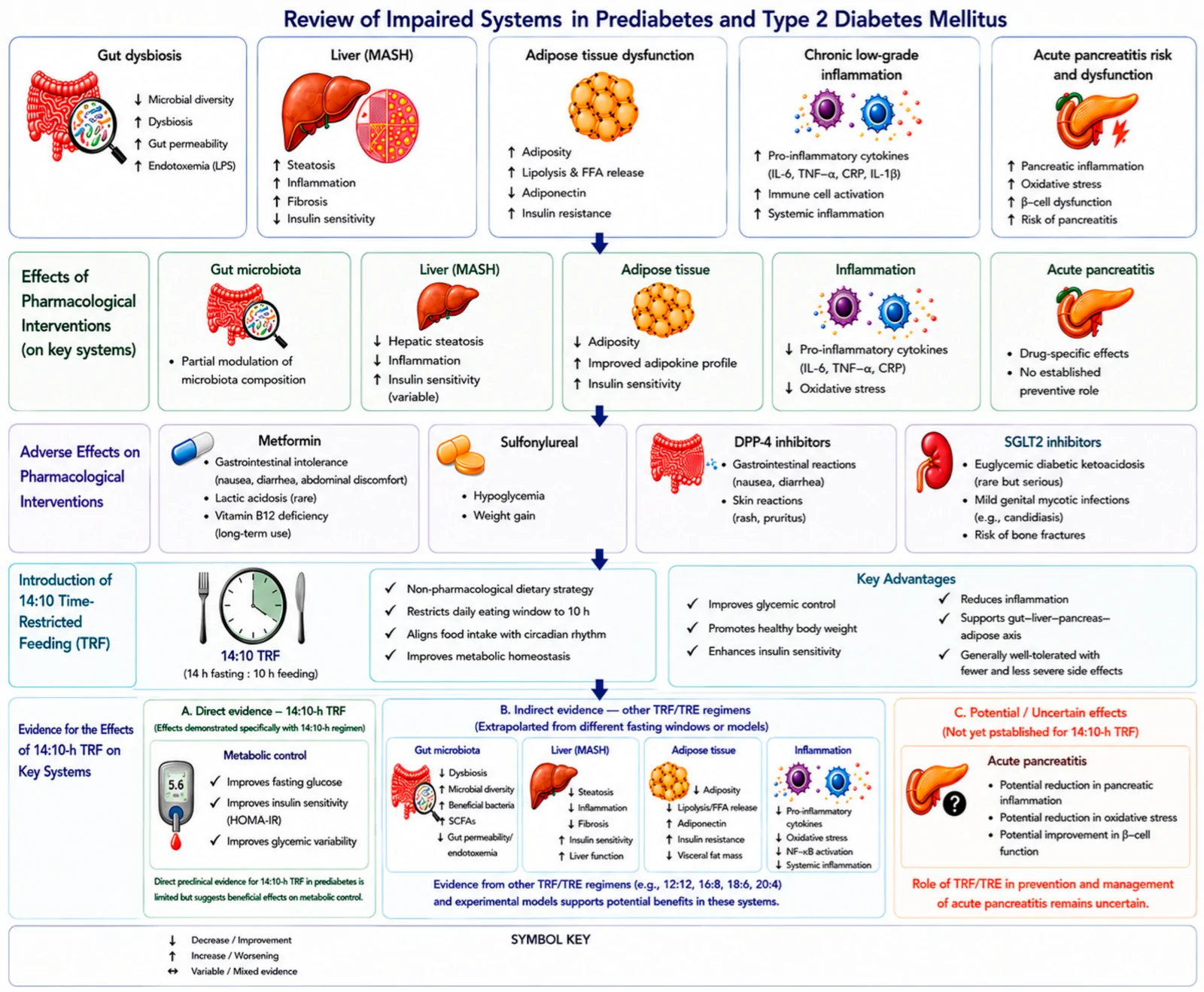
Time-restricted feeding has emerged as a promising non-pharmacological intervention for the management of metabolic disorders, particularly type 2 diabetes mellitus and its associated complications. Time-restricted feeding involves restricting food intake to a specific daily eating window while fasting for the remaining hours within 24 h. Furthermore, time-restricted feeding can be combined with specific dietary modifications to enhance its therapeutic benefits. Type 2 diabetes mellitus has been strongly linked to gut dysbiosis, adipose tissue dysfunction, chronic low-grade inflammation, metabolic dysfunction-associated steatotic liver disease, and an increased risk of acute pancreatitis. Given the rising global prevalence of type 2 diabetes mellitus, early intervention strategies are becoming increasingly important. Prediabetes, as an intermediate stage preceding type 2 diabetes mellitus, provides a critical opportunity to understand the mechanisms underlying disease progression and to develop effective preventive strategies. However, the effects of time-restricted feeding on gut dysbiosis, adipose tissue dysfunction, dysregulated inflammatory responses, metabolic dysfunction-associated steatotic liver disease and the risk of acute pancreatitis at prediabetic state remain incompletely understood. Therefore, this review summarizes the current evidence regarding the therapeutic potential of time-restricted feeding in the management of type 2 diabetes mellitus and its related complications, while highlighting areas that require further investigation.
- Time-restricted feeding
- Inflammation
- Microbiome composition
- Metabolic dysfunction-associated steatotic liver disease
- Type 2 diabetes
- Acute pancreatitis
The paper
University of KwaZulu-Natal
Cells, 8 Oct 2026, Open access