Longer activity bouts linked to lower dementia risk
Compared with never doing moderate-to-vigorous activity, 13-minute bouts were linked to a 72% lower relative risk of dementia.
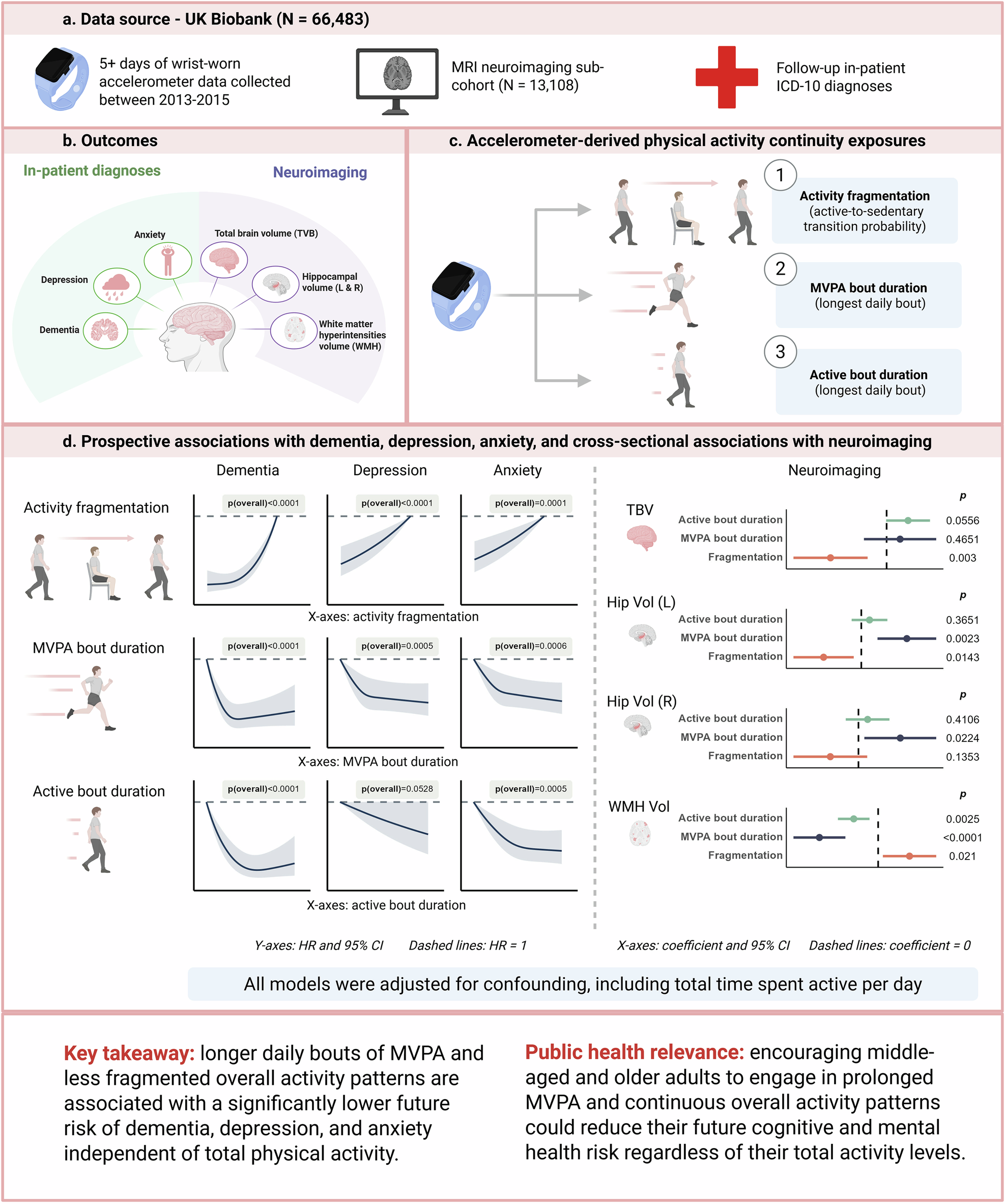
In an observational study of 66,483 UK Biobank participants, researchers linked longer daily bouts of moderate-to-vigorous physical activity and less broken-up activity to lower future risks of dementia, depression and anxiety. These associations held independently of total physical activity.
The lowest observed dementia risk occurred with 13-minute bouts, compared with never doing moderate-to-vigorous activity. For depression and anxiety, the lowest observed risks occurred with 36-minute bouts: relative risks were 52% and 50% lower, respectively, than in people who never did such activity. Comparing the least with the most broken-up activity, relative risks were 82% lower for dementia, 57% lower for depression and 52% lower for anxiety. Longer bouts and less broken-up activity were also linked to a larger left hippocampus, a brain region involved in memory.
Why it matters
For dementia, an age-related disease, the results may help guide research into whether prevention advice should consider activity patterns as well as total activity.
Caveats
This observational study cannot establish cause and effect or show that these bout lengths are optimal. The abstract did not report participants’ ages, follow-up duration or absolute risks.
- Moderate-to-vigorous physical activity
- Physical activity fragmentation
- Dementia
- Depression
- Anxiety
- Humans
The paper
City University of Hong Kong (Dongguan); City University of Hong Kong
Translational Psychiatry, 22 Jul 2026, Open access