Prostate Cancer Incidence and Disease Characteristics in Transgender Women Receiving Gender-affirming Hormone Therapy: A Systematic Review with Meta-analysis
Preregistered CRD420261369142
Abstract
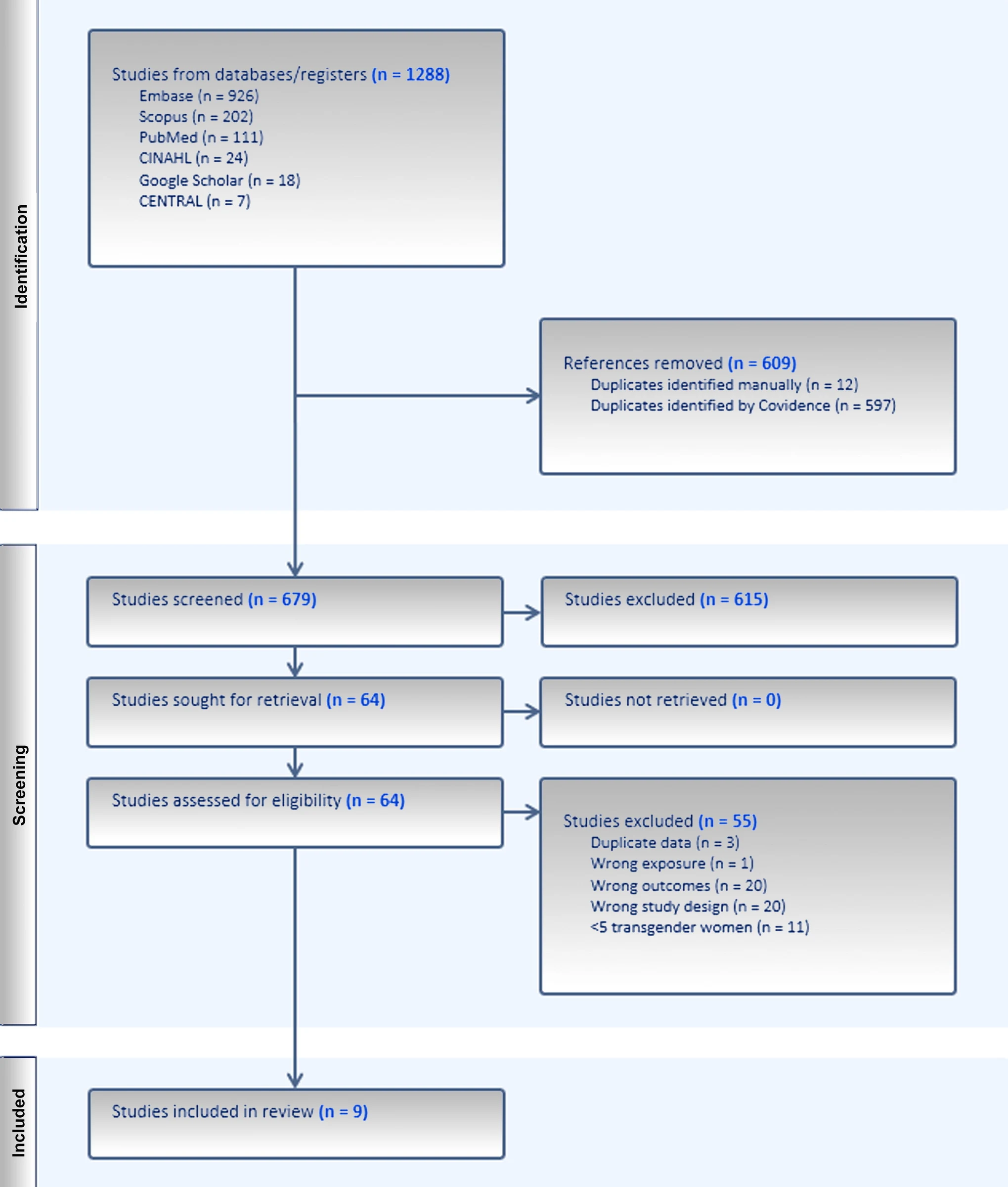
BACKGROUND AND OBJECTIVE: Transgender women (TGW) retain lifelong prostate cancer (PCa) risk despite gender-affirming hormone therapy (GAHT), yet its association with PCa incidence and severity is poorly synthesised. This study aimed to quantify pooled PCa incidence in TGW on GAHT relative to cisgender men and characterise disease severity. METHODS: This is a systematic review with meta-analysis per Preferred Reporting Items for Systematic Reviews and Meta-Analyses 2020 (International Prospective Register of Systematic Reviews: CRD420261369142). Five databases were searched from inception to April 2026. Eligible studies reported PCa incidence or outcomes in ≥5 TGW or gender-diverse individuals with intact prostates receiving GAHT. Screening, extraction, and risk-of-bias assessment (Risk Of Bias In Non-randomized Studies - of Interventions; JBI) were performed in duplicate. Random-effects meta-analyses pooled standardised incidence ratios (SIR), incidence rates, and proportions with recorded PCa. KEY FINDINGS AND LIMITATIONS: Nine studies drawn from six independent data sources (54 342 TGW on GAHT; 160 PCa cases) were included. Pooled SIR versus age-adjusted cisgender men was 0.224 (95% confidence interval = 0.146-0.344; κ = 2), a 77.6% relative reduction; pooled incidence rate was 22.9 versus 98.1 per 100 000 person-years. Among 36 cases with reported grade, 33.3% were International Society of Urological Pathology grade group 4-5; prostate-specific antigen (PSA) ranged from 6.5-18.0 ng/ml and was not pooled. Grade and stage data were derived from fewer than 40 patients with no matched cisgender comparison. CONCLUSIONS AND CLINICAL IMPLICATIONS: Detected PCa incidence is substantially lower in TGW receiving GAHT, on very low certainty evidence. Case-level data include a non-negligible proportion of high-grade disease, but whether severity differs from matched cisgender populations remains uncertain. Clinicians should not equate population-level reduction with individual-level protection. Validated PSA thresholds and screening pathways are needed.
- Gender-affirming hormone therapy
- Prostate cancer
- International Society of Urological Pathology grade group
- Prostate-specific antigen
- Humans
The paper
The University of Melbourne
European Urology Oncology, 15 Oct 2026

