Other illnesses linked to poorer lymphoma survival at 80 and over
The hazard ratio for death—a relative rate over time—was 1.43 for illness scores of one and 1.88 for two or more, versus zero.
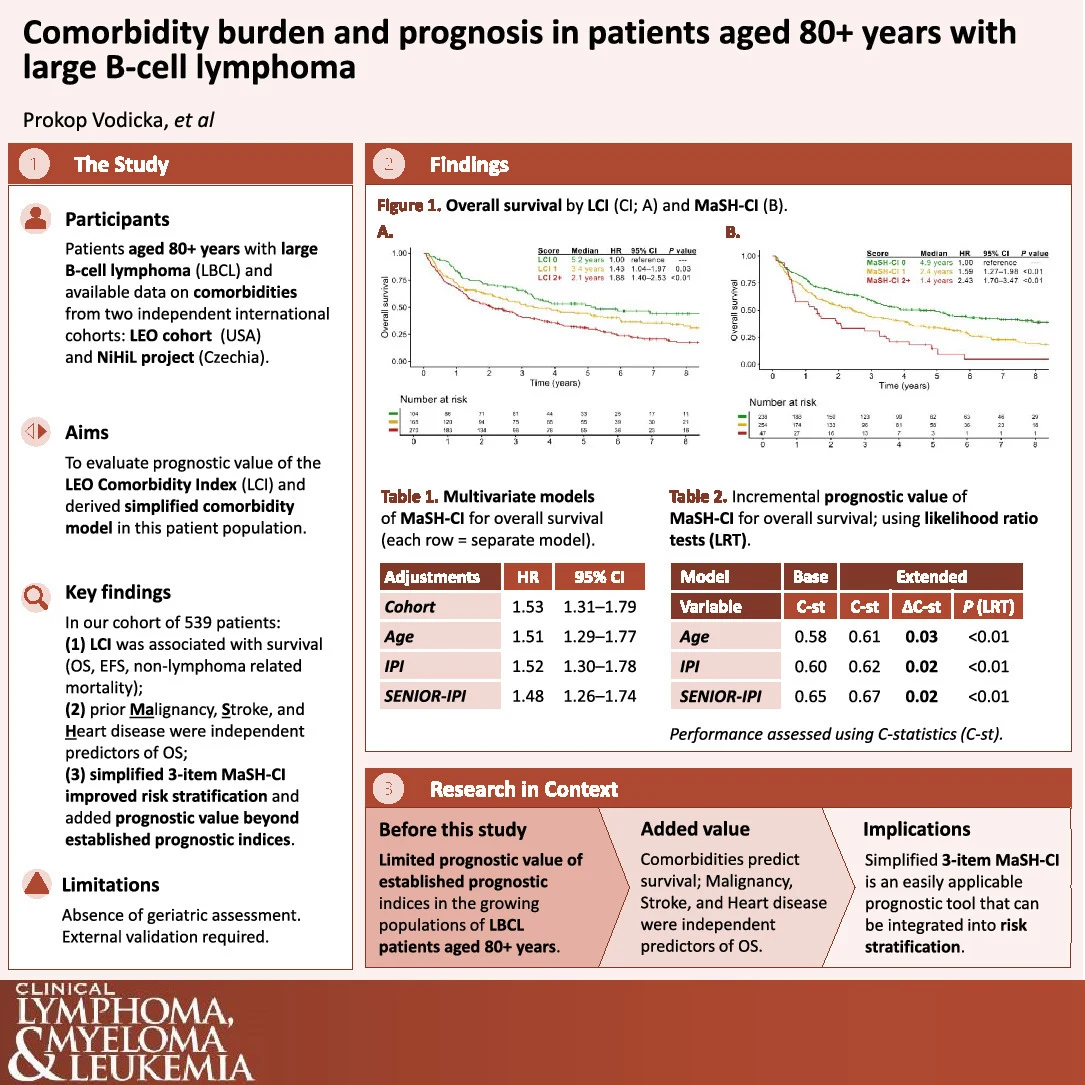
An observational analysis examined 539 people aged 80 or older with large B-cell lymphoma, a cancer of immune cells, from two independent international cohorts. Researchers assessed an index covering 10 categories of additional illnesses. Higher scores were linked to poorer overall survival.
Over two years, deaths from causes other than lymphoma occurred in 11%, 13% and 26% of patients with scores of zero, one and two or more, respectively. Heart disease, a previous or current additional cancer, and stroke were independently linked to overall survival. Researchers combined these into a simpler score, giving one point for each. Adding either score to conventional lymphoma risk scores improved their ability to distinguish outcomes.
Why it matters
As the population aged 80 or older with this lymphoma grows, clinicians need ways to account for health problems that conventional cancer risk scores may miss.
Caveats
This observational analysis cannot show that additional illnesses caused poorer survival. The findings concern people aged 80 or older with large B-cell lymphoma, not younger people or people with other cancers.
The paper
Comorbidity Burden and Prognosis in Patients Aged 80+ Years With Large B-Cell Lymphoma
Mayo Clinic
Clinical Lymphoma, Myeloma & Leukemia, 23 Sep 2026