Assessment score predicted death risk in older cancer patients
The model scored 82% on a statistical measure of how well it distinguished death from survival at six months.
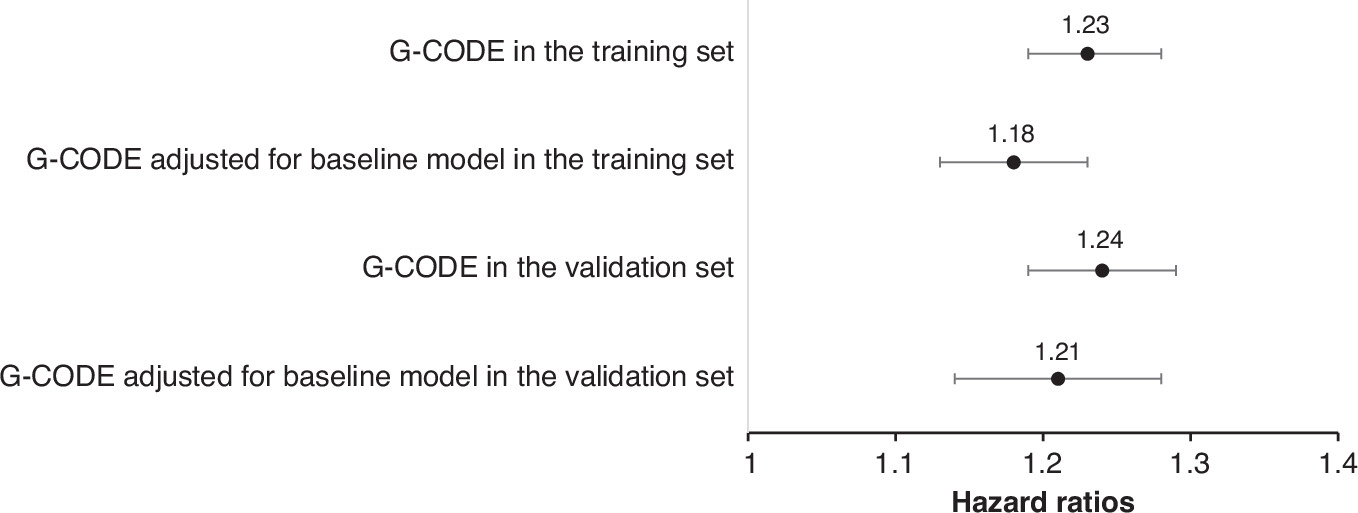
24 months, independent replication, registered NCT02884375
An observational study used two French cohorts of cancer patients aged 70 or older referred for an assessment of age-related health needs. Researchers developed a score from the Geriatric Core Dataset, a standardised assessment, in 950 patients and tested it in a separate cohort of 766.
Five assessment findings were linked to death within six months: no caregiver, weight loss, other medical conditions, difficulty with tasks needed for independent living, and poorer performance on a test of standing up, walking and sitting down. The full model also included age, cancer type, whether cancer had spread, and treatment. It scored 82%, 78% and 80% on a statistical measure of its ability to distinguish death from survival at six, 12 and 24 months, respectively.
Why it matters
For older adults with cancer, the study addresses how age-related health needs, independence and caregiver support can inform estimates of survival alongside information about the cancer itself.
Caveats
The cohorts included only French patients referred for this assessment, so the findings may not apply to other cancer patients. The study assessed prediction, not whether changing the linked factors improves survival.
- Modelling and theory
- Cancer
- Weight loss
- 4-instrumental activities of daily living score
- Caregiver availability
- Humans
The paper
Department of Internal Medicine; Univ Paris Est Créteil
British Journal of Cancer, 12 Oct 2026