The potential role of the gephyrin-CNTNAP4 interface in brain aging: Mechanisms of inhibitory circuit dysfunction and cognitive decline
Abstract
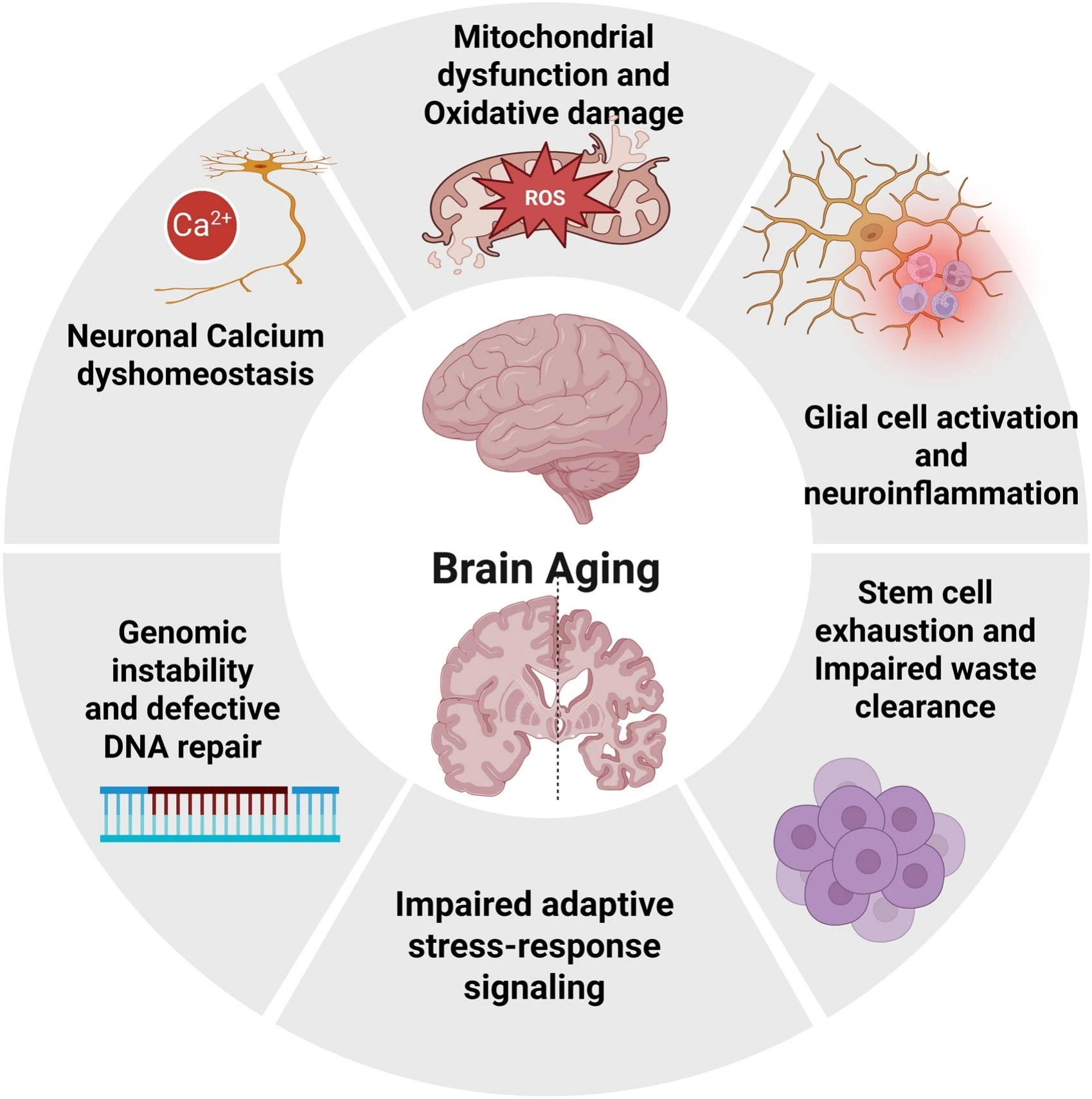
Brain aging is a multifactorial process characterized by progressive deterioration of synaptic integrity, impaired neuronal connectivity, and cognitive decline. Physiological brain aging involves a natural decline in cognitive function due to reduced synaptic connections, and synaptic integrity. However, the brain maintains plasticity, allowing individuals to adapt through lifelong learning and targeted lifestyle interventions. Conversely, pathological brain aging refers to abnormal, accelerated neurological decline that extends far beyond typical age-related changes, characterized by noteworthy brain atrophy, and is a primary driver of neurodegenerative diseases. Increasing evidence suggests that dysfunction of inhibitory neurotransmission represents a fundamental mechanism underlying age-associated alterations in brain circuitry. Among the molecular determinants governing inhibitory synaptic organization, the gephyrin, a principal postsynaptic scaffold protein, and contactin-associated protein-like 4 (CNTNAP4), a synaptic adhesion molecule involved in neuronal connectivity and neurotransmitter regulation, have independently emerged as important modulators of synaptic homeostasis. However, their potential functional interplay in normal and pathological brain aging remains poorly understood. Therefore, in this narrative review, we examine current knowledge regarding the structural and functional biology of gephyrin and CNTNAP4, emphasizing their contributions to inhibitory synapse maintenance, neuronal network stability, and age-related cognitive function. We further discuss convergent mechanisms through which disturbances in gephyrin-dependent receptor clustering and CNTNAP4-mediated synaptic adhesion may promote excitatory-inhibitory imbalance, synaptic destabilization, and circuit dysfunction during aging. Particular attention is given to shared downstream pathways implicated in brain senescence, including mechanistic target of rapamycin (mTOR) signaling, sirtuin-1 (SIRT1) activity, mitochondrial homeostasis, and neuronal autophagy. We propose the concept of a Gephyrin-CNTNAP4 interface as a previously underappreciated framework linking inhibitory synaptic scaffolding with cell-adhesion mechanisms in the aging brain. Understanding this interface may provide novel insights into the molecular basis of cognitive decline and facilitate the development of multi-target therapeutic strategies to preserve synaptic resilience and promote healthy brain aging.
The paper
King Abdullah Specialized Children Hospital; Damanhur University
Progress in Neuro-psychopharmacology & Biological Psychiatry, 15 Oct 2026