Fuller DNA map reveals hidden mutations in a human melanoma
An analysis of one donor’s melanoma found 16% of acquired DNA variants in sequences absent from a conventional human reference genome.
Limit: Only one donor’s melanoma was analysed
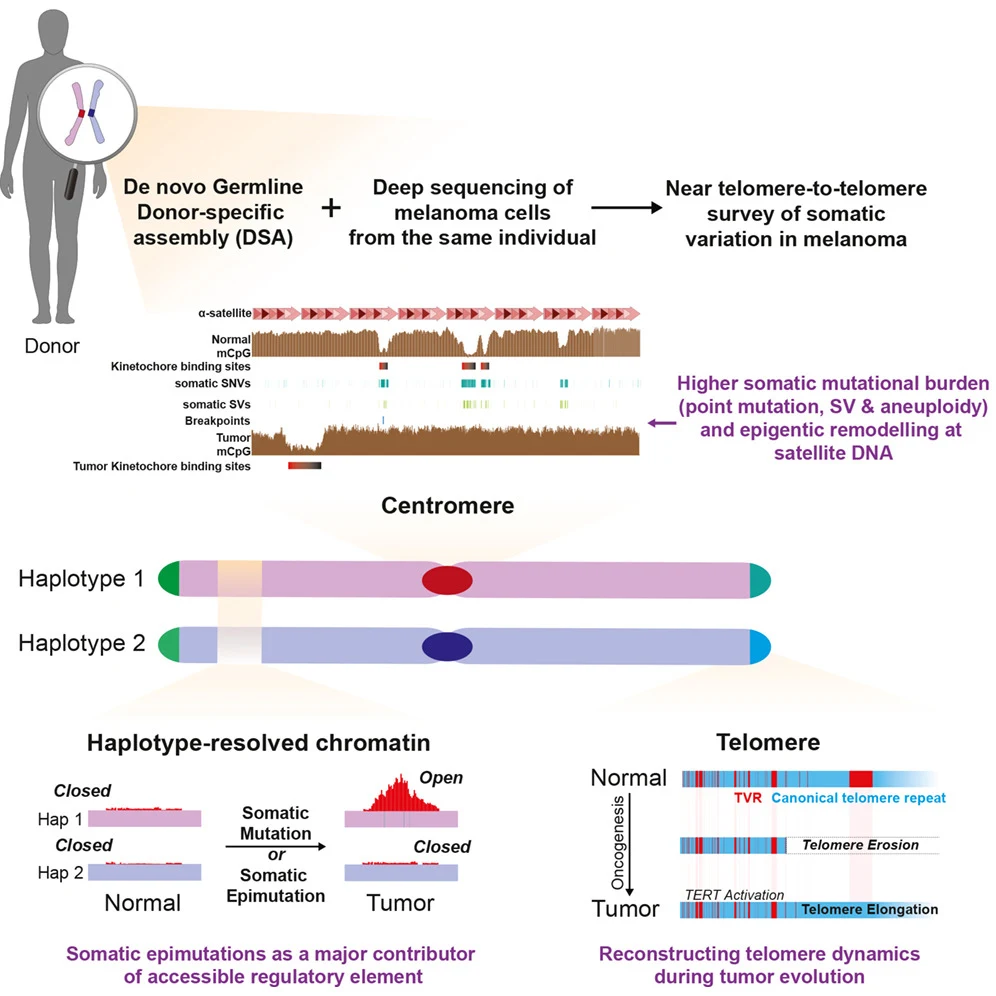
Researchers conducted an observational analysis of a human donor and their melanoma, combining a nearly complete map of the donor’s two genome copies with detailed tumour DNA sequencing. They found that 16% of somatic variants—DNA changes acquired rather than inherited—lay in sequences missing from the reference genome used for comparison.
Satellite DNA, made up of repeated sequences, contained hotspots for mutations associated with ultraviolet light. The researchers also examined telomeres, the protective ends of chromosomes. Analyses of individual DNA molecules reconstructed a cycle of telomere shortening and extension by telomerase, an enzyme that lengthens chromosome ends, during tumour evolution.
Why it matters
The framework could help researchers investigate how acquired DNA differences between cells develop with age, including in regions conventional genome analyses cannot readily examine.
Caveats
This observational analysis centred on one donor’s melanoma, not on aging. It does not establish how common these patterns are across people or cancers.