Epidemiological trend comparison and incidence prediction for elderly lung cancer in 204 countries and territories: a retrospective study
Abstract
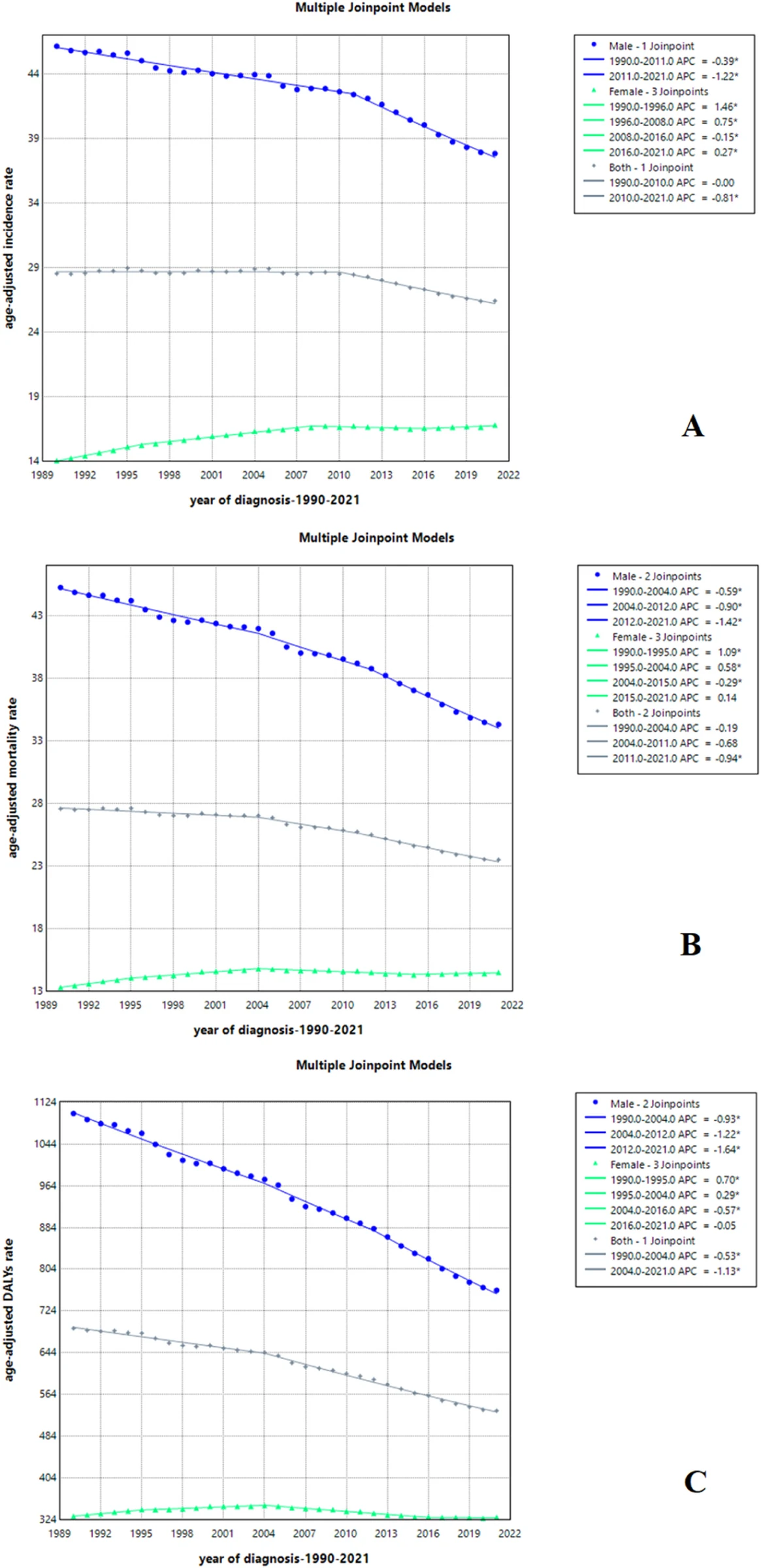
BACKGROUND: Lung cancer is widely prevalent worldwide at present, especially in the elderly population aged over 65-years. It is essential to timely understand epidemiological trends of elderly lung cancer and project the future incidence in global and regions, which could be conducive to reducing the incidence and mortality of lung cancer. METHODS: We stratified the large-scale population through ages, genders, regions and countries and territories. Lung cancer incidence, mortality and Disability Adjusted Life Years (DALYs), with 95% uncertainty intervals, were separately computed in global, regional and national levels. Average Annual Percentage Changes (AAPCs) were calculated through join point regression model to assess the temporal trend of each year. We employed Deep Neural Networks (DNN) for predicting the global and regional incidence of lung cancer to 2050 by gender, age and socio-demographic index. RESULTS: Lung cancer incidence, mortality and DALYs for the elderly people were derived in the global and Socio-Demographic Index (SDI) levels, regional levels and national levels through the stratification of age and gender. We predicted lung cancer incidence of the elderly through DNN model by the year of 2050. Lung cancer incidence of the elderly men was decreased nearly 11% from 1990 to 2021 globally, with the AAPC value of -0.36% (95% CI -0.42% ‒ -0.30%). Elderly lung cancer incidence in high SDI region had significant drop of 21% from 1990 to 2021. The prediction indicated the decline trend in incidence of elderly lung cancer worldwide. Elderly lung cancer incidence in the high SDI region would have obviously decrease by 2050, whereas the high-middle SDI region would have highest lung cancer incidence in the elderly than other SDI regions by 2050. CONCLUSIONS: This research analysed the epidemiological trends of lung cancer for the elderly in global, regional and national levels and predicted the incidence trend of elderly lung cancer by the year of 2050. The findings could illuminate the trend of incidence, mortality and DALYs for elderly lung cancer and contribute to lung cancer early diagnosis and treatment in the elderly.
The paper
Chinese Academy of Medical Sciences & Peking Union Medical College
Clinics, 15 Oct 2026