Higher lung cancer rates among mental health service users
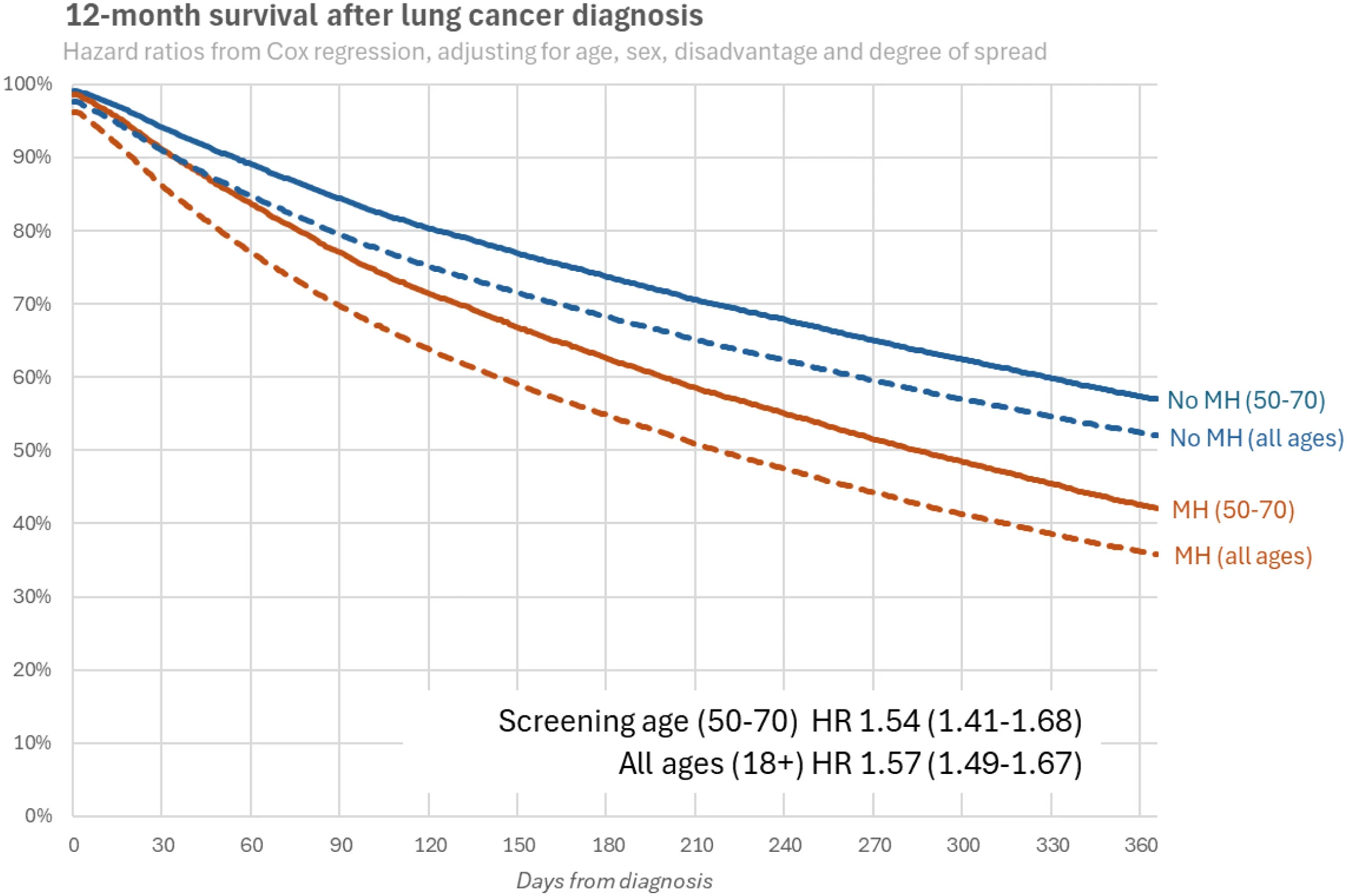
Mental health service users had 1.54 times the lung cancer incidence of other New South Wales residents after accounting for age, sex and disadvantage.
An observational study analysed 39,680 lung cancer notifications among New South Wales residents from 2011 to 2020. Researchers compared people who had accessed public mental health services with other residents. Service contact meant hospital or community mental health care in the five years before diagnosis.
People accessing these services were younger at diagnosis. They had higher odds of cancer having spread elsewhere in the body at diagnosis and higher mortality from any cause within 12 months. Median survival was 121 days, compared with 211 days among other residents. Among people aged 50–70, the group targeted by Australia’s new lung cancer screening programme, mental health service users had twice the lung cancer incidence of other residents in that age range. Their 12-month mortality was also higher.
Why it matters
The findings bear on how Australia’s lung cancer screening programme reaches people aged 50–70. The authors called for supporting participation across mental health diagnoses, rather than focusing only on selected conditions.
Caveats
This observational study could not establish that mental health service use caused the differences. Its definition covered public hospital and community care, not everyone with a mental health condition.
The paper
NSW Ministry of Health
The Australian and New Zealand Journal of Psychiatry, 15 Oct 2026