Mental illness life expectancy gap narrowed in Queensland
The gap fell from 13.4 to 9.4 years in females and from 16.7 to 12.1 years in males, compared with Queensland’s general population.
14 years
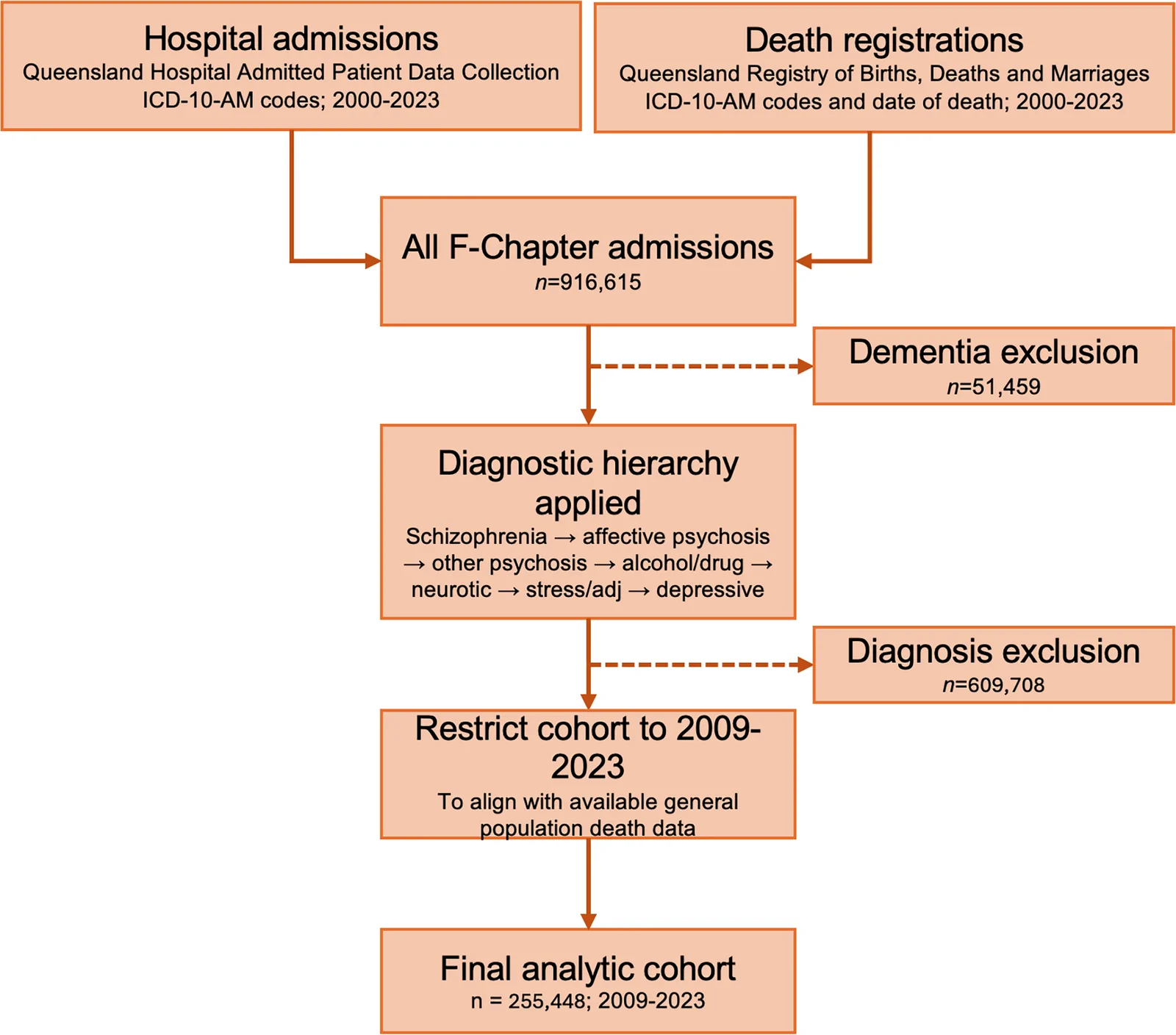
A retrospective observational cohort study analysed linked hospital and death records for 255,448 adults aged 18 or older hospitalised with a main psychiatric diagnosis in Queensland, Australia. It covered seven diagnostic categories and excluded dementia. Researchers estimated life expectancy and compared it with Queensland population norms over 14 years.
The life expectancy gap narrowed in both sexes, but remained considerable. It did not narrow significantly in either sex among people with schizophrenia or other psychoses, conditions that can involve losing touch with reality. The combined rate of excess deaths from physical illness was substantially higher than that from intentional self-harm in both sexes. Self-harm was the largest single contributor to the proportion of excess deaths in males.
Why it matters
For people with mental illness, the authors argued that prioritising physical health care is essential to closing the life expectancy gap, especially in psychotic disorders.
Caveats
This observational study could not establish why the gap narrowed. It covered adults hospitalised with psychiatric diagnoses, not everyone with mental illness.
The paper
University of Queensland
The Lancet Regional Health Western Pacific, 18 Sep 2026