Most people with cancer live with multiple long-term conditions
In 33,258 newly diagnosed adults and 16,807 five-year survivors, non-cancer multimorbidity affected 60% to 86% at diagnosis and 70% to 90% in survivorship.
BMC Medicine
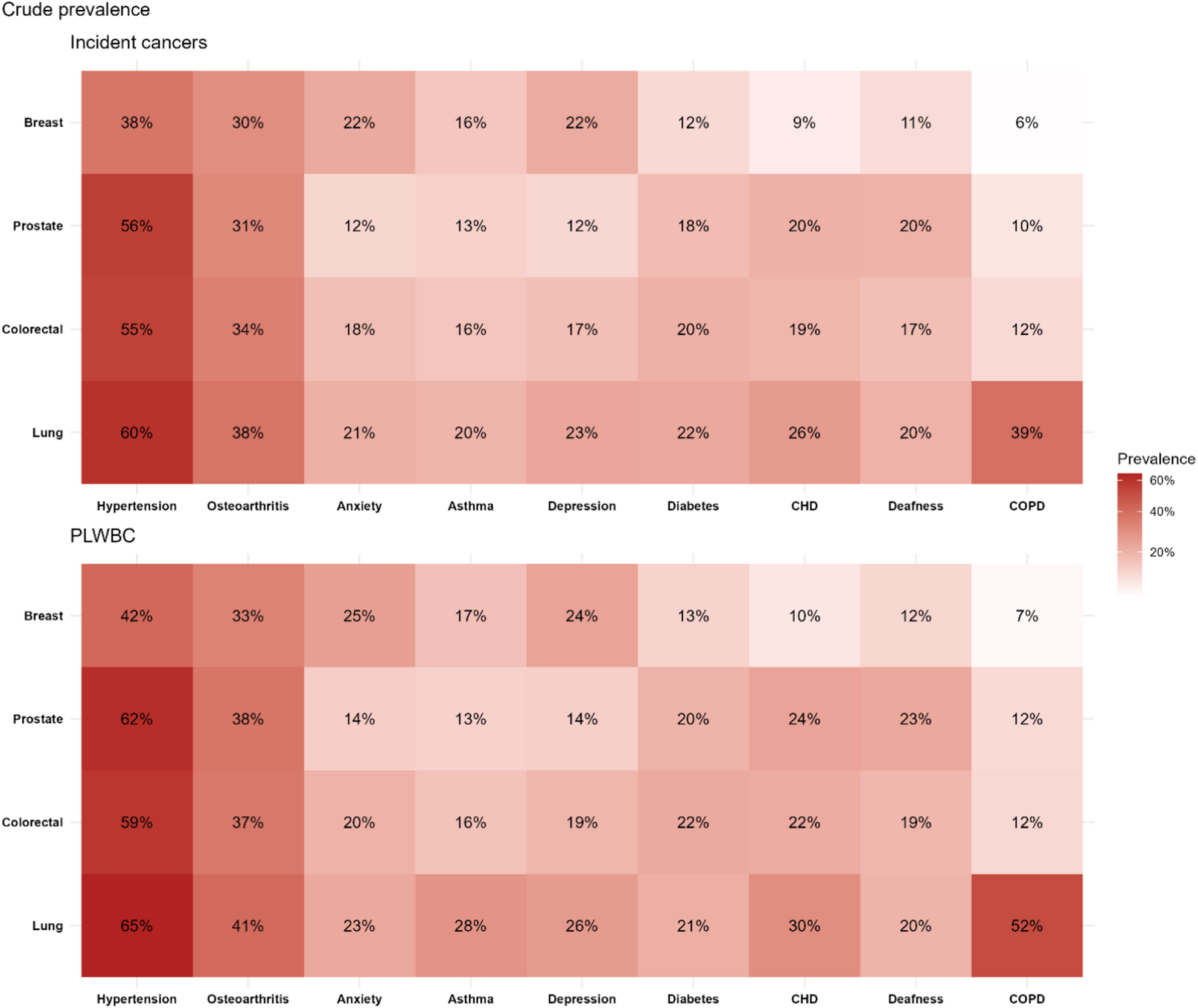
In a retrospective cohort study of adults aged 18 and older diagnosed with or surviving five years after breast, prostate, colorectal, or lung cancer, researchers evaluated 46 non-cancer long-term conditions. The analysis included 33,258 people with incident cancer and 16,807 five-year survivors. Non-cancer multimorbidity, defined as two or more conditions, ranged from 60% to 86% at diagnosis and 70% to 90% in survivors, varying by cancer type. Fewer than 20% had no additional conditions at diagnosis—and under 5.3% in lung cancer—while fewer than 15% of survivors had none. Combined mental and physical multimorbidity affected 24% to 39% of newly diagnosed patients and 27% to 44% of survivors. Deprivation was linked to higher rates across all ages. Compared with colorectal cancer, lung cancer had higher odds of multimorbidity in both groups.
Why it matters
The findings highlight that cancer frequently co-occurs within a wider landscape of chronic diseases. Tracking these non-cancer conditions may help researchers understand how shared aging mechanisms and environmental risks influence health trajectories after diagnosis.
Caveats
The retrospective, observational design cannot determine whether cancer or its therapies drove the development of subsequent conditions. In addition, the analysis was restricted to four major cancer types and evaluated a prespecified set of 46 chronic conditions.
The paper
Maxwell S, Lone N, Jackson C et al.
BMC Medicine · 5 Oct 2026 · CC BY