The impact of e-cigarette exposure on metabolic function: a narrative review
Abstract
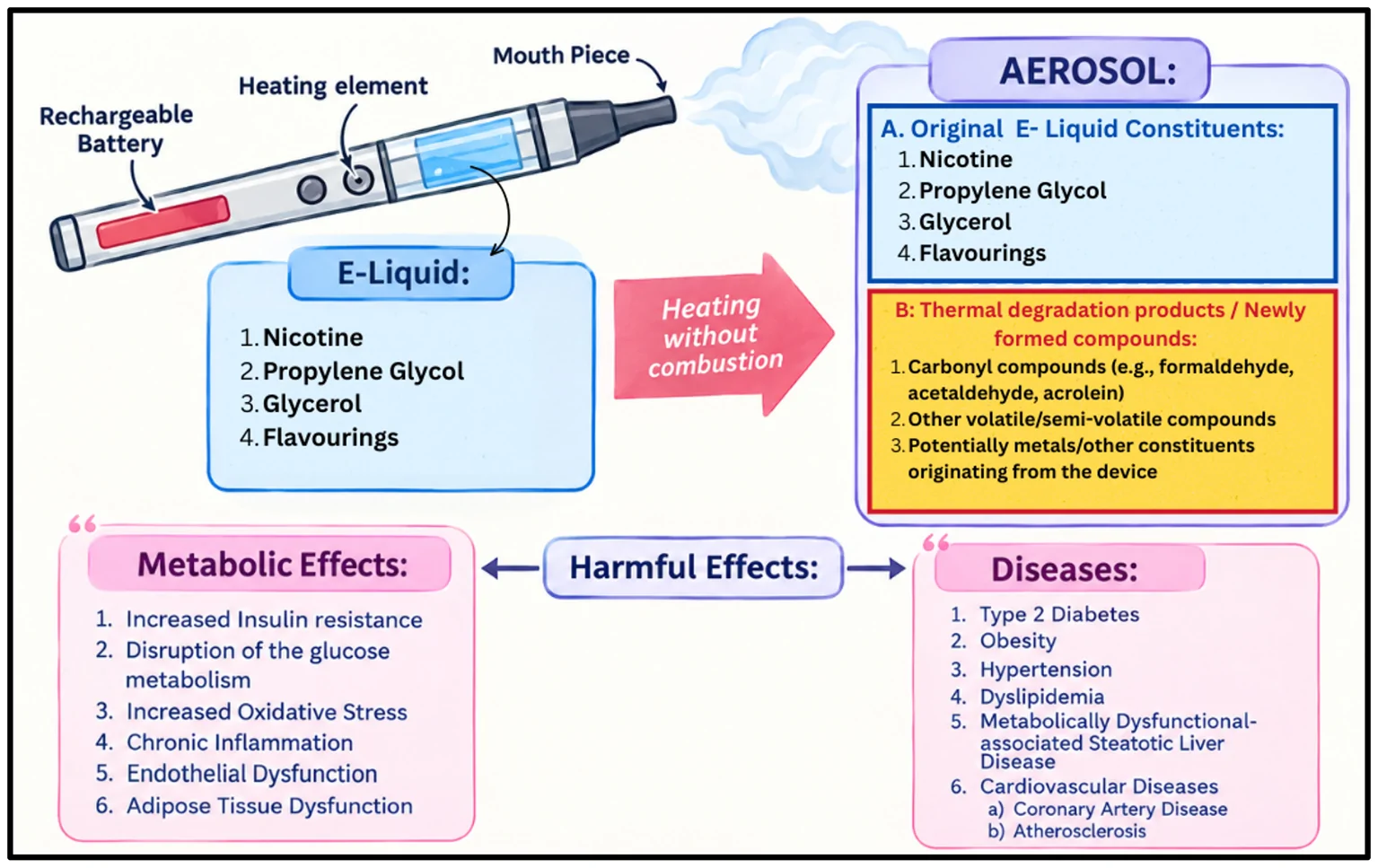
Electronic cigarettes (e-cigarettes) have rapidly emerged as a popular alternative to conventional tobacco smoking, contributing to a substantial rise in their global use over the past decade. Although marketed as a safer, combustion-free method of nicotine delivery, increasing evidence suggests that e-cigarette exposure may adversely affect metabolic health. This literature review evaluates current evidence regarding the impact of e-cigarette use on the metabolic system. Relevant studies published until 2026 were identified through searches of databases including PubMed, Embase, CINAHL, and reports from the World Health Organization. This narrative review incorporates findings from both human and animal studies examining the metabolic consequences of e-cigarette exposure. Current evidence suggests that nicotine and other aerosol constituents may contribute to metabolic dysregulation through oxidative stress, inflammation, mitochondrial dysfunction, and altered cellular signaling pathways. Several studies have demonstrated associations between e-cigarette use and obesity-related outcomes, including increased body mass index and adipose tissue dysfunction. Evidence has also linked e-cigarette exposure to insulin resistance, impaired glucose metabolism, elevated HbA1c levels, reduced antioxidant activity, and increased expression of glycogen synthase kinase-3 beta (GSK3β), a pathway implicated in the development of prediabetes. Additionally, broader components of metabolic syndrome, including hypertension, dyslipidemia, endothelial dysfunction, and cardiovascular risk factors, have been explored in the literature. While the findings collectively suggest a potential relationship between e-cigarette use and adverse metabolic outcomes, the current body of evidence remains limited by the predominance of cross-sectional and short-term studies. Further longitudinal, clinical, and mechanistic research is necessary to better establish causality and clarify the long-term metabolic effects of e-cigarette use.
From the paper
- Result
Greater odds of being obese and overweight were seen in those passively exposed to both e-cigarette aerosol and cigarette smoke (adjusted odds ratio = 3.9, 95% CI: 1.4–11.0; p = 0.009), further suggesting an association between obese weight status and e-cigarette exposure.
- Limitation
Firstly, the evidence that is available is characterized by substantial heterogeneity in study designs, the populations, e-cigarette devices, as well as e-liquid formulations, concentrations of nicotine, exposure durations.
Quoted word for word from the full text on frontiersin.org.
- E-cigarette use
- Nicotine
- Inflammation
- Oxidative stress and ROS signalling
- Dyslipidemia
- Endothelial dysfunction
The paper
Royal College of Surgeons in Ireland
Frontiers in Public Health, 30 Sep 2026, Open access