Non-invasive assessment of estimated glomerular filtration rate using lens autofluorescence in a population without chronic kidney disease
Abstract
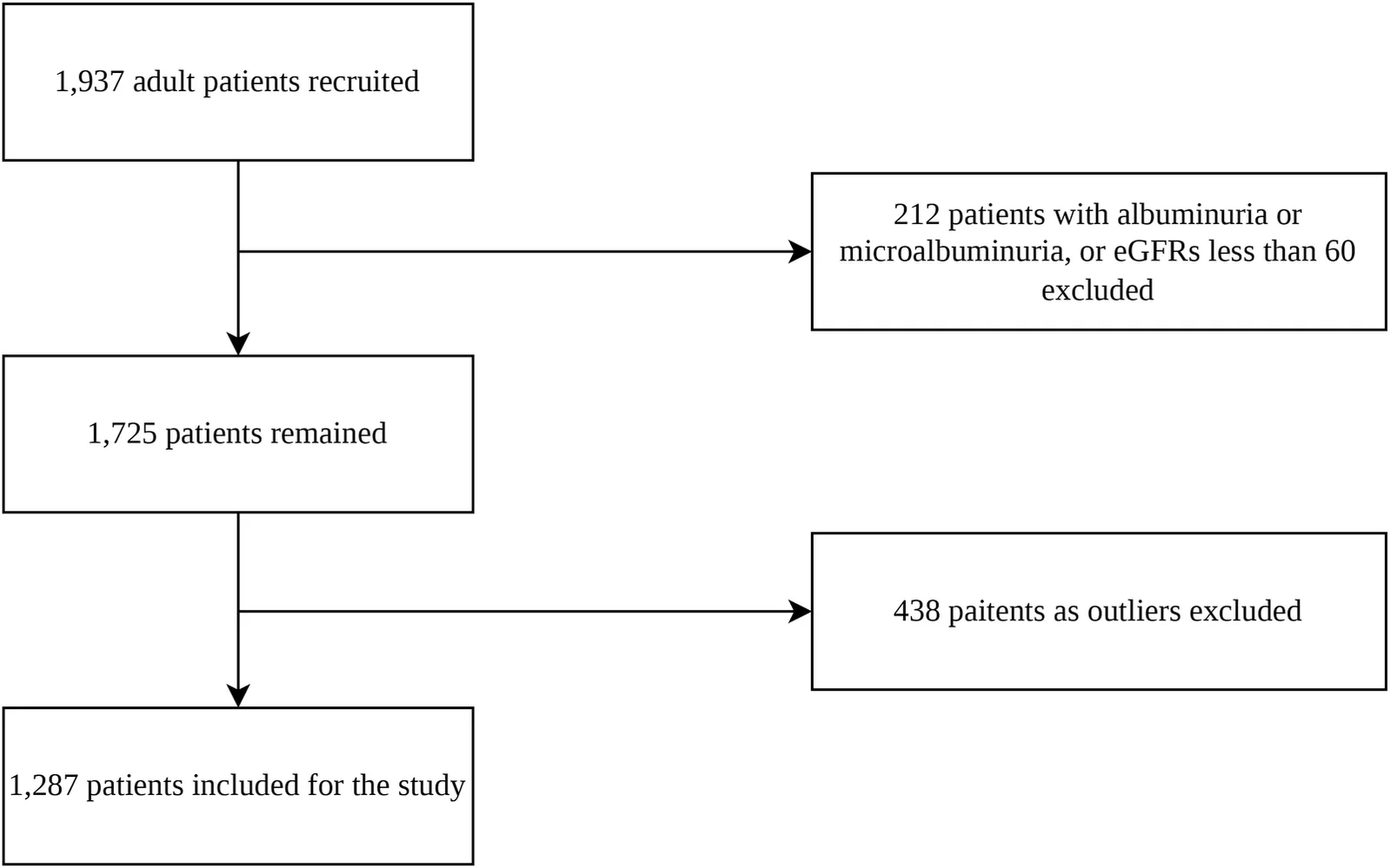
PURPOSE: The estimated glomerular filtration rate (eGFR) is a vital indicator for monitoring renal health. Limitations caused by invasive serum-based measurement often delay the detection of early-stage renal decline. Advanced glycation end products (AGEs) contribute significantly to renal pathogenesis. This study specifically targets the "pre-clinical" window of renal decline. We investigate whether lens autofluorescence based AGE (LAF-AGE) measurement can serve as a non-invasive early warning indicator for eGFR in an asymptomatic, non chronic kidney disease (CKD) control population, facilitating the possibilities of detection of individuals at risk of future CKD before clinical manifestations. METHODS: From an initial pool of 1,937 participants, we excluded those with eGFR < 60 mL/min or albuminuria or microalbuminuria (n = 1,725). Following the removal of biochemical outliers using the interquartile range (IQR) method, 1,287 participants were included in the final analysis. LAF-AGEs were measured using a scanning confocal biomicroscope. Age-adjusted AGE levels (AALs) were derived based on population percentiles. Multivariate linear regression was used to evaluate associations while adjusting for confounders, including sex, BMI, blood glucose, and lipids. RESULTS: LAF-AGEs showed a significant negative association with eGFR in the univariate model (β = -47.80, p < 0.001). This association remained significant after adjusting for confounders. Higher AALs were independently associated with lower eGFR (p = 0.002). CONCLUSION: LAF-AGEs is a valid, practical and non-invasive parameter for eGFR evaluation.
- Estimated glomerular filtration rate
- Chronic kidney disease
- Age-adjusted advanced glycation end product levels
- Lens autofluorescence-based advanced glycation end products
- Humans
The paper
Chongqing University
Frontiers in Medicine, 30 Sep 2026, Open access