Survival and disease burden of breast cancer (Monastir, Tunisia): A population-based cohort study (2002-2022)
Abstract
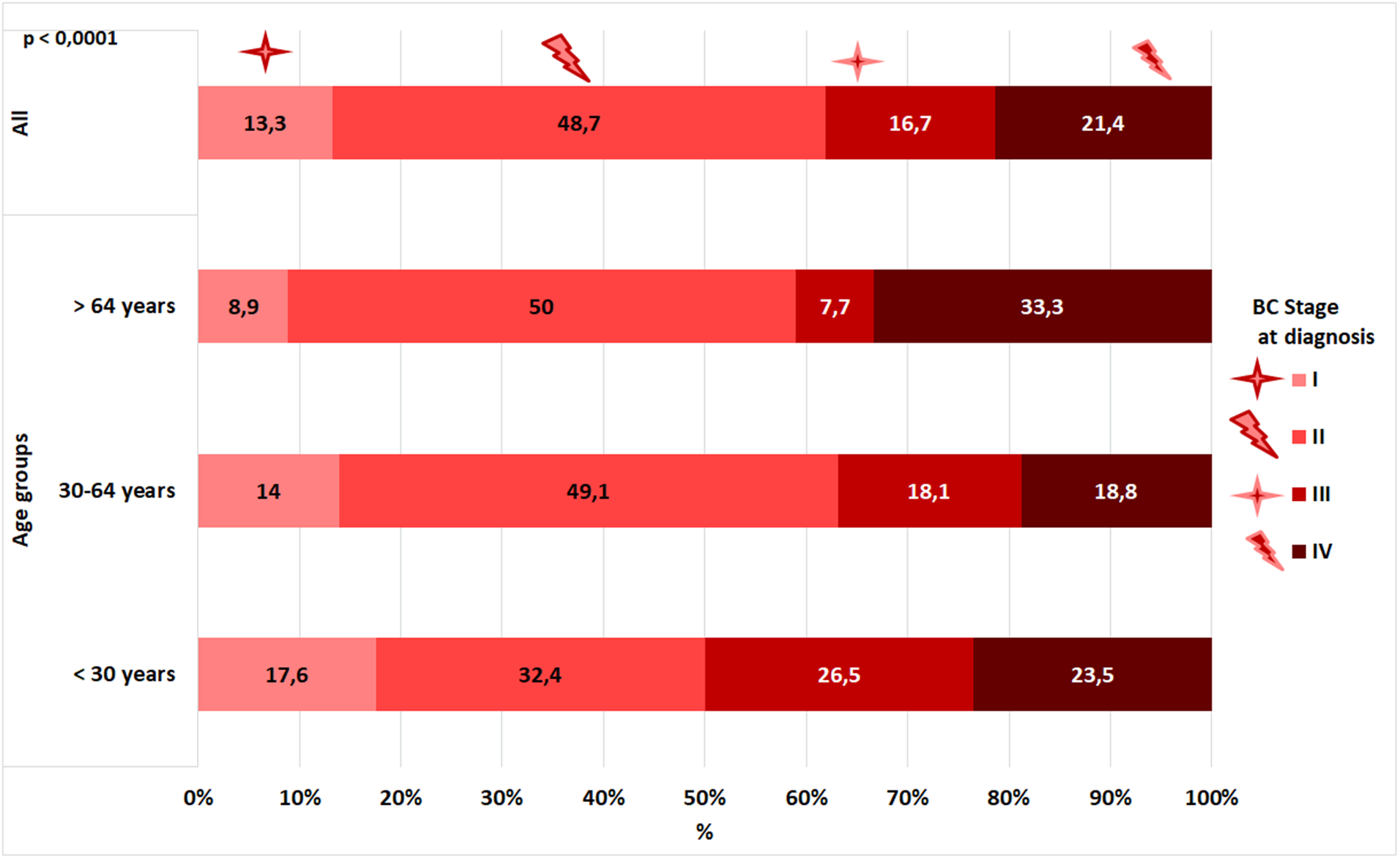
BACKGROUND: Population-based evidence on Breast Cancer (BC) survival and disease burden in Tunisia remains limited. This study aimed to describe BC survival and temporal trends, quantify the BC burden, and assess the impact of early diagnosis on survival and burden. METHODS: We conducted a descriptive population-based cohort study of women diagnosed with BC in Monastir between 2002 and 2014, with follow-up through January 2022. Overall survival was estimated using Kaplan-Meier methods, and factors associated with mortality were assessed using multivariable Cox regression. BC burden was quantified using disability-adjusted life years (DALYs), comprising years of life lost (YLLs) and years lived with disability (YLDs). Relative risks (RRs) and related measures were used to assess the association between stage at diagnosis and mortality. RESULTS: Among 1,075 incident BC cases identified between 2002 and 2014, 21.4% were diagnosed at stage IV. By 2022, vital status information was available for 959 women. The crude and age-standardized mortality rates were 11.9 (95% CI, 8.5-15.4) and 12.5 (95% CI, 8.9-16.0) per 100,000 WY, respectively. Median survival was 187 months (95% CI, 163.7-210.2), reaching 226 months among women diagnosed at stages 0-I. Three-, five-, and ten-year survival rates were 77.0%, 70.0%, and 45.2%, respectively. Ten-year relative survival showed a significant upward trend among women aged 30-64 years, corresponding to the target population of the national BC early detection program (APC, 5.37%; 95% CI, 2.03-8.82; p = 0.005). The total BC burden was 10,665.4 DALYs, including 10,362 YLLs (97.3%). Median DALYs per patient was 28.0 years (IQR, 13.74-36.95). Diagnosis at stages 0-II was associated with a 22% reduction in ten-year mortality (RR, 0.78; 95% CI, 0.67-0.91), with an NND of 9. Diagnosing 61 women at stages 0-II rather than III-IV would avoid one DALY. CONCLUSION: The significant upward trend in ten-year survival among women targeted by the national BC early detection program, together with the avoidance of one DALY per 61 women diagnosed at stages 0-II rather than III-IV, supports continued investment in early detection and BC control in Tunisia.
From the paper
- Participants
Between 2002 and 2014, a total of 1,075 incident BC cases, were identified.
- Follow-up
The median follow-up time was 12 years (IQR:9–15).
- Result
Diagnosis at stages 0–II was associated with a 22% reduction in ten-year mortality (RR, 0.78; 95% CI, 0.67–0.91), with an NND of 9.
- Limitation
Sensitivity analyses showed no significant differences between women included in the analysis and those with missing vital status, suggesting that selection bias was likely limited.
Quoted word for word from the full text on journals.plos.org.
The paper
University of Monastir
PLOS One, 14 Oct 2026, Open access


