Weight-loss surgery linked to lower obesity-related cancer risk
Compared with no surgery, weight-loss surgery was associated with a lower obesity-related cancer rate, with an adjusted rate ratio of 0.81.
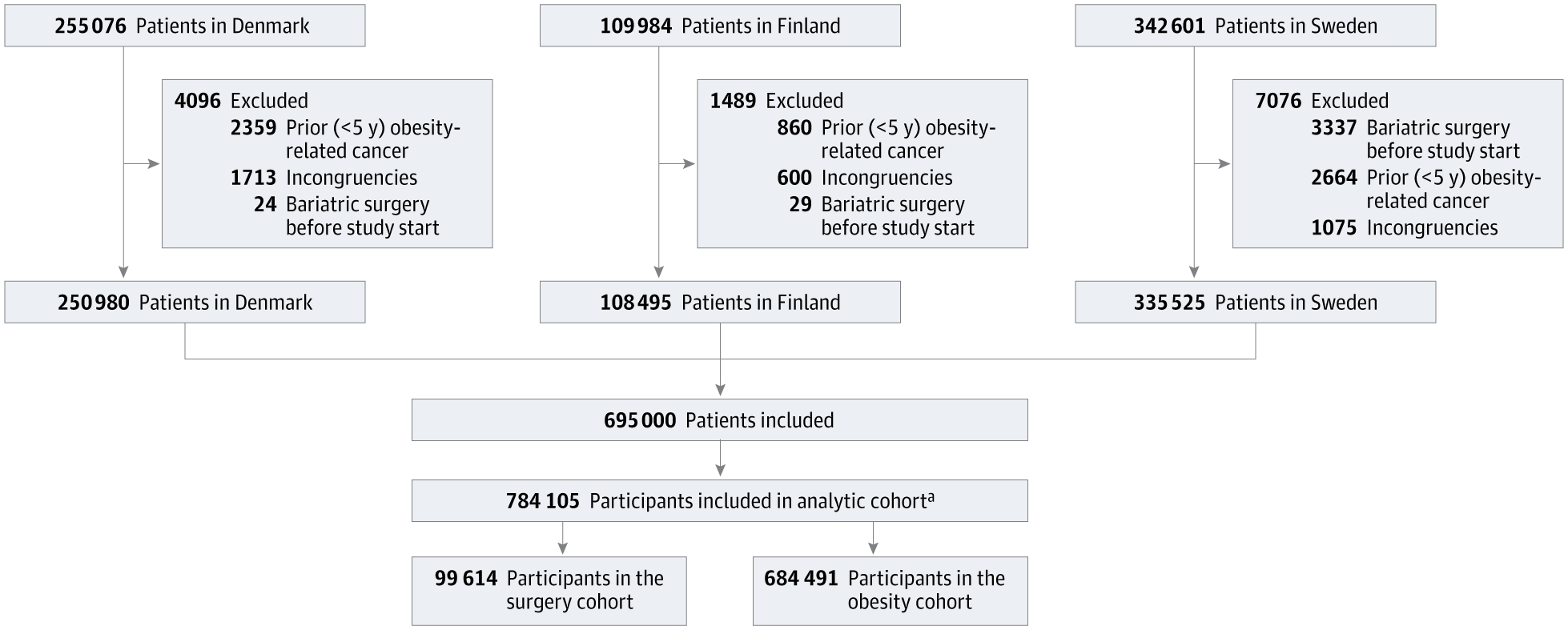
An observational cohort study included 784,105 adults aged 18–59 with recorded obesity in Denmark, Finland and Sweden: 569,266 women and 214,839 men. Researchers used national registry records from 1992 to 2023 to compare people who underwent weight-loss surgery with those who did not. In total, 99,614 had surgery.
Surgery was associated with a lower rate of obesity-related cancers overall. The rate ratio compared cancer rates after accounting for factors including age and sex. The association was similar in the two age groups studied, 18–39 and 40–59. Associations for cancers not specific to one sex were similar in women and men. Surgery was also associated with higher pancreatic cancer risk, particularly among younger adults, with a reported adjusted rate ratio of 2.21.
Why it matters
Obesity is associated with several cancers. The study addressed whether the link between weight-loss surgery and long-term cancer risk differs between younger and middle-aged adults.
Caveats
This observational study cannot establish that surgery caused the differences in cancer rates. It covered people aged 18–59 with recorded obesity, so the findings do not establish associations in older adults or people without obesity.
The paper
Bariatric Surgery and Risk of Obesity-Related Cancer by Age and Sex
and Karolinska University Hospital
JAMA Surgery, 14 Oct 2026