Effects of Exercise Training on the Metabolic Cost of Walking in Health and Disease: A Systematic Review and Meta-analysis
Abstract
BACKGROUND: The metabolic cost of walking (Cw) increases with heathy aging and in neurological conditions. No comprehensive assessment has been performed yet to determine whether chronic exercise training and rehabilitation could improve Cw. OBJECTIVE: The purpose of this study was to determine whether the effects of chronic exercise interventions on Cw differ by type, dose, and intensity in healthy adults and individuals with neurological conditions (multiple sclerosis, Parkinson's disease, and stroke). DESIGN: Systematic review and robust variance estimation meta-analysis with meta-regression following Preferred Reporting Items for Systematic Reviews and Meta-Analyses (PRISMA) guidelines. DATA SOURCES: Systematic search of Medline, Web of Science, and CINAHL databases. RESULTS: A total of 27 studies with 36 intervention arms and 54 outcomes in 1177 participants, of those 703 healthy adults and 474 patients with multiple sclerosis (1 study), Parkinson's disease (1 study), and stroke (9 studies) were included. Across all types of training (aerobic, resistance, other), chronic physical exercise training improved Cw (g = 0.40, p = 0.001). Improvements were significant in healthy individuals (g = 0.49, p = 0.001) but not in patients with stroke (g = 0.24, p = 0.065). Meta-regression confirmed that population moderated the effects of training on Cw (p = 0.043) after adjusting for exercise training characteristics. In the adjusted meta-regression, higher study-level mean body mass index (BMI) was associated with smaller intervention effects on Cw (β = - 0.20, p = 0.040). Training type, duration, intensity, frequency, and session duration did not significantly moderate the training effects on Cw, although the meta-regression may have been underpowered to detect such associations. Heterogeneity (I² < 62.5%) and risk of bias were moderate. CONCLUSIONS: This is the first meta-synthesis examining the effects of diverse forms of exercise training on Cw in different populations. Chronic physical exercise training improves Cw in healthy adults, with smaller effects observed in individuals with stroke. The findings support chronic physical exercise training as an effective strategy for improving walking economy.
From the paper
- Studies
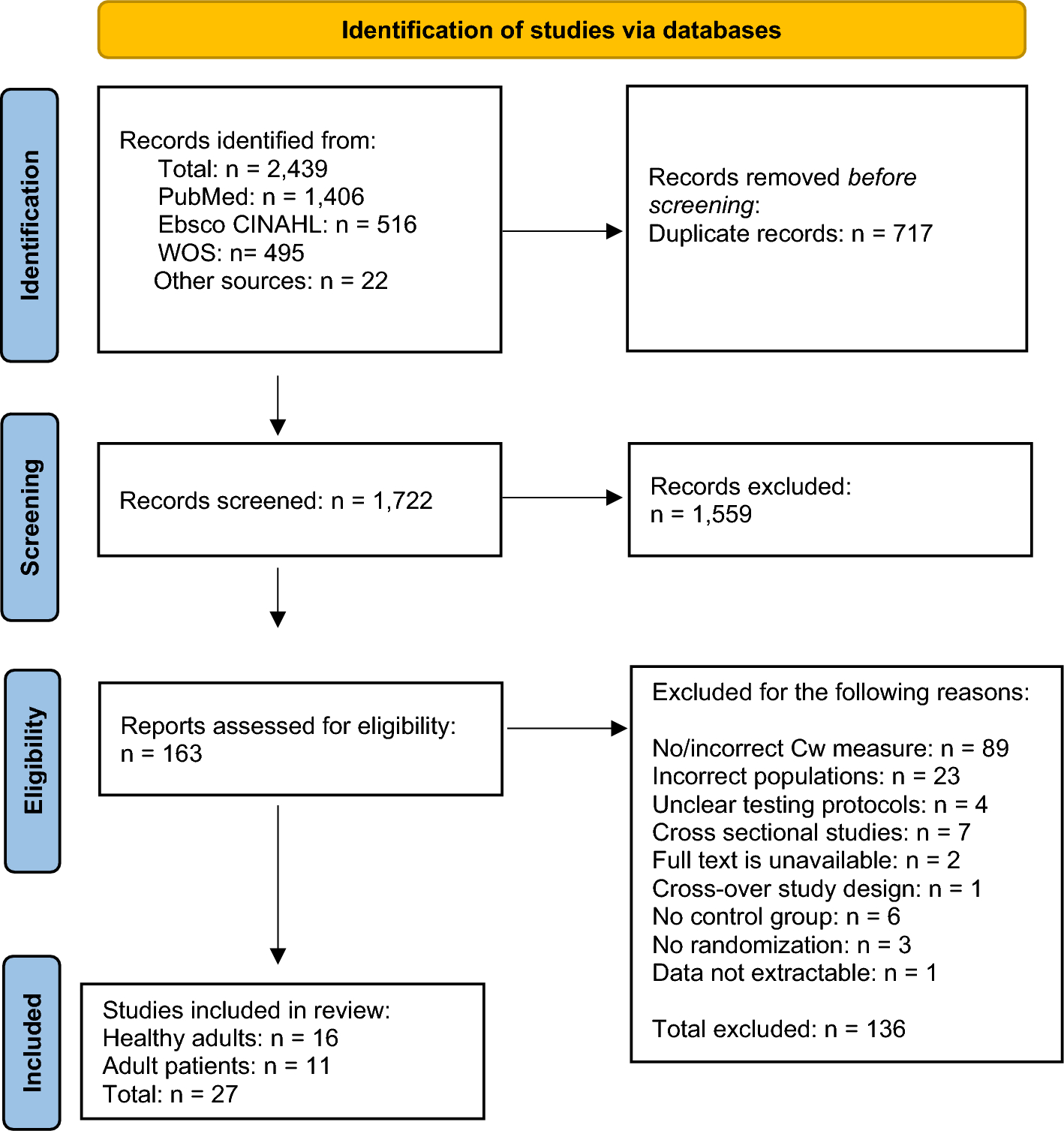
We identified 2439, screened 1722, and finally included 27 studies.
- Result
… the interventions significantly improved mobility (g = 0.41, 95% CI 0.28–0.71, p = 0.001), metabolic outcomes (g = 0.50, 95% CI 0.28–0.71, p = 0.001), and strength and power (g = 0.70, 95% CI 0.09–1.31, p = 0.027) but not body composition (p = 0.238) or balance-related outcomes (p = 0.406).
- Limitation
This review cannot address the distinct mechanisms of how different types of chronic exercise training improve Cw.
Quoted word for word from the full text on link.springer.com.
The paper
Ningbo University; Charles University
Sports Medicine, 14 Oct 2026, Open access