GLP-1 Receptor Agonists in Dentistry: Promise, Pitfalls, and Evidence Gaps
Abstract
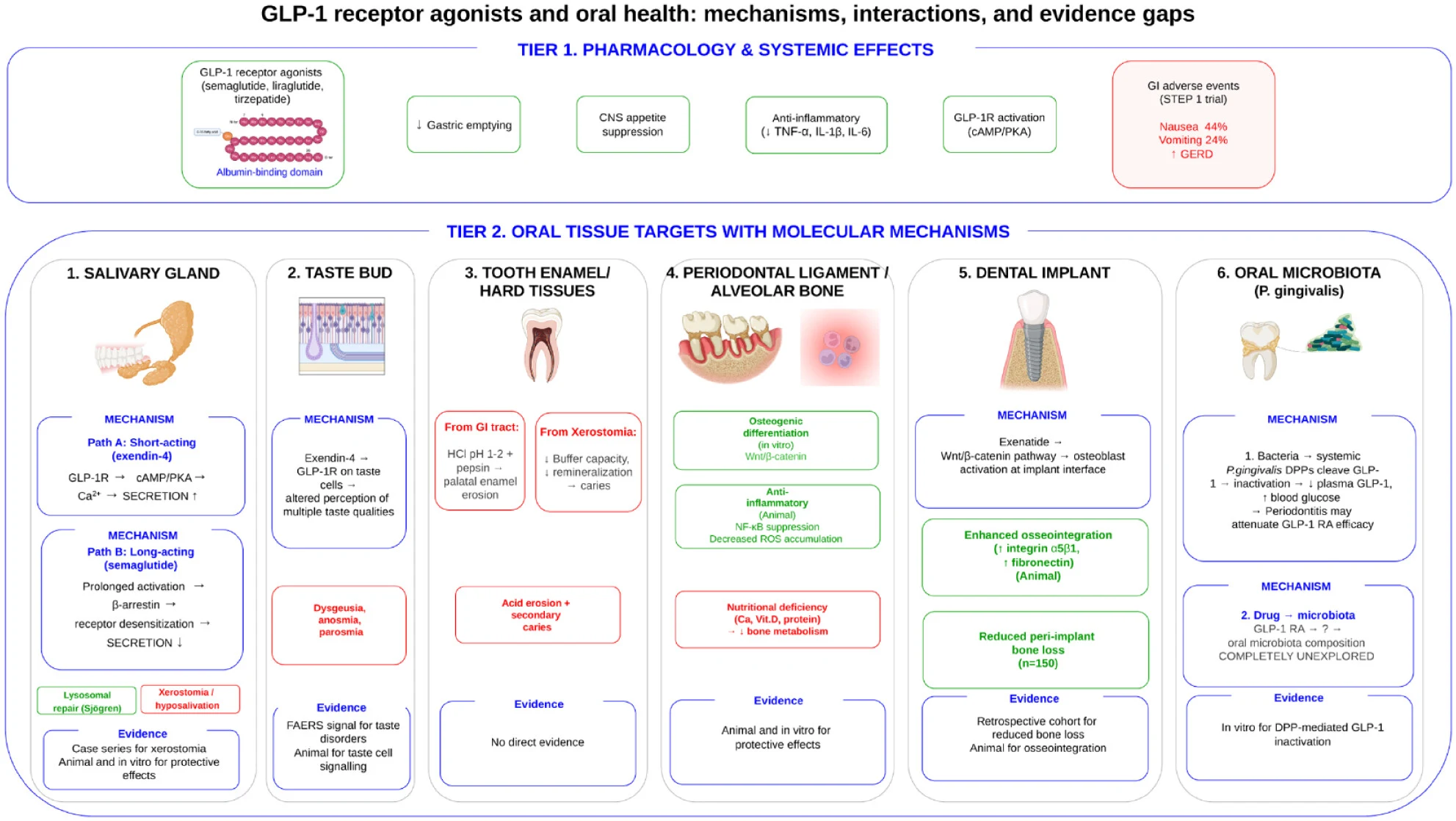
GLP-1RAs (glucagon-like peptide-1 receptor agonists) have become one of the fastest-growing drug classes worldwide, with prescriptions for obesity treatment increasing by 587% from 2019 to 2024. While their metabolic and cardiovascular benefits are well established, the implications for oral health remain largely unexamined. Preclinical evidence consistently demonstrates anti-inflammatory and osteoprotective effects on periodontal and peri-implant tissues: GLP-1RAs promote osteogenic differentiation of periodontal ligament stem cells, reduce alveolar bone resorption in animal models of periodontitis, and enhance implant osseointegration in diabetic rats. However, these findings are based exclusively on in vitro and animal studies, with only a single retrospective cohort study providing limited clinical data. Conversely, several oral adverse effects have been reported based on pharmacovigilance analyses, including xerostomia, dysgeusia, and anosmia, particularly for semaglutide. Gastrointestinal side effects, particularly nausea (15% to 50%), vomiting (5% to 24%), and gastroesophageal reflux, pose a plausible but unquantified risk for tooth erosion and secondary caries. A bidirectional link between GLP-1 signaling and the oral microbiota, mediated by bacterial dipeptidyl peptidase (DPP)-4-like enzymes that degrade endogenous GLP-1, adds further complexity. Despite this breadth of potential interactions, no prospective study has used any dental outcome as an endpoint in patients receiving GLP-1RAs. This critical appraisal synthesizes the evidence across multiple dental disciplines, grades it in each domain, and identifies the gaps that demand urgent investigation.
- GLP-1 receptor agonists
- Semaglutide
- GLP-1 and incretin signalling
- Inflammation
- Secondary dental caries
- Humans
The paper
LMU Klinikum
Journal of Dental Research, 14 Oct 2026, Open access