Inflammatory Potential of Diet and Breast Cancer Risk: A Population-Based Case-Control Study
Abstract
Chronic inflammation may contribute to breast cancer (BC). The Dietary Inflammatory Index (DII) and energy-adjusted DII (E-DII) quantify the inflammatory potential of diet. This case-control study evaluated associations of the DII and E-DII with BC risk among Iranian women. We recruited 600 newly diagnosed BC cases and 600 population-based controls from Isfahan, Iran. Dietary intake was assessed using a validated 168-item food frequency questionnaire (FFQ). DII and E-DII scores were calculated based on 26 and 25 food parameters, respectively. Logistic regression models were used to estimate odds ratios (ORs) and 95% confidence intervals (CIs). Multivariable-adjusted models accounted for confounders including age, body mass index, reproductive history, and sunlight exposure. Higher E-DII scores were significantly associated with an increased odds of developing BC. In the fully adjusted models, women in the highest quartile of the E-DII had 63% greater risk than those in the lowest quartile (adjusted OR: 1.63; 95% CI: 1.08-2.45). Analyses based on continuous E-DII also showed that each unit increase in the E-DII score was linked to a 14% increase in BC odds (adjusted OR: 1.14; 95% CI: 1.05-1.24). In contrast, DII scores were not significantly associated with BC risk in any of the models. This study demonstrated that diets with stronger inflammatory properties, indicated by elevated E-DII scores, are associated with a higher risk of BC among Iranian women. These outcomes underline the value of using energy-normalized inflammatory indices when assessing dietary influences on cancer risk.
From the paper
- Participants
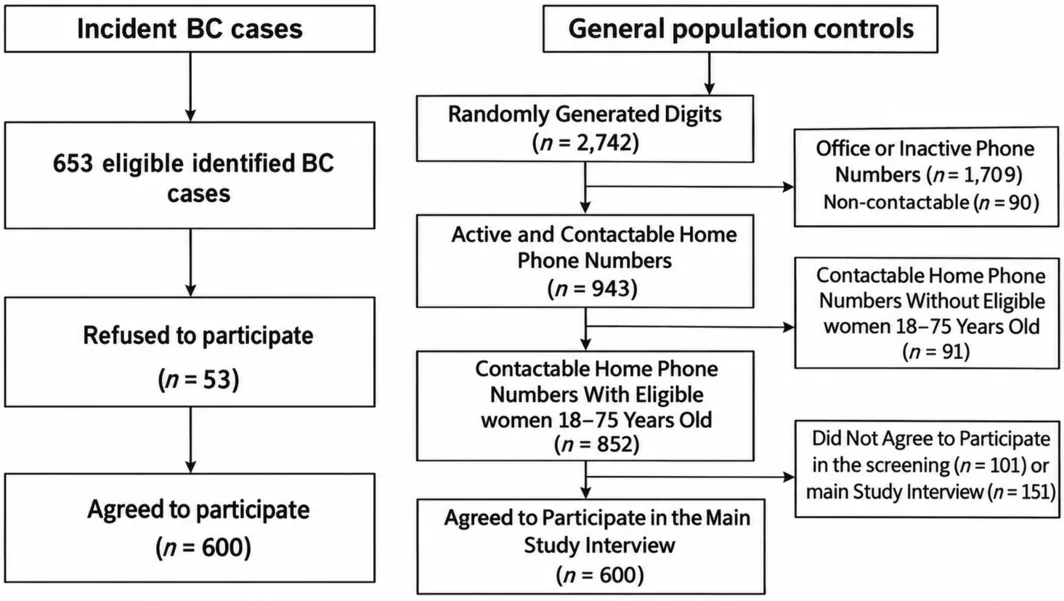
A total of 600 newly diagnosed BC cases and 600 controls from the general population were included in this study (Table 1).
- Result
In the unadjusted model, per-unit E-DII score was not significantly associated with the odds of BC (OR = 1.04; 95% CI: 0.98–1.11; p = 0.17).
Quoted word for word from the full text on onlinelibrary.wiley.com.
- Dietary inflammatory potential
- Breast cancer
- Dietary inflammatory index
- Energy-adjusted Dietary Inflammatory Index
- Humans
The paper
Isfahan University of Medical Sciences; University of South Carolina
Food Science & Nutrition, 13 Oct 2026, Open access