Combined statin and fenofibrate therapy and cardiorenal outcomes in patients with CKD, dyslipidemia, and ischemic heart disease
Multicentre
Abstract
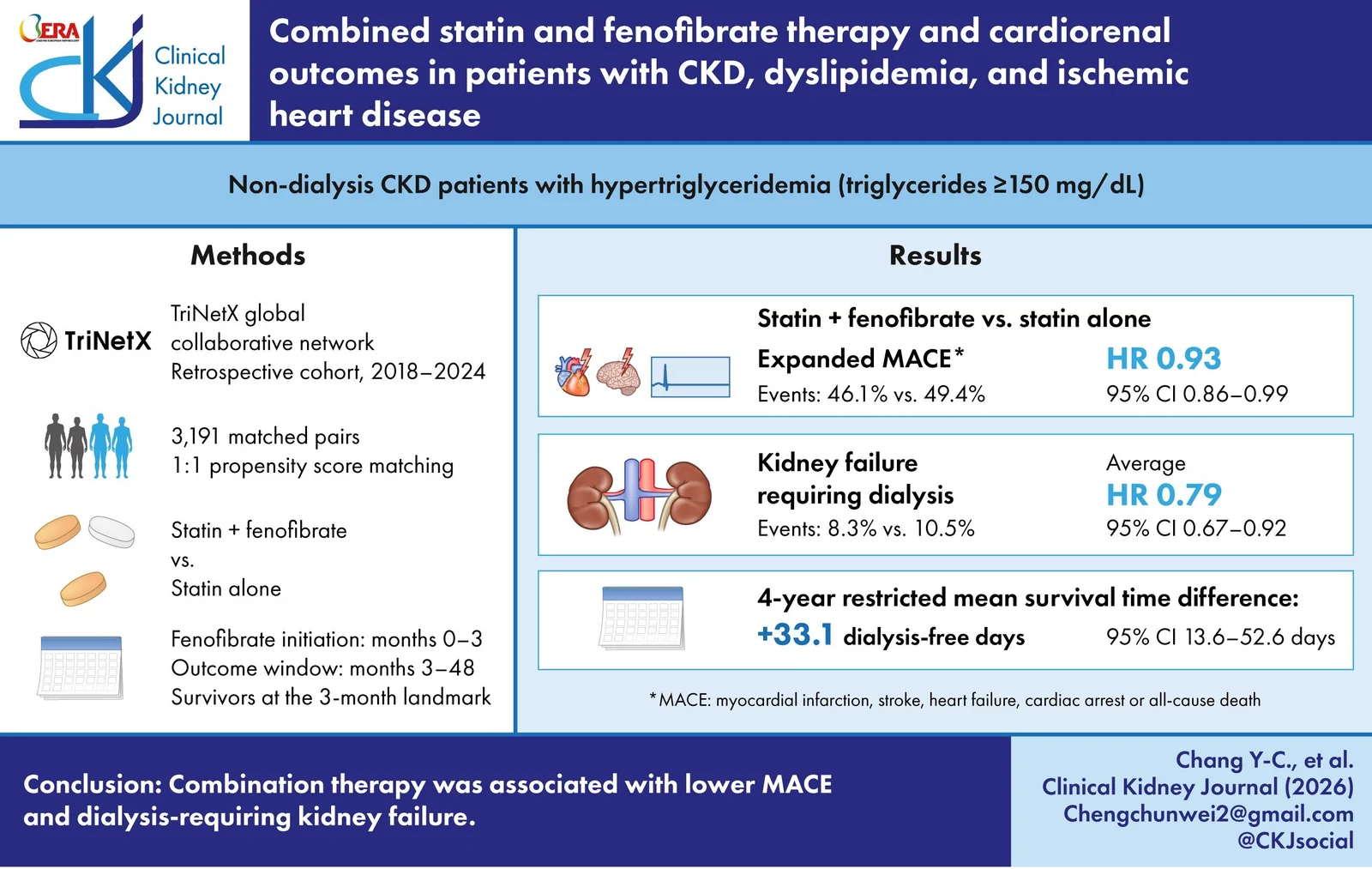
BACKGROUND: Adults with non-dialysis-dependent chronic kidney disease (CKD), ischemic heart disease (IHD), and hypertriglyceridemia are at high cardiorenal risk; whether starting fenofibrate together with statin therapy is effective and safe in this population is uncertain. METHODS: In a multicenter retrospective cohort study emulating a target trial in the TriNetX Global Collaborative Network (2018-2024), 112 003 (28.5%) of 392 969 statin initiators with CKD and hypertriglyceridemia had IHD. Those without dialysis dependence were assigned to statin-fenofibrate combination therapy or statin monotherapy according to fenofibrate initiation within 3 months of the first statin prescription. The main outcomes were expanded major adverse cardiovascular events (MACEs) (acute myocardial infarction, stroke, heart failure, cardiac arrest, or all-cause death) and end-stage kidney disease (ESKD) necessitating dialysis. Propensity score matching yielded 3191 pairs. Cox models estimated hazard ratios (HRs). RESULTS: Median follow-up was 881 days with combination therapy and 925 days with statin monotherapy. Combination therapy was associated with lower risks of MACE [1472 [46.1%] vs 1576 [49.4%] events; HR, 0.93; 95% confidence interval (CI), 0.86-0.99] and ESKD necessitating dialysis (264 [8.3%] vs 335 [10.5%]; HR, 0.79; 95% CI, 0.67-0.92). Risks of all-cause mortality (377 vs. 375), acute myocardial infarction (537 vs. 570), heart failure (1059 vs. 1134), stroke (310 vs. 312), acute kidney injury (825 vs. 840), and coded safety events were not significantly different between groups. CONCLUSIONS: Among selected adults with non-dialysis-dependent CKD, hypertriglyceridemia, and IHD, statin-fenofibrate combination therapy was associated with lower risks of MACE and of ESKD necessitating dialysis, without a significant increase in coded safety events.
The paper
Fu Jen Catholic University
Clinical Kidney Journal, 1 Oct 2026